

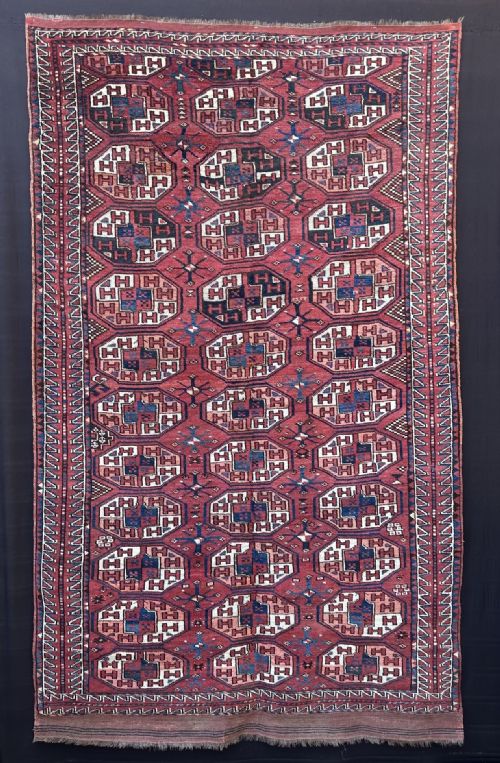


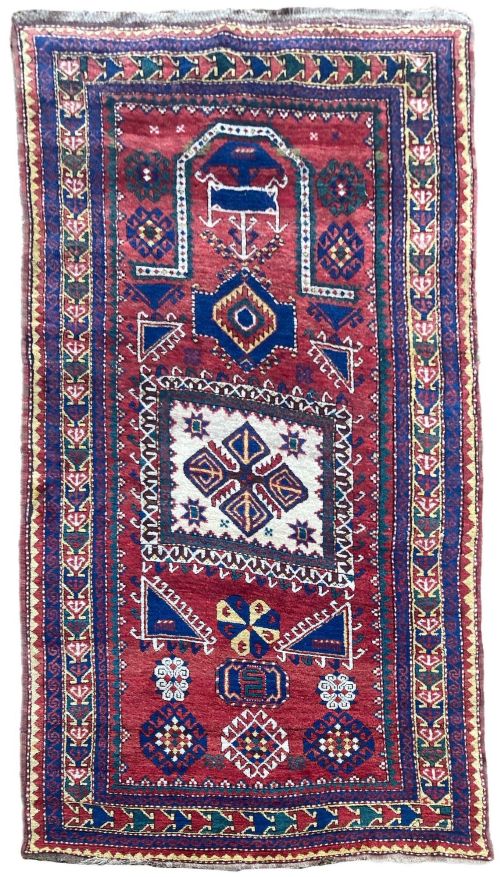
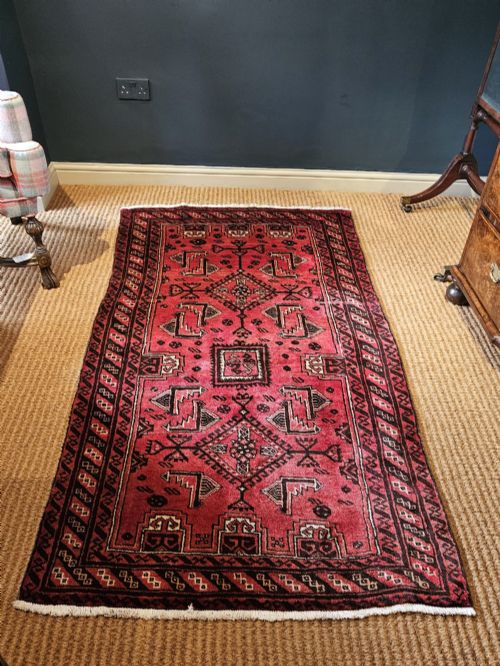


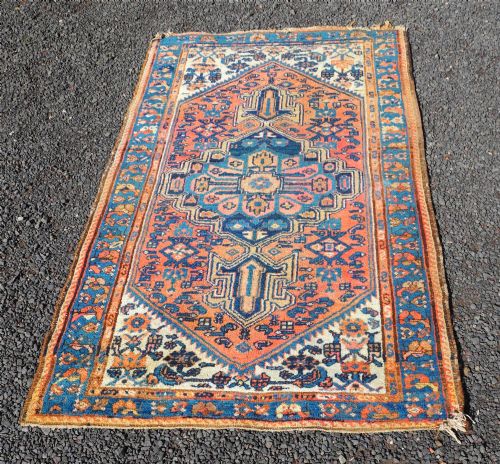

Hand Knotted Geometric Carpet
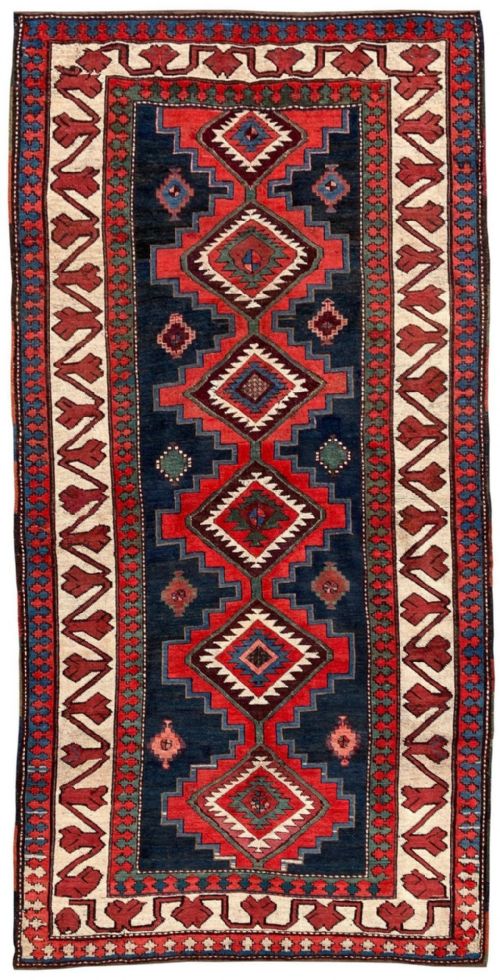
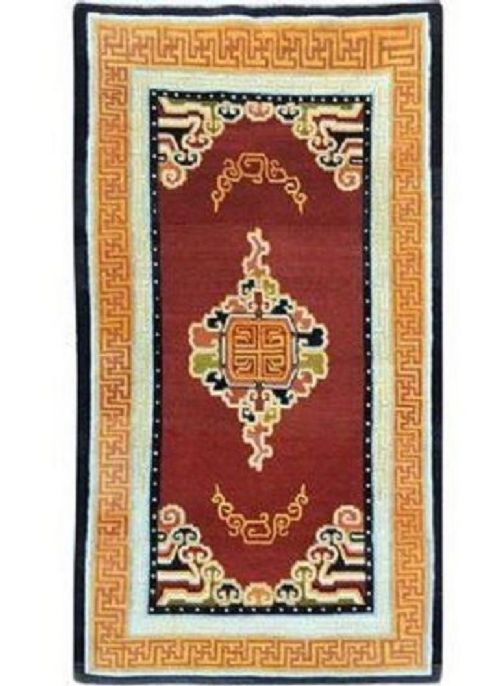
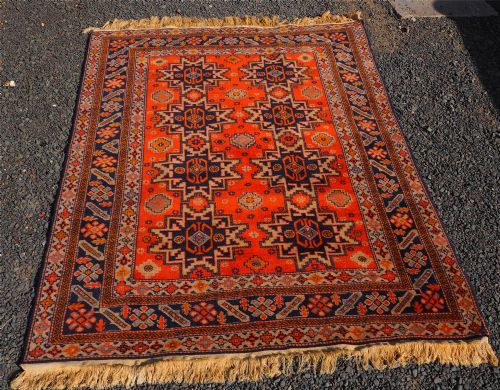
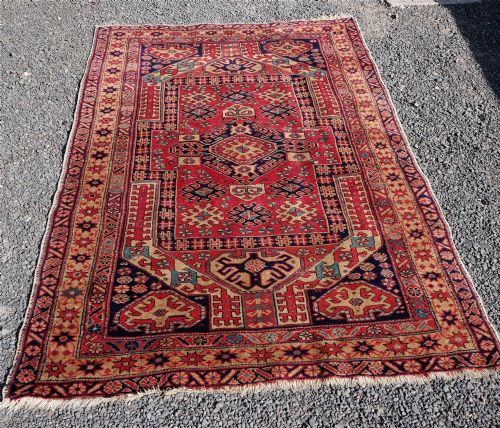
A hand knotted geometric carpet brings together tribal weavers and village workshops through structured medallions and repeating rectilinear motifs.
Hand Knotted Geometric Carpet
When you search for a hand knotted geometric carpet, you encounter floor coverings originating from nineteenth and early twentieth century traditions across Persia, the Caucasus, Anatolia, and Central Asia. The pieces appearing here span rug and runner formats, often created by specific tribal groups such as the Baluch, Turkmen, and Kurdish weavers.
You are most likely to meet village and tribal formats displaying traditional patterns rather than court designs. These range from compact prayer rugs to room-sized carpets carrying rectilinear medallions, all built for domestic use.
Materials and construction methods
The weavers utilised wool, hand-spun wool, and pure wool foundations alongside cotton, building resilience into every knot. Natural dyes provide the palette, creating deep reds, mellow tones, and contrasting accents that age gracefully across the surface.
The construction relies on manual knotting techniques passed down through generations of tribal and village workshops. Camel wool also appears in certain foundation elements, adding structural variety to the finished textile.
Current listings span periods from the nineteenth century through the 1930s, featuring wool, cotton, and natural dye materials.
Elements of distinction
The fineness of the knotting and the crispness of the geometric drawing dictate the refinement of a piece. Tighter execution allows intricate motifs to remain sharp and legible across the field.
The depth and complexity of the natural dye palette separate standard production from superior examples. Subtle variations in tone throughout the wool add visual movement that flat chemical dyes fail to replicate.
The Hand Knotted Geometric Carpet Glossary
- Mihrab
- A niche design symbolising a prayer gateway, commonly found oriented toward Mecca on specific rugs. This architectural motif directs the viewer's eye along the vertical axis of the textile.
- Gul
- A repeating octagonal medallion or floral motif associated with Turkmen and Baluch weaving traditions. Each tribal group arranges these secondary patterns in distinct grid formations.
- Runner
- A long, narrow carpet format designed for corridors, hallways, and staircases. These pieces balance repeated geometric borders with central field medallions.
- Natural Dyes
- Colourants derived from plants, roots, and minerals rather than synthetic compounds. These substances yield stable tones that develop a soft patina over decades.
Hand Knotted Geometric Carpet: Frequently Asked Questions
Where were these carpets made?
The pieces originate from traditional weaving centres across Persia, the Caucasus, Anatolia, and Turkmenistan.
Nomadic tribes and settled village communities produced them for daily domestic utility and regional trade.
How do I care for wool carpets?
Regular gentle vacuuming without a beater bar removes trapped grit from the wool pile. Professional cleaning maintains the natural lanolin in the hand-spun fibres.
Rotating the floor covering periodically ensures even wear in high-traffic hallways and living spaces.
What defines a prayer rug?
Prayer rugs feature a distinct mihrab niche design that indicates the orientation during devotional use. These compact formats were easily rolled and transported by nomadic families.
The directional layout distinguishes them from standard area rugs and runners intended for general floor placement.
How are tribal rugs identified?
Identification relies on specific structural characteristics, border arrangements, and characteristic medallion groupings like guls. Regional palettes and wool preparation also point toward particular groups such as the Baluch or Yomut.
Comparing knot direction and edge finishes helps separate Anatolian village work from Caucasian or Persian production.