

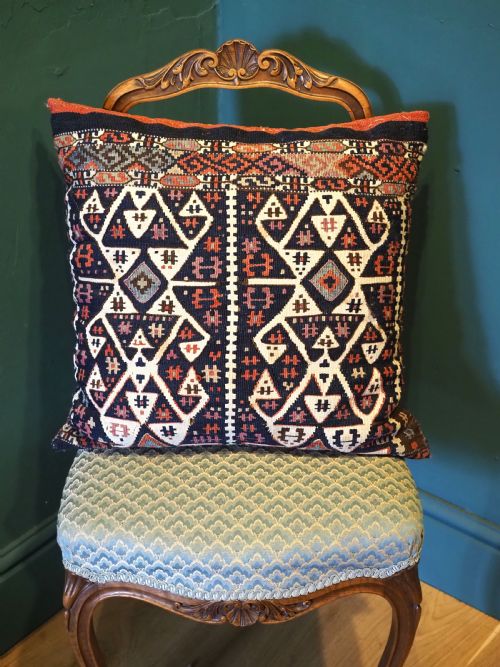


Navy Wool Flatweave
Navy wool flatweave rugs and textiles offer the rich patterns of tribal weaving traditions, bringing historic craftsmanship and durable floor coverings into modern rooms.
Navy Wool Flatweave
When you search for navy wool flatweave, you enter the diverse world of tribal and nomadic textiles originating from Persia, the Caucasus, Anatolia, and Central Asia. These pieces span the late nineteenth and early twentieth centuries, capturing the distinct aesthetic of regions such as Shirvan, Daghestan, and Khorassan.
The selections here encompass various functional forms, including kilims, runner rugs, area rugs, dining sofreh, and saddle bag faces. Tribal weavers produced these flatweaves without pile, resulting in a durable textile well suited for placement on floors or use as cushions.
The most common examples on this page reflect Persian tribal and Caucasian weaving styles, often displaying geometric motifs, chevron patterns, and banded designs. Each textile represents the domestic production of specific groups like the Baluch, Afshar, Yomut Turkmen, and Shahsavan.
Materials and construction methods
The foundational material across these listings is wool, frequently complemented by cotton for structural warps and wefts. Weavers utilised hand-spun wool, which provides texture and absorbs colour unevenly in a manner that creates subtle variations across the surface.
Colouring relied heavily on natural dyes and vegetable dyes, yielding deep indigo shades for the navy backgrounds alongside earthy tones. These organic colourants interact with the wool fibres to age gracefully over decades of light exposure.
Techniques vary from standard slit-tapestry flatweave kilims to complex soumak wrapping and banded weft work. These methods required considerable skill from the maker, particularly when executing intricate bird, dragon, or geometric motifs without the aid of a pile foundation.
Several pieces preserve the original plain weave backs of saddle bags, reminding us they once bounced across the steppes on the flanks of a camel.
Distinctions in quality
Quality in these flatweaves rests upon the tightness of the weave and the precision of the geometric execution. Tighter packing of the weft threads produces a firmer, more resilient textile that maintains its structural integrity over decades of use.
The sophistication of the dye palette and the depth of the indigo wool separate standard domestic items from finer tribal pieces. Natural dyes display a characteristic abrash, where the tone shifts subtly across the field, adding visual richness that chemical dyes lack.
The complexity of the design layout, such as fine banded details or well-drawn tribal motifs, indicates the weaver's proficiency. Well-proportioned borders and balanced symmetry reflect superior regional craftsmanship within traditions like Senneh or Shirvan.
The Navy Wool Flatweave Glossary
- Flatweave
- A textile produced without pile by interlacing warp and weft threads directly on a loom. This construction creates a thin, reversible rug that lies flat on the floor.
- Kilim
- A pileless tapestry-woven carpet or rug originating from regions spanning the Balkans to Central Asia. They often feature sharp geometric patterns formed by the slit-weave technique.
- Soumak
- A brocade-like flatweaving technique where decorative weft threads are wrapped around the warp threads before being passed back. This method creates a textured surface with raised patterns.
- Sofreh
- A flatwoven spread or cloth traditionally used for dining, kneading bread, or serving meals in Persian and nomadic households. They typically feature utilitarian yet artistic geometric compositions.
- Abrash
- Variations of colour within the same dye lot, appearing as horizontal bands or shifts in tone. This natural occurrence results from successive dye baths or changes in wool batches.
Navy Wool Flatweave: Frequently Asked Questions
How were these flatweaves used originally?
Nomadic and village communities utilised these flatweaves for multiple domestic purposes, ranging from floor coverings and tent furnishings to transport bags.
Items like saddle bags and sofreh served specific functional roles in daily nomadic life before entering the collector market as decorative textiles.
What is a soumak weave?
Soumak is a flatweaving technique where coloured weft threads wrap around the vertical warp threads in a herringbone or braided pattern.
This method produces a sturdier, thicker textile than a standard kilim and leaves floating threads on the reverse side.
How do I care for a wool flatweave?
Regular gentle vacuuming without a rotating brush roll prevents dust and grit from settling into the wool fibres.
Professional specialist cleaning is recommended for washing, and placing a quality rug underlay beneath the textile prevents slipping and reduces wear.
Are natural dyes easy to spot?
Natural and vegetable dyes display a characteristic softness and variation in tone that chemical dyes rarely replicate.
Indigo blues and madder reds derived from plants interact with wool to develop a rich patina as the textile ages.