

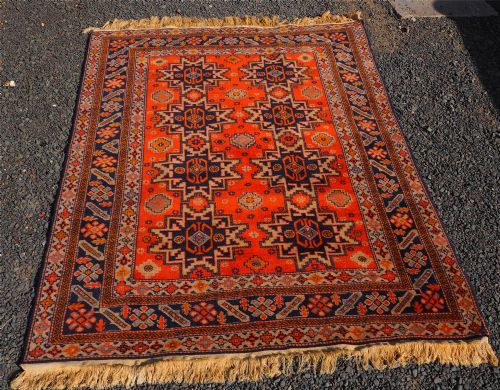
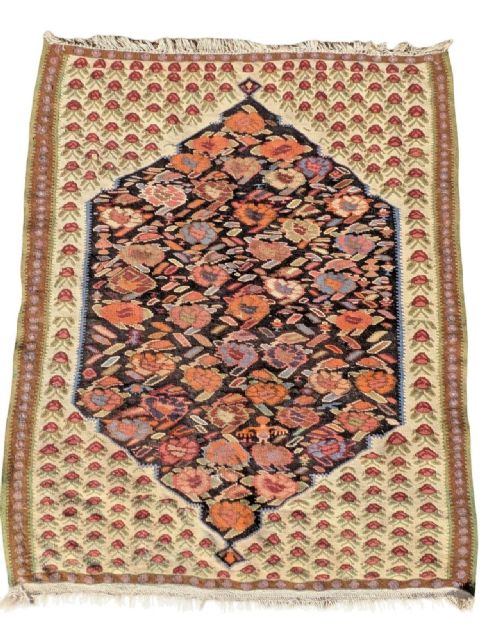
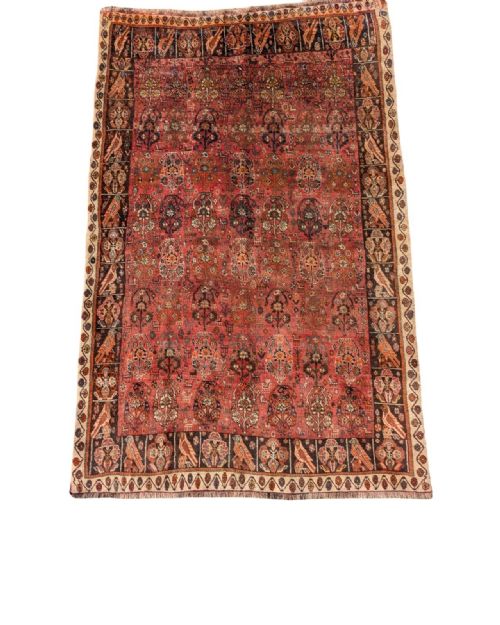
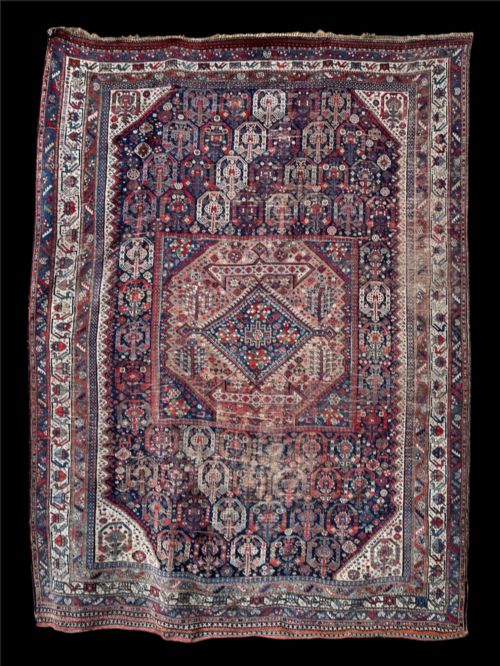
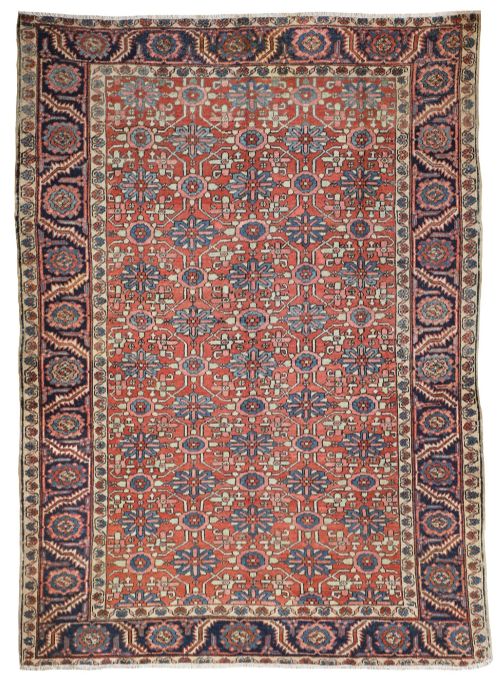
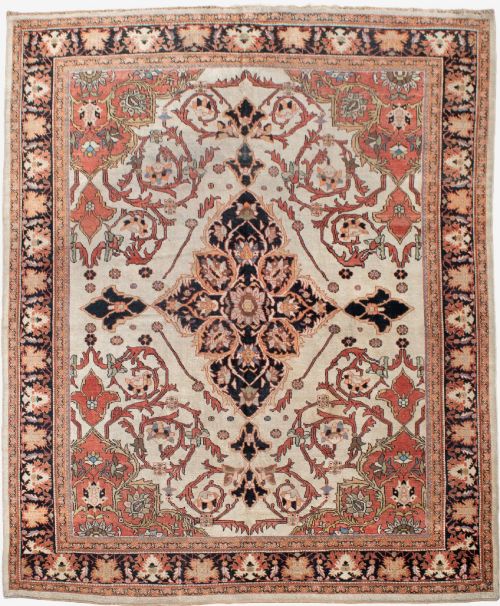
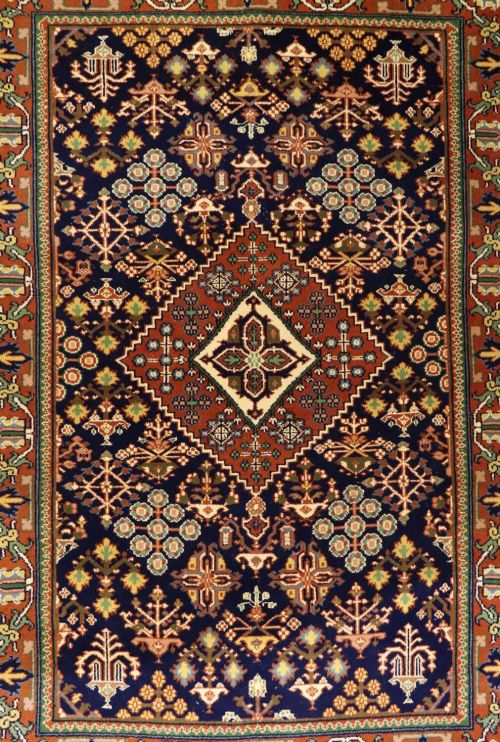
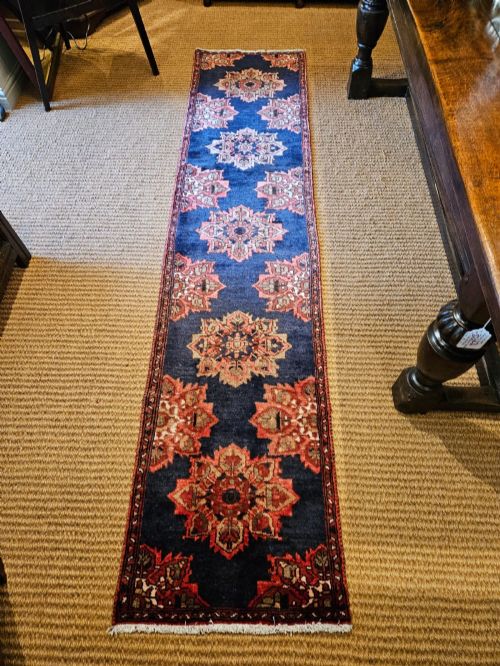
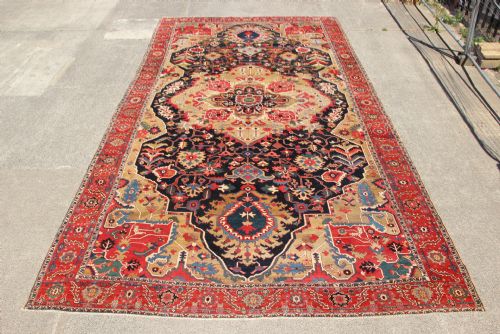
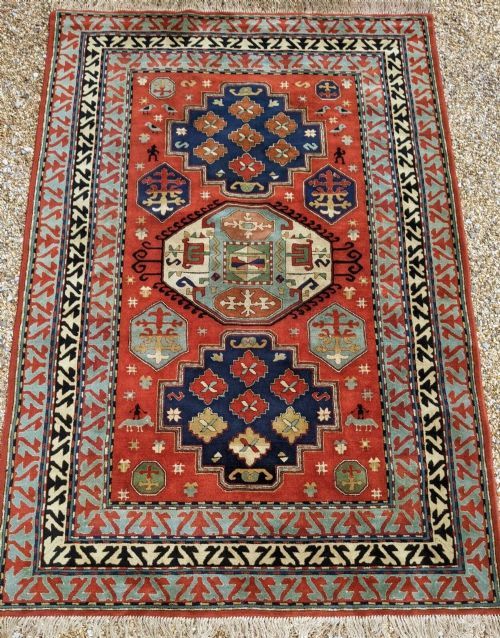
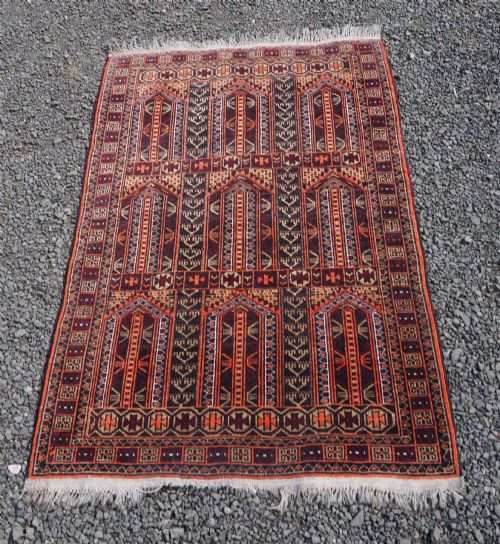
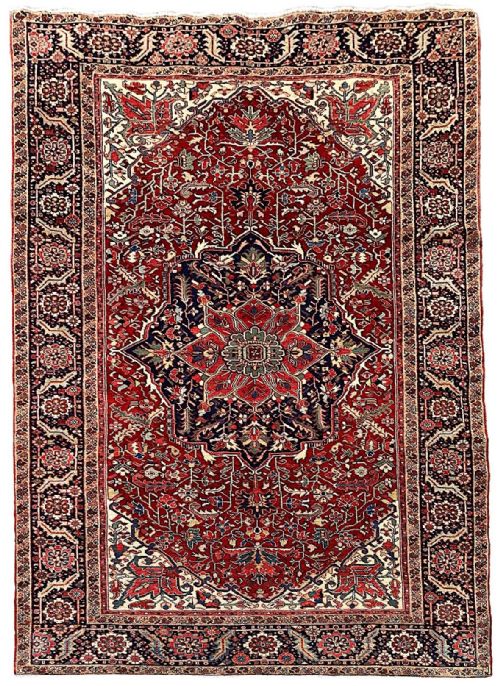
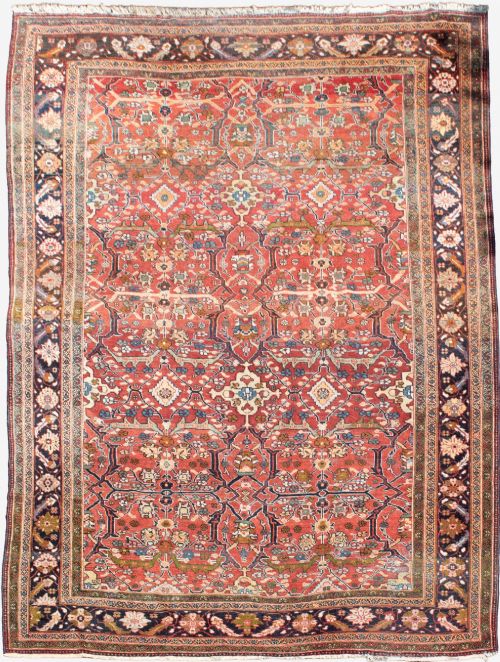
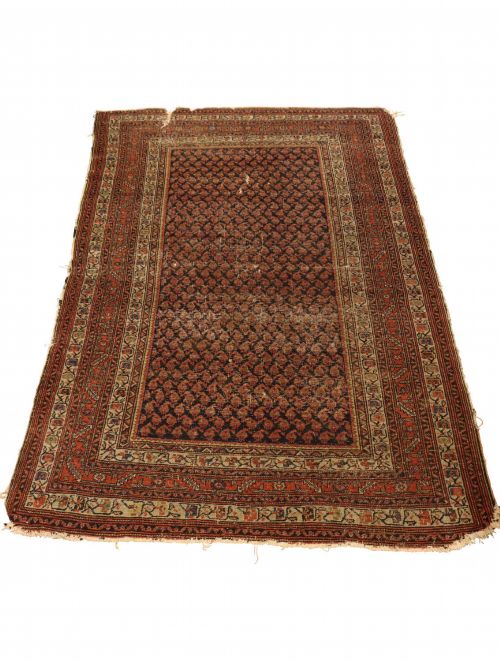
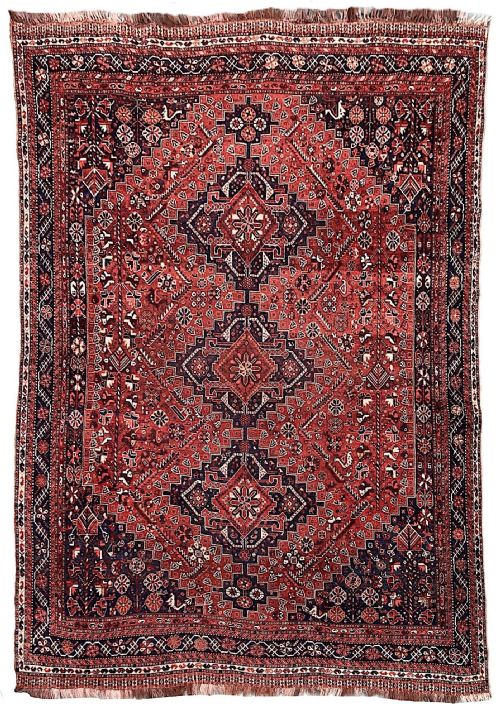
Navy Terracotta Wool Carpet
These heavy hand-knotted floor coverings in deep blues and warm earth tones anchor a room with enduring pattern.

Navy Terracotta Wool Carpet
A navy terracotta wool carpet encompasses hand-knotted room-size carpets, runners, and smaller rugs originating primarily from Persian and Caucasian weaving traditions. The examples found here date from the late nineteenth century through to the early decades of the twentieth century, reflecting traditional village and tribal designs.
Buyers will frequently encounter Heriz carpets alongside tribal pieces from the Khamseh, Qashqai, and Baluch groups. These pieces display distinct geometric medallions, all-over boteh motifs, and traditional tribal layouts executed in durable wool pile.
Formats range from expansive room-size carpets exceeding five metres to narrow runner rugs designed for hallways. The palette relies on deep indigo and navy grounds contrasted with terracotta, rust, and warm madder tones.
Materials and construction methods
These floor coverings utilise sturdy wool piles knotted onto cotton or wool foundations, ensuring a dense and resilient structure built to withstand generations of foot traffic. Hand-spun wool yarns absorb natural dyestuffs unevenly, creating subtle tonal variations across the field known as abrash.
Weavers employed either symmetrical Turkish knots or asymmetrical Persian knots depending on the regional workshop or tribal tradition. Selvedges are typically corded by hand to protect the edges, while ends are secured with various forms of kilim end-finish.
Listings feature nineteenth and early twentieth-century Persian and Caucasian wool rugs, including Heriz, Bidjar, and Malayer village weaves.
Distinguishing quality in older floor coverings
Knot density and the precision of the drawing dictate the refinement of a piece, with finer village and workshop carpets displaying crisper geometric outlines. The quality of the wool used in the pile determines the natural lustre and the longevity of the surface under heavy use.
The integrity of the structural foundation and the originality of the edges and ends influence the preservation state. Pieces retaining their full original dimensions and uncompromised pile represent the higher tier of survival for these nineteenth and early twentieth-century textiles.
The Navy Terracotta Wool Carpet Glossary
- Abrash
- Natural tonal variation within a single colour field caused by changes in dye batches or hand-spun wool lots.
- Boteh
- A stylised almond or pear-shaped motif representing a cypress tree or flame, commonly found in Persian weaving.
- Kelleh
- A long, rectangular format carpet, narrower than a standard room-size carpet but wider than a runner.
- Kilim
- A flat-woven textile section at the ends of a pile carpet that prevents the knots from unravelling.
- Medallion
- A large central ornamental design motif placed in the middle of the carpet field.
Navy Terracotta Wool Carpet: Frequently Asked Questions
How do I clean a wool carpet?
Regular gentle vacuuming without a rotating beater bar prevents dust accumulation in the pile.
Professional specialist washing is required for deeper cleaning to protect the natural wool fibres and dyes.
Can I place these rugs in heavy traffic areas?
The dense wool construction of these traditional pieces suits busy hallways and living spaces.
Using a quality underlay prevents slippage and cushions the foundation against premature wear on hard floors.
How do I date an older carpet?
Structural characteristics, palette composition, and wool texture help narrow the period of production.
Regional weaving techniques and specific design motifs also provide reliable clues to the era of manufacture.