


Navy Red Caucasian Carpet
When you search for a navy red caucasian carpet, you encounter hand-knotted tribal floor coverings originating from the nineteenth and early twentieth centuries.
Navy Red Caucasian Carpet
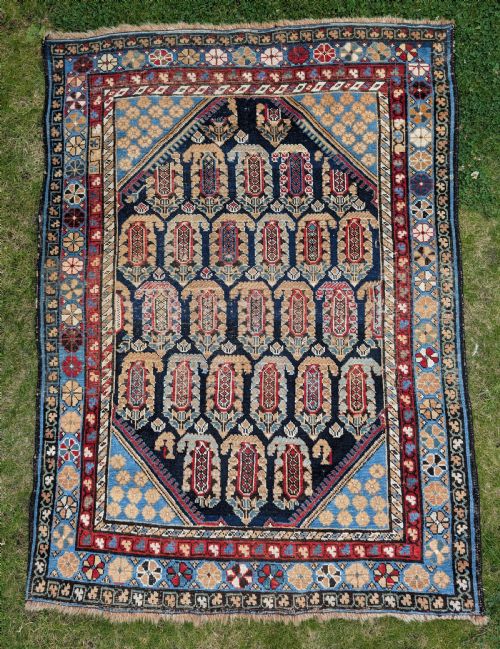
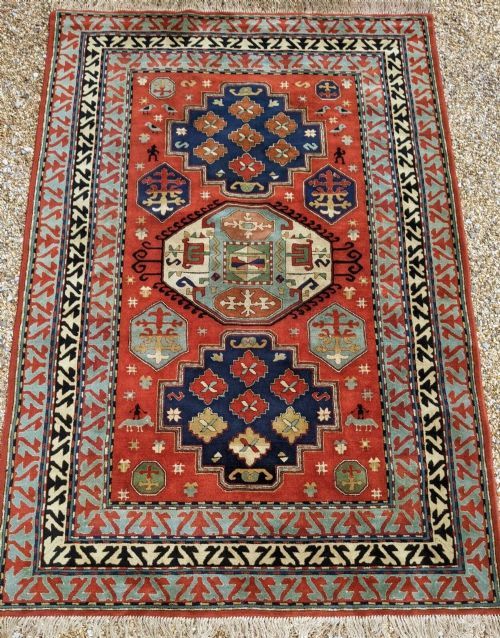
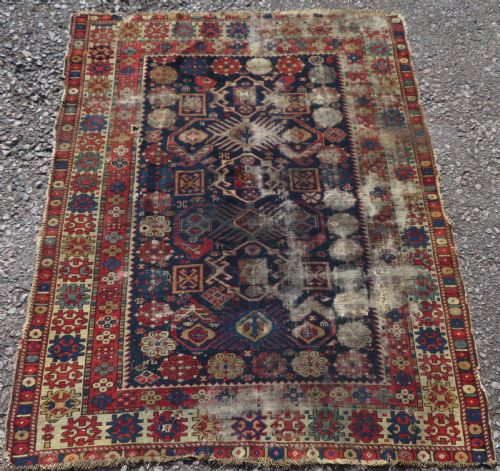
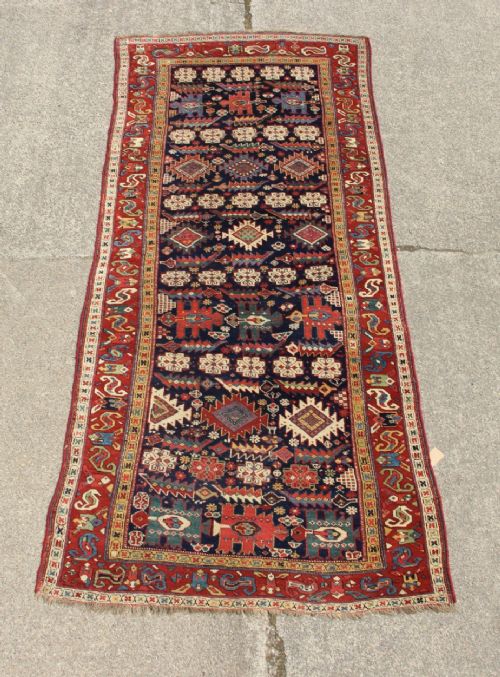
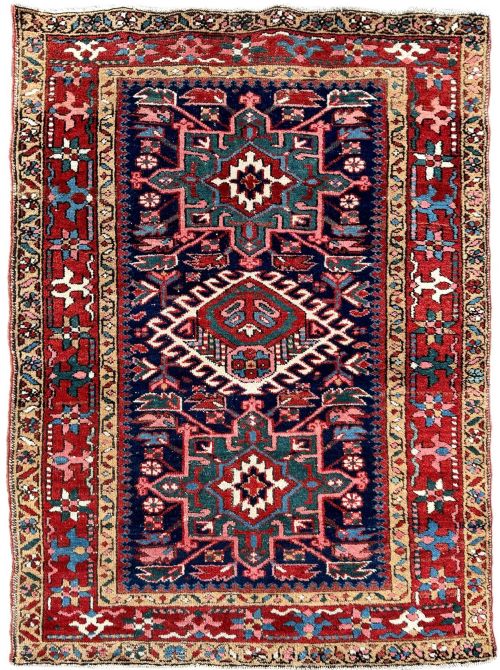
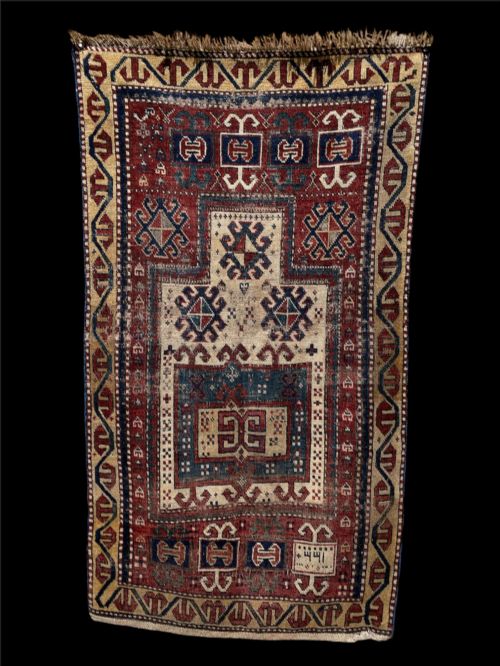
A navy red caucasian carpet brings together traditional regional weaving styles spanning rugs, long runners, and prayer rugs produced across the Caucasus and neighbouring areas. The selections available on this page reflect diverse nineteenth and early twentieth-century origins, including specific regional groupings such as Kazak, Shirvan, Kuba, and Karadja. These textiles serve as historical floor coverings that showcase distinct tribal patterns and geometric motifs.
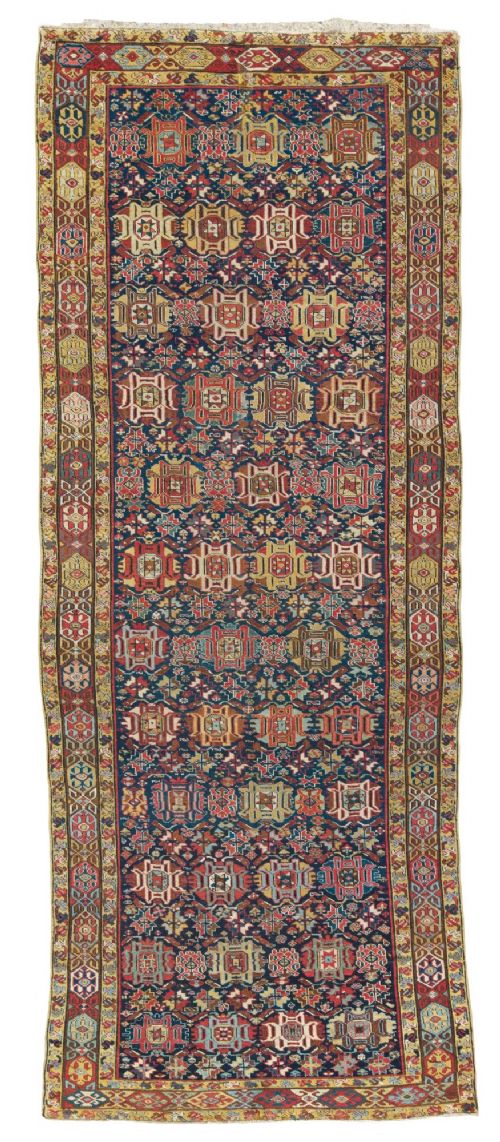
Buyers will find pieces dated from the mid-nineteenth century up to the 1930s, encompassing both room-size carpets and smaller saddle or prayer formats. The visual composition typically relies on contrasting navy and red tones arranged within medallions, lattice patterns, or striped boteh designs. Each piece reflects the specific aesthetic vocabulary of the weavers from areas like Daghestan, Gendje, and Karabagh.
Materials and construction methods
The construction of these textiles relies primarily on hand-knotted wool secured on cotton or wool foundations. Artisans utilised hand-spun wool for the pile, ensuring a dense and durable surface that withstands centuries of use.
Colour derives from natural and vegetable dyes, producing rich variations across the navy and red fields. The application of these traditional dyeing techniques yields the characteristic depth and muted patination observed in antique specimens.
Certain prayer rugs incorporate small animal and peacock figures hidden among the geometric lattices.
Evaluating quality and condition
Quality in these woven pieces rests upon the fineness of the knotting, the crispness of the geometric design, and the integrity of the foundation. Tighter knots and well-defined motifs indicate superior craftsmanship from skilled weavers.
The condition of the wool pile and the stability of the natural dyes further distinguish finer examples. Patination and light wear from age are expected, while structural soundness in the foundation separates robust carpets from fragile specimens.
The Navy Red Caucasian Carpet Glossary
- Medallion
- A central ornamental motif placed in the field of a carpet. This design element often anchors the geometric symmetry of tribal rugs.
- Boteh
- A stylised almond or pear-shaped motif of Persian origin. It appears frequently in repeating rows across nineteenth-century runners and carpets.
- Prayer rug
- A small format textile featuring a mihrab or arch design indicating the direction of prayer. These pieces were traditionally used for personal devotion.
- Soumak
- A flat-weave technique involving wrapping weft threads over the warp to create a durable, tapestry-like structure. This method results in a thick textile without a traditional cut pile.
- Hand-knotted
- A manufacturing process where individual strands of wool are tied by hand to the warp threads. This technique ensures long-term durability and intricate pattern detail.
Navy Red Caucasian Carpet: Frequently Asked Questions
How do I care for an antique wool rug?
Vacuum gently without a beater bar and keep the textile away from direct sunlight to protect the natural dyes.
Professional cleaning by a specialist in antique textiles is recommended every few years to preserve the wool pile.
Where were these carpets originally made?
Production centres span the Caucasus region, including areas such as Daghestan, Shirvan, Karabagh, and Kuba.
Additional pieces originate from nearby tribal territories in Northwest Persia and Anatolia.
What is the difference between a rug and a carpet?
Size defines the practical distinction, with smaller formats classified as scatter rugs, prayer rugs, or saddle covers.
Larger room-size floor coverings and long hallway runners are generally designated as carpets.
How can I tell the age of a piece?
Dating relies on stylistic markers, structural analysis, and the presence of early natural or vegetable dyes.
Nineteenth-century examples typically show softer colour maturation and specific regional weaving structures compared to later twentieth-century items.