


Navy Blue Hallway Runner
A navy blue hallway runner brings floor-level depth to long corridors through hand-knotted wool and botanical dyes.
Navy Blue Hallway Runner
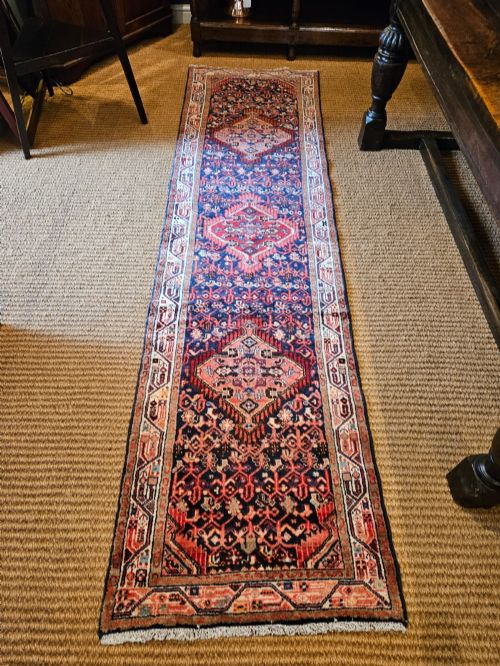
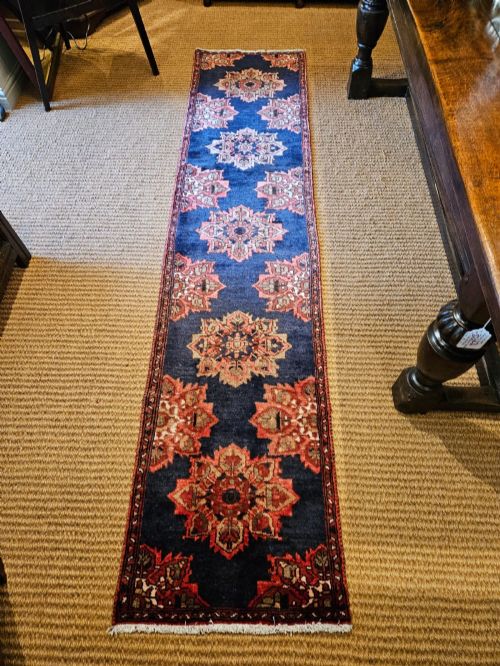
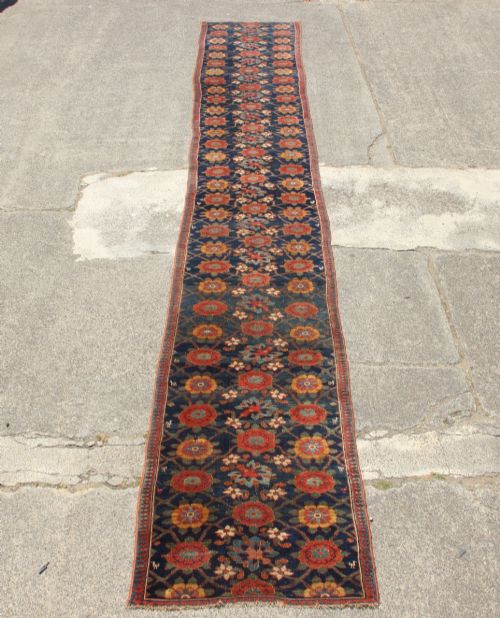
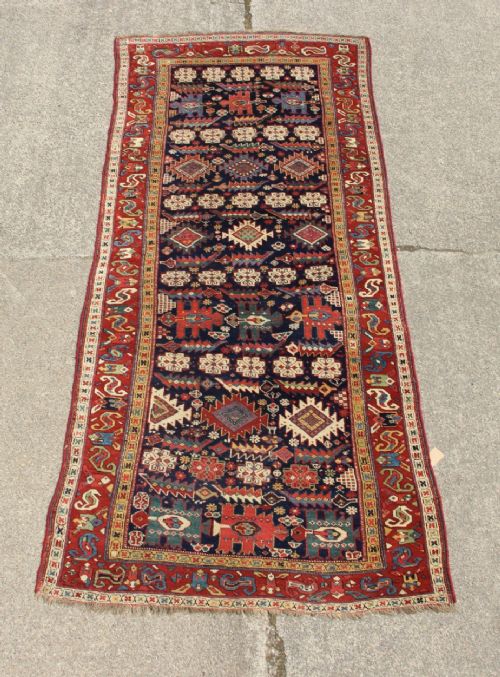
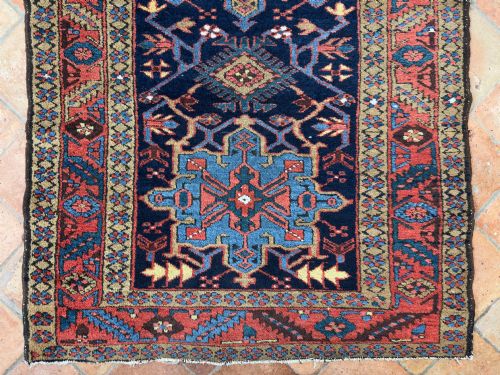
A navy blue hallway runner is a long, narrow floor covering designed specifically for corridors, passages, and narrow transitional spaces in period homes. When searching for a navy blue hallway runner, buyers encounter hand-knotted woolen pieces originating primarily from Persian and Caucasian weaving traditions dating from the late nineteenth and early twentieth centuries. These narrow carpets take the form of elongated tribal and village rugs that naturally suit the linear proportions of hallways.
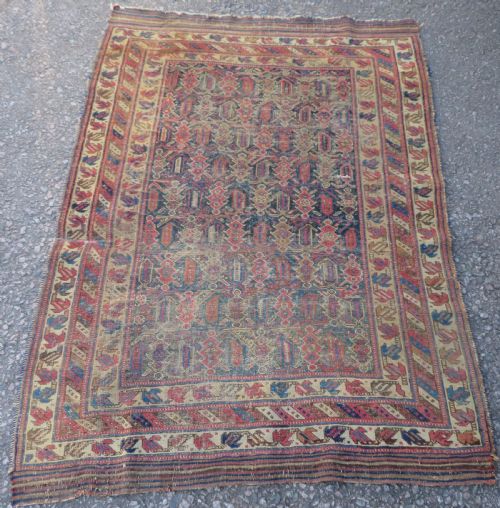
The selections available here draw heavily from established weaving regions such as Heriz, Bakhtiari, Karaja, and various Caucasian centres. Production spans from the eighteen-eighties through to the nineteen-thirties, reflecting the traditional hand-knotting techniques of Kurdish, Afshar, and Shahsavan makers. Most examples use durable wool foundations and pile, woven to withstand heavy foot traffic while providing deep indigo and navy ground colours.
What varies in quality
Knot density and structural integrity dictate the upper tier of these hallway runners, where finer wool and tighter packing create a resilient, durable pile. Superior examples maintain crisp geometric or curvilinear definition in their medallions and boteh motifs, showing deliberate planning by the weaver.
The quality of the organic dyes alters the visual longevity of the piece, with richer indigo grounds holding greater depth and saturation over decades of light exposure. Condition and original proportions also separate standard village pieces from finer workshop productions originating in regions like Ferahan or Sarouk.
Certain antique Caucasian runners incorporate surprisingly large peacocks standing proudly beside strict geometric star medallions.
The Navy Blue Hallway Runner Glossary
- Runner
- A long, narrow carpet format specifically woven to fit corridors, staircases, and narrow hallways.
- Boteh
- A stylised almond or paisley motif representing a floral spray or cypress tree, frequently seen in Persian and Caucasian weaving.
- Abrash
- Subtle tonal variations in the wool pile caused by differences in dye batches or hand-spun yarn lots.
- Warp
- The vertical threads stretched across the loom that form the foundational skeleton of the rug.
- Medallion
- A large central ornamental design element placed symmetrically in the field of the runner.
Navy Blue Hallway Runner: Frequently Asked Questions
How do I clean an antique wool runner?
Gentle surface brushing and careful professional immersion washing preserve the natural lanolin within antique wool pile. Avoid harsh chemical agents that strip organic dyes from the foundation.
Regular light vacuuming without a beating brush prevents grit from settling deep into the knot structure of nineteenth-century runners.
Will a narrow runner slip on hallway floorboards?
A breathable, high-friction underlay placed beneath the runner prevents movement on polished timber and stone flooring. This simple addition protects the wool foundation from excessive friction against hard surfaces.
Selecting a quality underlay also provides extra cushioning underfoot along busy entrance corridors.
How can I tell a Persian runner from a Caucasian one?
Persian runners generally feature curvilinear floral patterns, Herati motifs, and softer overall drawing executed in workshops or large villages. Examples include Heriz, Bakhtiari, and Ferahan productions dating around nineteen hundred.
Caucasian runners display sharper, more geometric medallions, hooked polygons, and starker colour contrasts. Pieces from regions like Kazak and Kuba show these stiffer, highly structured tribal designs.
Are nineteenth-century runners durable enough for daily use?
Hand-spun wool and dense knotting make these historical runners surprisingly resilient for high-traffic hallway environments. The natural oils in antique wool repel dirt and provide inherent structural strength.
Placing them away from direct continuous moisture ensures the foundation threads remain sound over decades of domestic footfall.