



Naval Ship Artwork
Naval ship artwork captures the drama of historic vessels on water, offering a direct view into maritime heritage through period paintings and prints.
Naval Ship Artwork
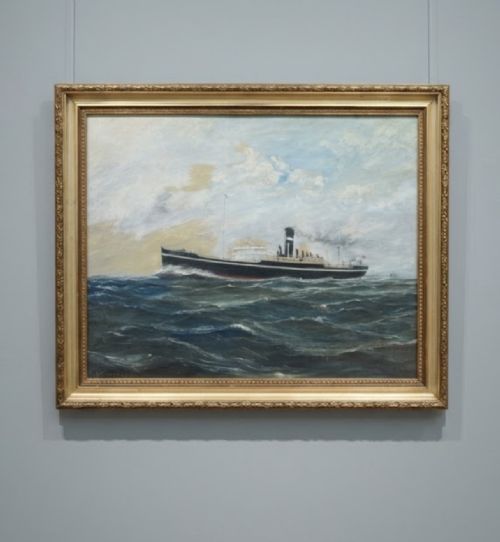
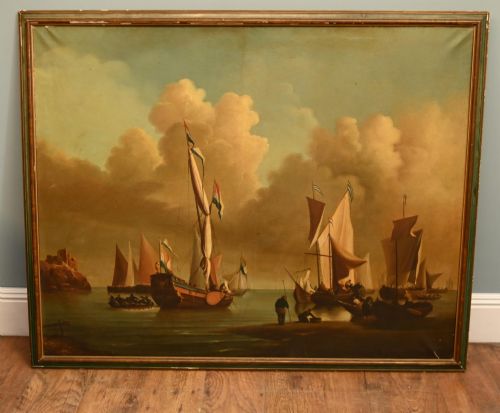
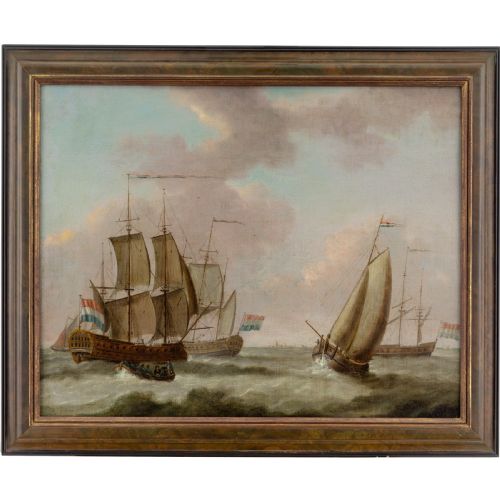
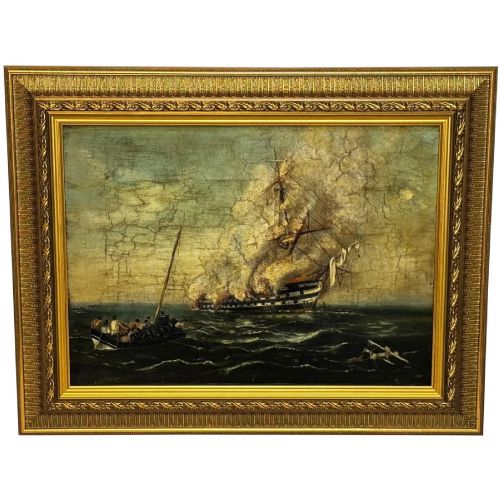
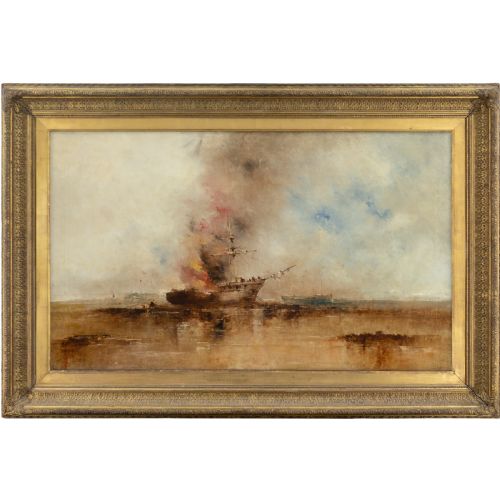
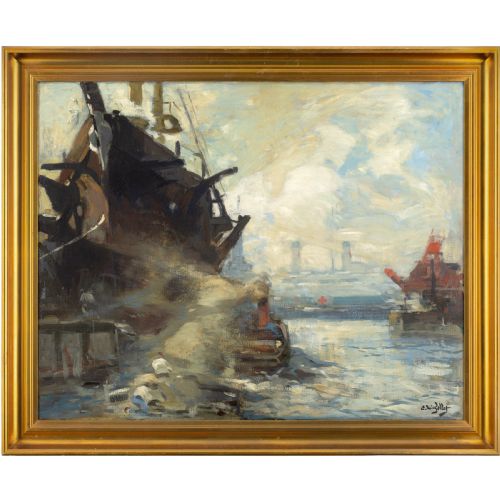
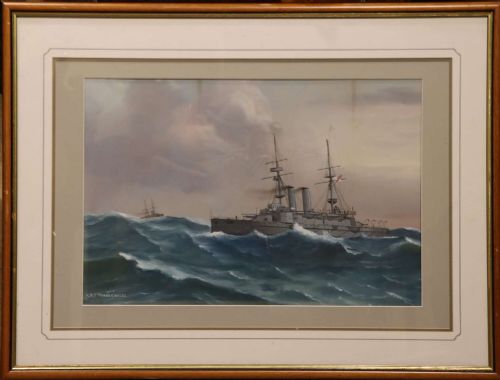
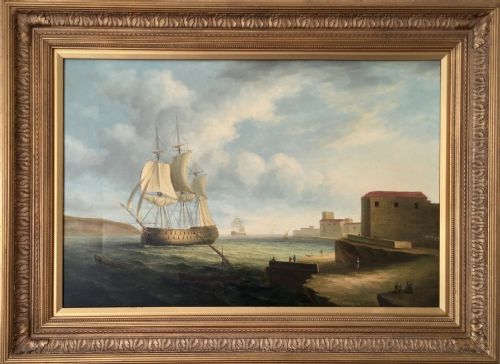
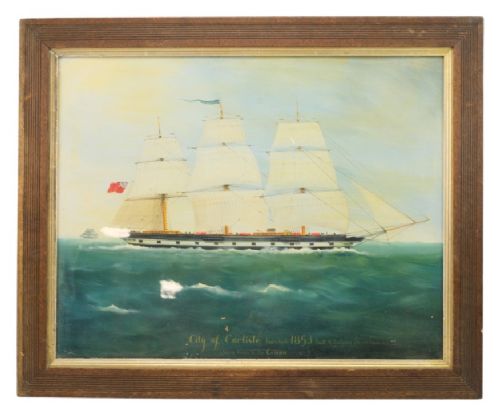
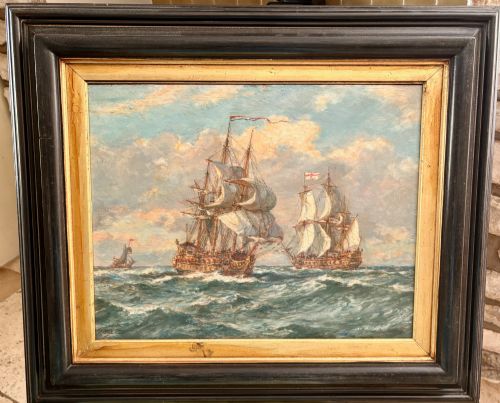
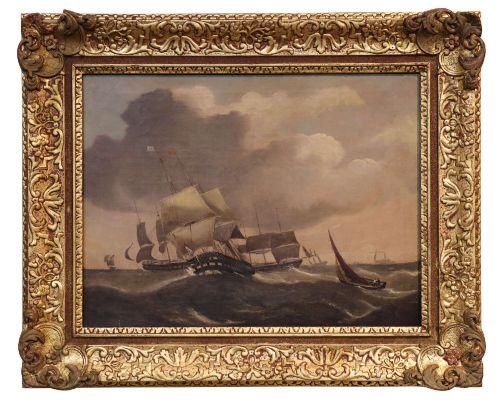
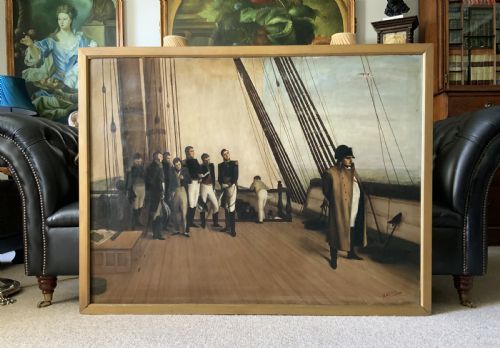
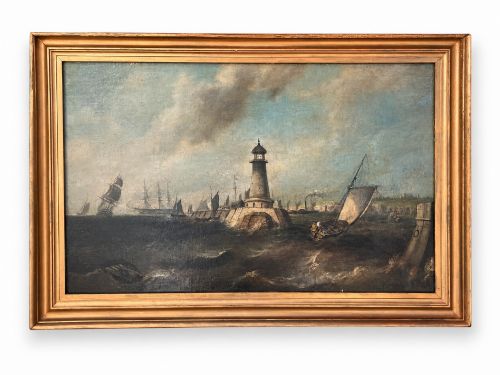
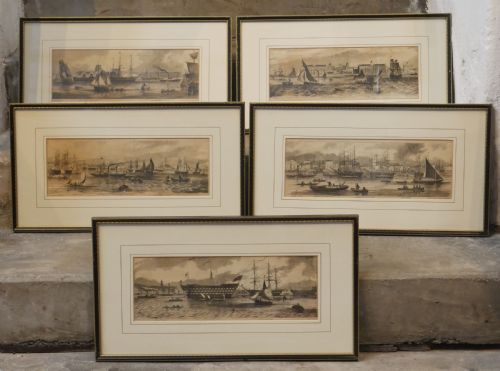
Naval ship artwork encompasses framed oil paintings, watercolours, gouache works, engravings and lithographs depicting warships, sailing vessels and fleet engagements. These pieces record specific naval vessels, historic actions and coastal scenes across several centuries of maritime history.
The selections available range from early eighteenth-century Dutch school canvases to Victorian marine watercolours and twentieth-century depictions of cruisers and aircraft carriers. Oil paintings on canvas and panel sit alongside detailed works on paper.
Works often document named vessels such as the HMS Prince of Wales, HMS Bombay or the royal yacht, placing the viewer directly into notable naval moments. Collectors find both professional gallery commissions and intimate sailor-made tributes.
How these pieces were made
Artists built compositions using oil paint on canvas or wooden panel, layering pigment to capture the shifting textures of sea and sky. Watercolours and gouache on paper allowed for swift, precise detailing of rigging, hulls and signal flags.
Framing typically involves period wood mouldings, often with giltwood finishes that complement the maritime subject matter. Engravings and lithographs relied on printed plates to reproduce detailed views of naval docks and fleet reviews for a wider audience.
Naval Ship Artwork Retail Price Guide 2026
Typical asking prices for naval ship artwork among the pieces listed under this phrase on Sellingantiques today, from the lower quarter to the upper quarter. They describe what is for sale here now, not the wider market.
Listings feature works spanning from the 18th century through to the 1960s, executed in oil, watercolour, gouache, and lithography.
What varies in quality
Quality rests primarily on the artist's command of maritime architecture and atmospheric conditions, separating masterwork depictions of rigging and wave movement from generic renderings. Contemporary documentation of specific vessels by named marine artists commands greater attention than anonymous studio copies.
The condition of the surface medium, whether stable oil pigment on canvas or well-preserved watercolour on paper, determines the visual strength of the piece. Original frames that suit the period of the artwork further elevate the piece.
James Hardy·Eugène-Louis Gillot·William McAlpine·Bernard Gribble·Nicholas Condy·Charles William Adderton·Eric Tufnell·Vincenzo D’Esposito·Dion Pears·Samuel Owen·Marie-Edouard Adam·Ebeneezer Colls·Charles Dixon·Frank Wood·William Langley·WF Mitchell·Frank Wasley
The Naval Ship Artwork Glossary
- Gouache
- An opaque watercolour paint that dries to a matte finish, frequently utilised for maritime works requiring sharp detail on paper.
- Giltwood
- Wood carved and covered with a thin layer of gold leaf, commonly found on traditional frames enclosing nineteenth-century marine paintings.
- Lithograph
- A print made from a design drawn on limestone or metal plate, used to produce multiple copies of naval scenes.
- Panel
- A flat wooden board used as a rigid support for oil paintings, often seen in works dating from the eighteenth century.
- School
- A group of artists working in a similar style or region during a specific period, such as the Dutch School.
Naval Ship Artwork: Frequently Asked Questions
What subjects do naval ship artworks show?
The pieces depict named warships, historic sea battles, royal yachts and quiet anchorages across different maritime eras.
Artists recorded specific vessels like the HMS Bombay alongside general scenes of merchant shipping and naval fleets at sea.
How are these marine paintings usually framed?
Many examples feature period wooden frames, occasionally with giltwood detailing that matches the traditional aesthetic of maritime art.
Watercolours and works on paper are typically mounted under glass within period frames to protect the delicate surface.
Can I find works by named marine artists?
The selection includes signed and attributed works by established marine painters from the nineteenth and twentieth centuries.
Signatures, exhibition labels and documented provenances help connect specific pieces to known artists and naval historians.
How do I identify the period of a piece?
Dating relies on the ship types depicted, such as three-masted schooners, ironclad battleships or twentieth-century carriers, matched with the artist's active dates.
Materials like nineteenth-century canvas supports or early paper types also provide clear clues to the age of the artwork.