



Nautical Weather Instrument
A nautical weather instrument brings the precision of maritime tradition into your home, offering a reliable gauge of atmospheric pressure housed in rich timber and brass.
Nautical Weather Instrument
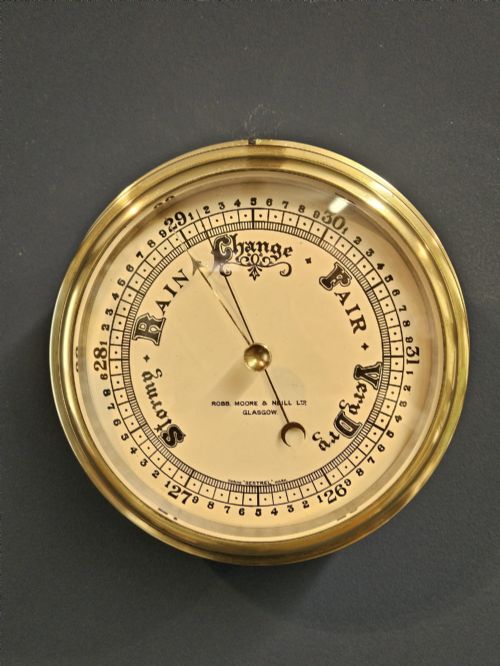
A nautical weather instrument represents the essential tools used at sea to measure atmospheric changes, with barometers and maritime clocks forming the core of the selection.
Buyers searching for a nautical weather instrument will most frequently encounter Victorian examples, alongside Edwardian and early twentieth century pieces.
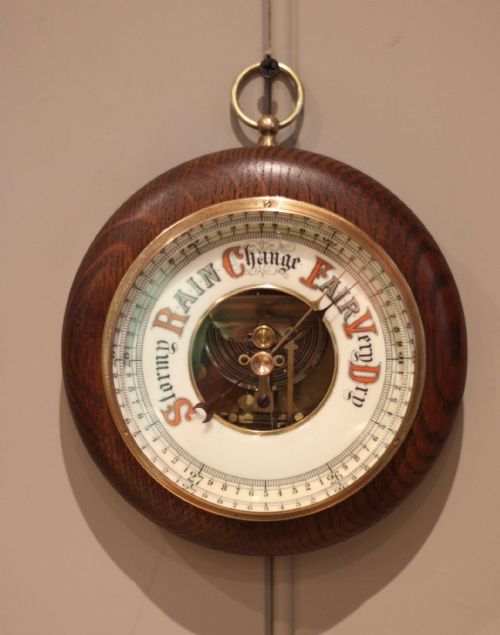
Forms range from wall-hanging marine stick barometers and banjo clock barometers to circular aneroid models and cased typhoon barometers.
Origins span Georgian foundations through Victorian maritime developments up to 1930s bulkhead pairs.
How they were made
Maker workshops utilised dense hardwoods such as mahogany, oak, walnut, rosewood, and general timber to construct robust cases capable of enduring marine environments.
Dials and sensitive internal mechanisms were protected beneath thick glass faces, paired with legible enamel scales and polished brass bezels.
Metal components involved heavy brass castings alongside occasional chrome finishes on later bulkhead pairings.
Nautical Weather Instrument Retail Price Guide 2026
Typical asking prices for nautical weather instrument among the pieces listed under this phrase on Sellingantiques today, from the lower quarter to the upper quarter. They describe what is for sale here now, not the wider market.
Early twentieth century mariners relied on specialised typhoon barometers to outrun tropical tempests.
What varies in quality
Distinction across the range lies in the calibre of the movement and the reputation of the maker, moving from standard commercial house barometers to signed precision instruments.
Cabinetwork quality separates ordinary production from superior pieces, demonstrated by crisp carving on walnut frames and fine joinery on marine stick cases.
The sophistication of the mechanism itself dictates the tier, visible in specialised instruments like hypsometers and barocyclinometers compared to domestic aneroid dials.
Elliott Brothers·Negretti and Zambra·James Murray·Gowland London·Bate of London
The Nautical Weather Instrument Glossary
- Aneroid barometer
- An instrument that measures atmospheric pressure without liquids by using an expanding metal capsule. This design allowed barometers to become more compact and suitable for domestic or shipboard wall mounting.
- Marine stick barometer
- A tall, mercury-filled barometer traditionally gimbaled for use at sea. The long wooden trunk houses the tube and a vernier scale for precise readings.
- Hypsometer
- A scientific instrument used to determine altitude by measuring the boiling point of a liquid. It relates atmospheric pressure changes to height above sea level.
- Bulkhead clock
- A clock designed to be mounted directly to the interior wall of a ship cabin. They are frequently paired with matching aneroid barometers.
- Barocyclonometer
- A specialised meteorological instrument designed in the tropics to track cyclonic storms and typhoons. These complex dials help anticipate severe weather developments.
Nautical Weather Instrument: Frequently Asked Questions
How do I read a marine stick barometer?
Read the height of the mercury column against the scale, using the adjustable vernier to measure fractions for precise barometric pressure changes.
Rising mercury generally points toward settled weather, while falling levels suggest approaching wind or rain.
Where should I hang a wooden banjo barometer?
Mount the instrument securely to an interior wall away from direct sunlight, radiators, and heavy vibrations to protect the internal wooden case and mechanism.
Hallways or studies make ideal locations where ambient temperatures remain relatively stable.
What is the difference between an aneroid and a stick barometer?
Stick barometers rely on an open column of mercury in a glass tube, whereas aneroid barometers use a sealed flexible metal box that expands or contracts with pressure. Aneroid versions are safer for travel and easier to mount in various domestic settings.
How do I date a Victorian brass and wood barometer?
Examine the wood selection, dial typography, and maker signatures, as Victorian pieces often feature rich walnut or rosewood framing paired with detailed brass bezels. Makers active during the nineteenth century frequently stamp or engrave their workshops directly onto the enamel face.