



Nautical Maritime Decor
Nautical maritime decor brings the physical history of sea travel directly indoors, drawing on centuries of ship models, paintings and navigational gear.
Nautical Maritime Decor
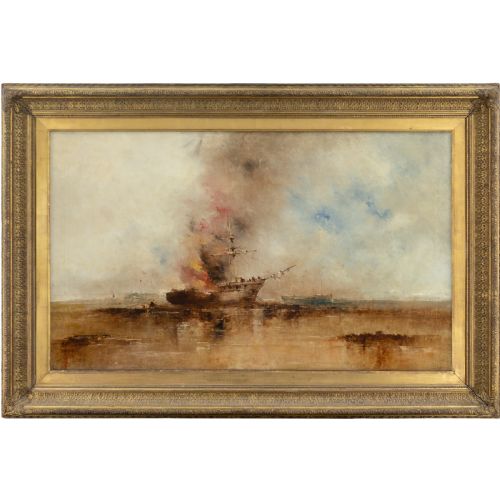
Nautical maritime decor encompasses functional sea-going equipment, marine art and detailed ship models produced across multiple centuries. Buyers searching for nautical maritime decor encounter everything from oil paintings of historic sea battles to utilitarian brass port holes and wooden pulley blocks.
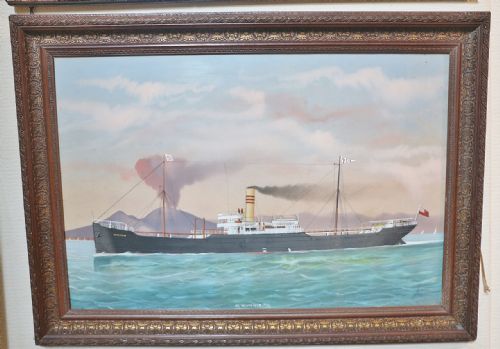
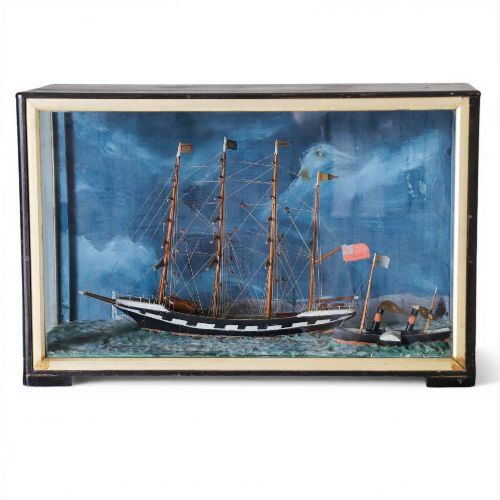
The pieces on this page lean heavily toward Victorian and Edwardian works, alongside interwar models and mid-century canvases. Large pond yachts, folk art dioramas and framed oil portraits dominate the selection available to collectors.
Materials and construction methods
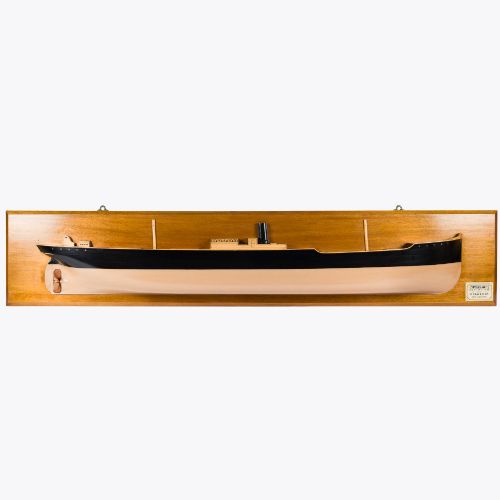
Makers utilised durable natural materials suited to life at sea, translating hardwoods, brass, glass and canvas into domestic objects and precision models. Wood forms the structural basis for carved pond yachts, scratch-built model hulls and elm pulley blocks.
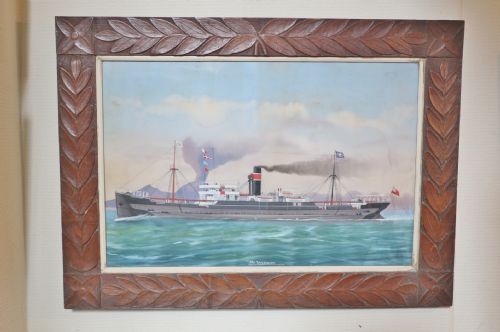
Metals such as brass, bronze and nickel plating appear in navigational instruments, signal cannons and heavy port holes. Oil paintings employ canvas and panel supports, often finished with detailed brushwork recording specific vessels and coastal engagements.
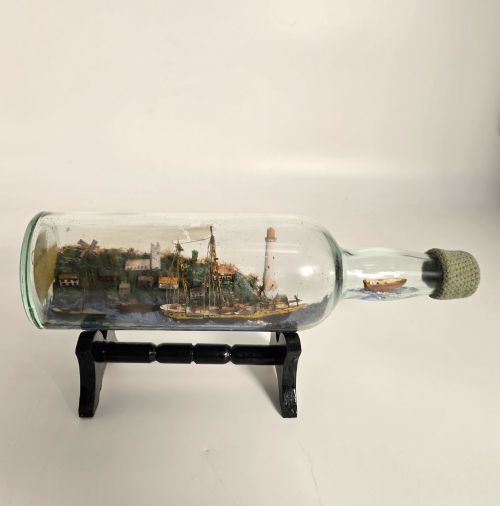
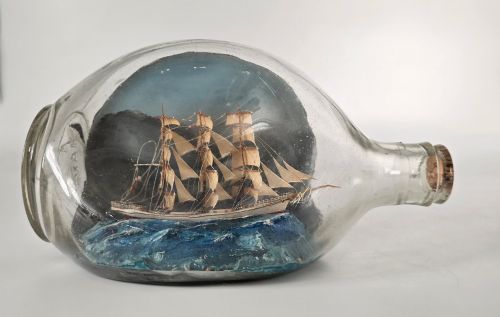
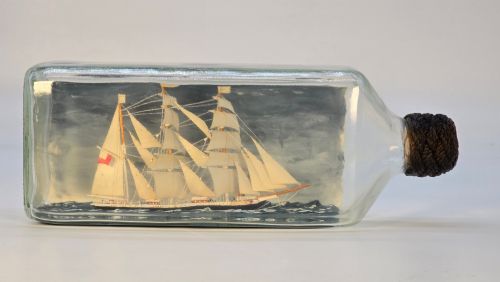
A tiny wooden sailor inside a glass bottle spent a century staring exclusively at a cork.
Assessing craftsmanship and condition
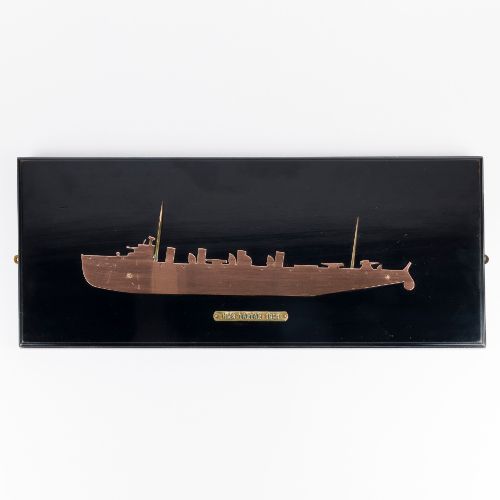
Quality rests in the precision of the scaling and the fidelity of the maker to actual maritime architecture. Hand-carved hulls, accurate rigging on model ships and signed oil portraits command greater attention than mass-produced decorative items.
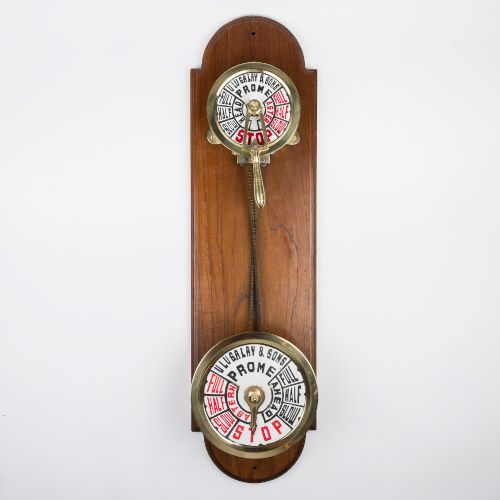
The integrity of surface materials defines the appeal of older pieces, whether retained original paint on a ship's wheel or patinated brass on an engine room telegraph. Wear acquired through genuine use or age sits differently on each object, influencing how its historical context reads.
James Hardy·William McAlpine·Lemuel Francis Abbott·Ulugary & Sons·W. Grey & Co·Dion Pears
The Nautical Maritime Decor Glossary
- Diorama
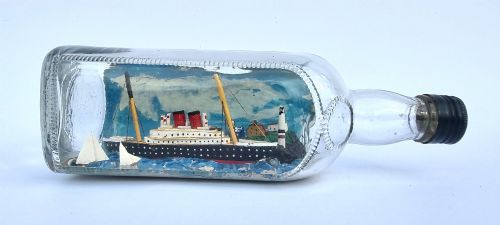
- A three-dimensional scene enclosed in a case, frequently used in maritime folk art to display model ships inside glass bottles.
- Port hole
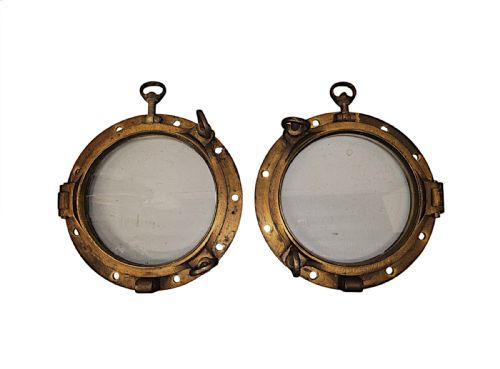
- A heavy circular window fitted to the side of a ship to let in light and air, commonly framed in brass.
- Pond yacht
- A large model sailing boat designed for recreational use on park ponds, often constructed with a wooden hull and cloth sails.
- Ketch
- A two-masted sailing vessel rigged with a mainmast and a shorter mizzenmast positioned forward of the rudder post.
- Pulley block
- A wooden or metal housing enclosing one or more pulleys, used aboard ships to change the direction of a tensioned rope.
Nautical Maritime Decor: Frequently Asked Questions
How do I date an antique ship model?
Dating relies on construction methods, materials and the specific rigging style of the vessel. Comparing the hull build against known historical ship designs narrows the period of origin.
Makers often employed specific woods and fasteners characteristic of their decade, such as early nineteenth-century brass fittings or later twentieth-century adhesives.
Were pond yachts meant for actual sailing?
Large pond yachts were constructed with weighted keels and functional rudders specifically designed for sailing on open water. Owners trimmed the sails to navigate across park ponds without human intervention.
Many retain the scars of active use on the water, showing minor bumps on the wooden hulls.
What is a diorama ship in a bottle?
A diorama ship in a bottle is a folk art piece where a miniature sailing vessel is constructed on a hinge or assembled inside a glass container. The masts fold flat to pass through the narrow neck and lift upright using attached strings.
Craftsmen often added painted sea backgrounds and cork stoppers to complete the enclosed maritime scene.
How should I display heavy brass port holes?
Brass port holes carry substantial weight due to their thick metal frames and glass panes, requiring secure wall anchoring. Mounting them directly into wall studs ensures stable support for the heavy hardware.
They function well as decorative architectural accents or converted mirrors within a room.