




Nautical Harbour Wall Art
Nautical harbour wall art captures bustling quaysides, anchored vessels, and tidal havens through historic paintings, watercolours, and prints.
Nautical Harbour Wall Art
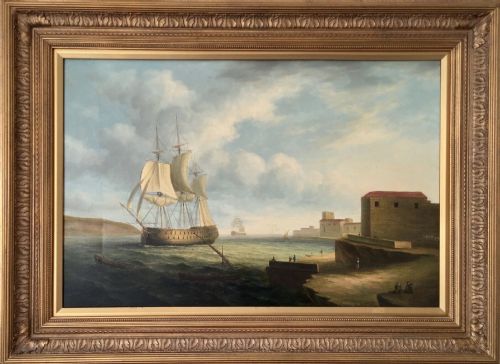
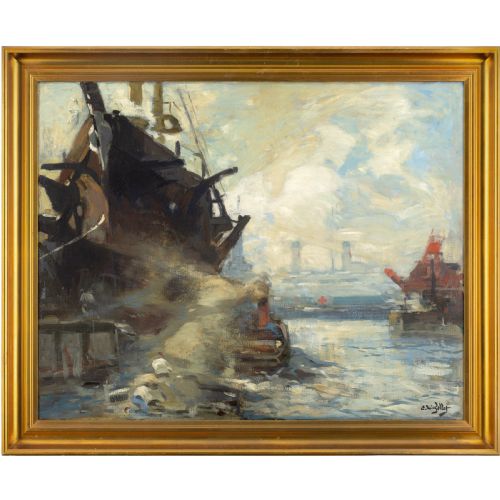
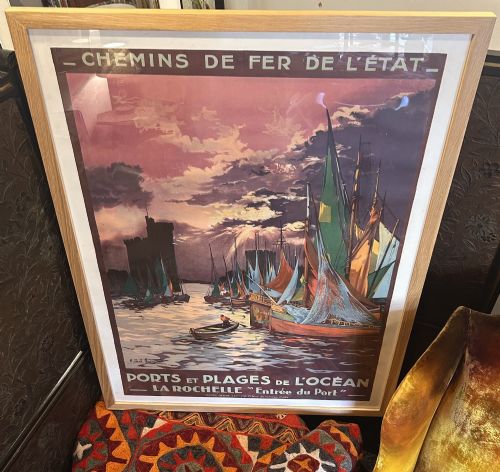
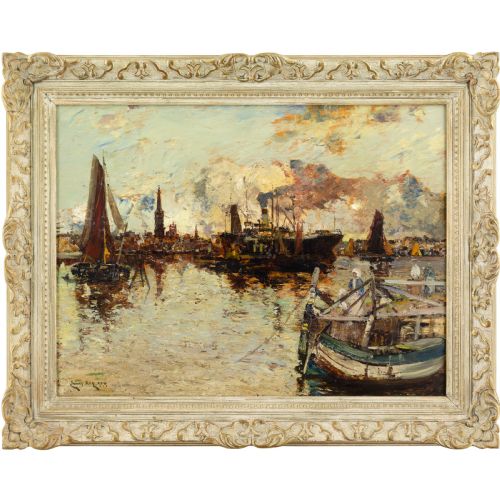
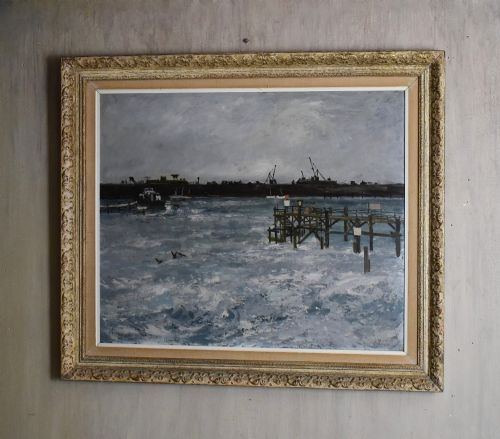
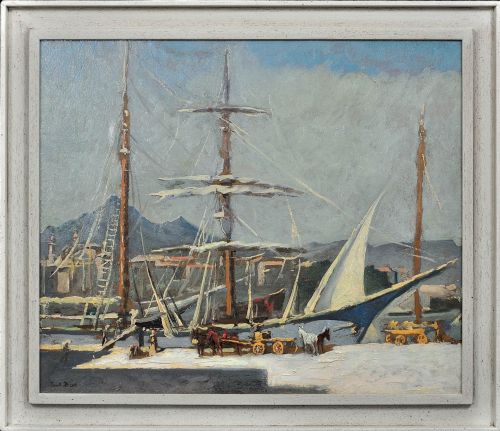
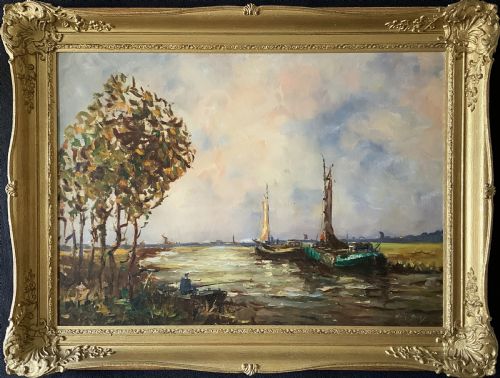
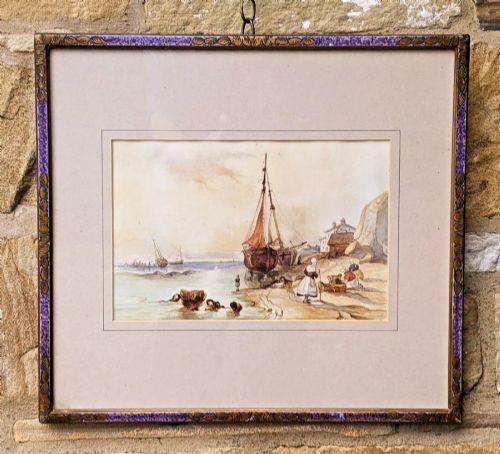
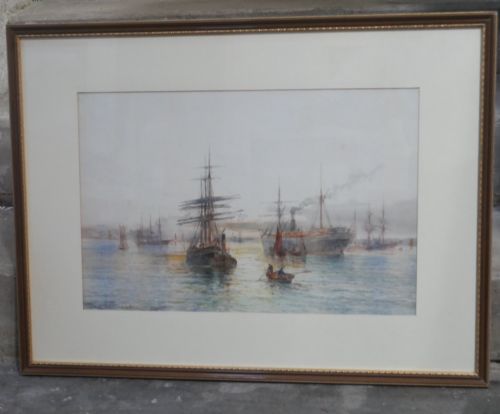
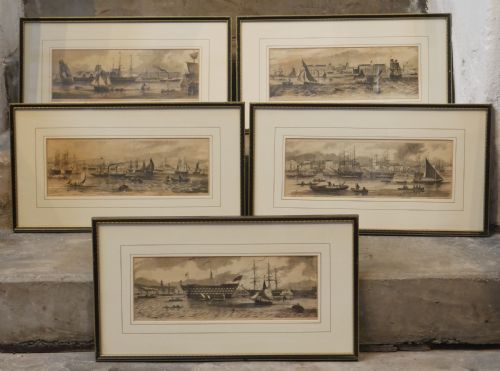
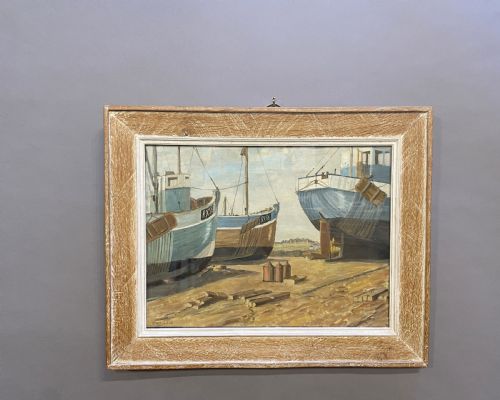
When you search for nautical harbour wall art, you encounter visual records of maritime life spanning from the nineteenth century into the mid twentieth century. The selections available on this page include oil paintings on canvas and board, delicate watercolours, and period posters depicting specific ports, fishing boats, and naval yards.
Most examples originate from British and European coastal contexts, capturing busy scenes from locations such as Portsmouth, Whitby, and various continental harbours. The dominant forms take the shape of framed artworks and fine art paintings that document working ports and coastal architecture.
How they were made
Artists working within this genre relied primarily on oil paint applied to canvas, wood panels, or board to capture the shifting light and heavy textures of maritime scenes. Alternatively, watercolour on paper allowed creators to achieve lighter, translucent washes representing sea spray and open skies.
Support materials range from traditional stretched canvas to sturdy paper and wood, frequently paired with period framing techniques including hand enamelled polychrome surrounds or glazed mounts.
Listings span the 19th Century alongside the 1900s, 1910s, 1920s, 1930s, 1940s, 1950s, and 1960s.
What varies in quality
The distinction between standard works and exceptional pieces rests upon the artist's command of atmospheric light, topographical accuracy, and the handling of water and vessels. Superior compositions demonstrate a confident interplay between the solid geometry of harbour walls and the fluid motion of the tide.
Condition and originality further define the tier of a piece, particularly regarding the preservation of the original pigments, the integrity of the support material, and the historical suitability of the accompanying frame.
James Hardy·Kenneth Cozens·Eugène-Louis Gillot·John E. Aitken·James Kay·Peter Brannan·Paul Bret·Willem Bos·Commander Eric Tufnell·Richard Harry Carter·William Lee Hankey·Thomas Bush Hardy·Owen Bowen·Samuel Owen·Ernest F. Hill·William Wyld·George Gregory·John Callow·Gustave de Breanski·William Kay Blacklock·Rowland Henry Hill·Herbert Royle·Fred Mayor·Thomas Clavering Alder
The Nautical Harbour Wall Art Glossary
- Watercolour
- A painting method in which the paints are made of pigments suspended in a water-based solution. This technique produces luminous, translucent effects well suited to coastal light and open water.
- Maritime
- Pertaining to the sea, shipping, and navigation. The term covers both military and commercial vessel depictions alongside shore-based harbour views.
- Lugger
- A small two- or three-masted fishing vessel rigged with standing lugsails. These working boats frequently appear in nineteenth and early twentieth century coastal scenes.
- Panel
- A rigid flat surface used as a support for painting instead of stretched canvas. Wood is the most common material found in these listings.
Nautical Harbour Wall Art: Frequently Asked Questions
What periods do these harbour scenes cover?
The available artworks predominantly span from the nineteenth century through the 1960s. This includes Victorian maritime pieces as well as later mid-twentieth-century interpretations.
Creators from the Edwardian era and the interwar decades are particularly well represented among the current selection of oil paintings and watercolours.
How should I frame and hang these watercolours?
Watercolours require protection from direct sunlight to prevent fading of the delicate pigments on paper. Framing behind conservation-grade glass helps preserve the condition of the paper and any historic mounts.
Positioning them away from damp exterior walls ensures the paper support remains stable over time.
How do I identify different types of vessels in the paintings?
Coastal scenes often feature working craft specific to their region, such as West Country trawling luggers or local fishing boats. Rigging styles, hull shapes, and the presence of steam or sail help distinguish between eras and vessel functions.
Background structures like dockyards and naval installations provide further context for the specific harbour depicted.