

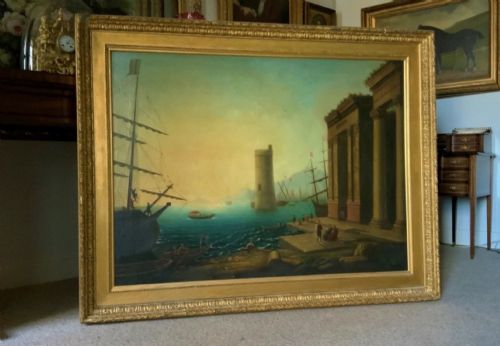
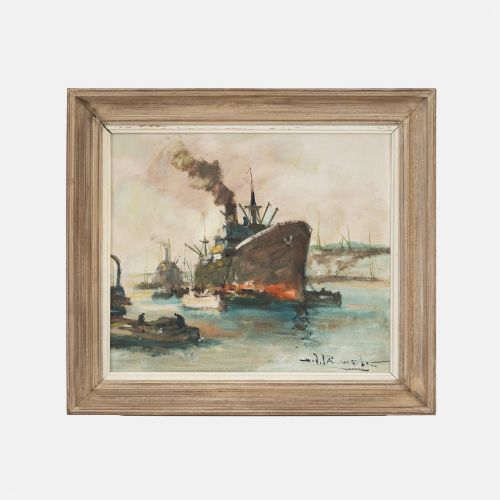
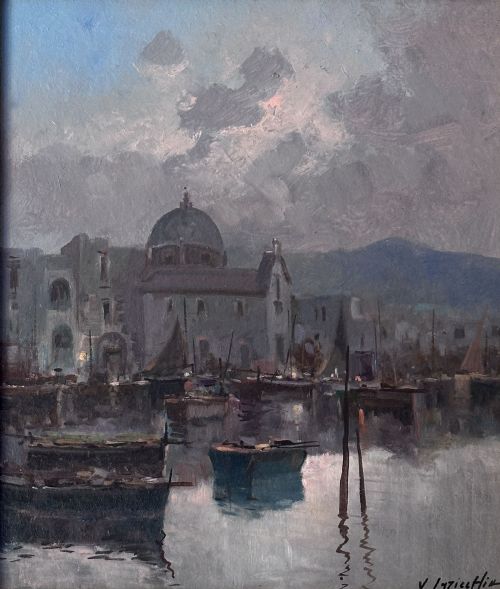
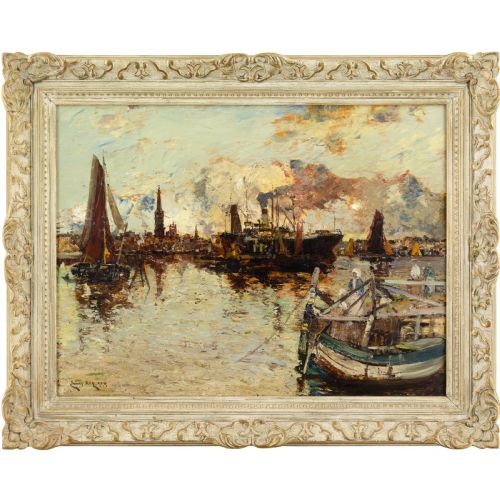



Maritime Port Scene Canvas
A maritime port scene canvas captures bustling harbours, ships and coastal architecture in oil paint, offering a glimpse into historic maritime commerce and daily coastal life.
Maritime Port Scene Canvas
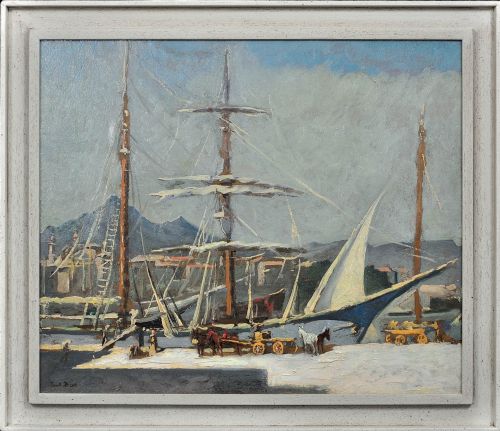
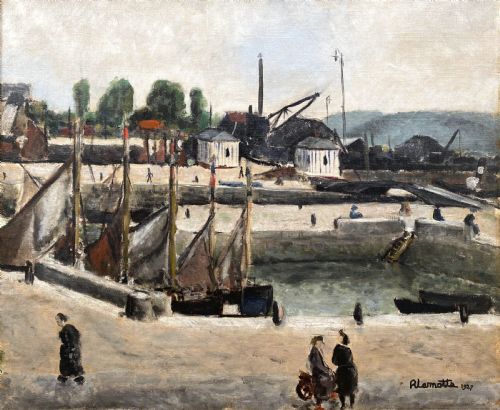
A maritime port scene canvas portrays harbour views, ships, quaysides and coastal towns executed in oil paint. These works record historic ports ranging from English coastal villages to Mediterranean harbours and major European docks.
The selections span multiple eras, encompassing Victorian depictions, early twentieth-century French Impressionism, Post-Impressionism, and seventeenth-century classical marine landscapes. Works feature specific locations such as Antwerp, Palermo, Port Erin, Mevagissey, Ostia, Southampton, and the French Riviera.
Buyers encounter varied artistic approaches including Realism, Modernism, and the 20th Century British School. Each canvas reflects the distinct atmospheric lighting and industrial or maritime activity of its chosen port.
What varies in quality
Quality rests upon the artist's handling of perspective, atmospheric light, and the bustling movement of harbour life. Superior works demonstrate confident brushwork and a sophisticated command of colour, particularly in rendering water and sky.
The depth of composition and the historical specificity of the vessels and architecture distinguish finer interpretations from more formulaic topographical views.
Maritime Port Scene Canvas Retail Price Guide 2026
Typical asking prices for maritime port scene canvas among the pieces listed under this phrase on Sellingantiques today, from the lower quarter to the upper quarter. They describe what is for sale here now, not the wider market.
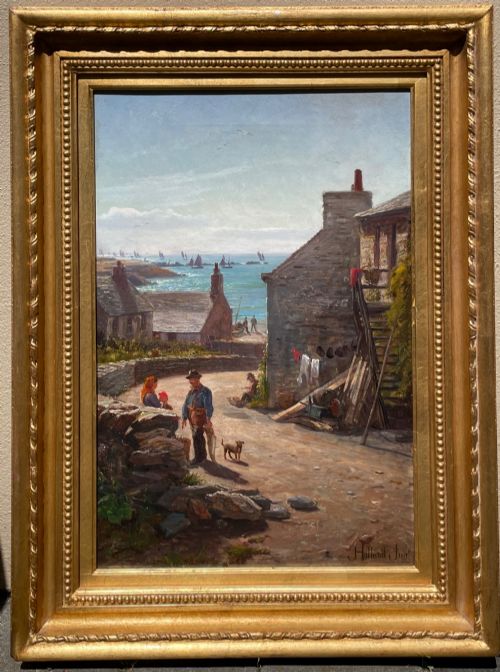
Several canvases record the exact moment a hot day brightens to blue over a Cornish fishing harbour.
James Kay RSW·Paul Bret·John Holland·Gyrth Russell·Claude Lorrain·Henri Ottman·Lamotte·Ludwig Hermann·J.M. Hastings
The Maritime Port Scene Canvas Glossary
- Oil on Canvas
- A painting medium where pigments bound in drying oil are applied to stretched fabric. This combination allows for rich textures and deep colour saturation suitable for marine scenes.
- Giltwood
- Wood carved and covered with a thin layer of gold leaf or gilt powder. It provides an ornate and reflective border often seen on period frames.
- Impressionism
- A nineteenth-century art movement characterised by relatively small, thin, yet visible brush strokes and an emphasis on accurate depiction of light. Painters often worked outdoors to capture harbour scenes directly from life.
- Post-Impressionism
- A predominantly French art movement that developed from Impressionism, extending its boundaries while rejecting its limitations. Artists prioritised expressive use of form and colour over naturalistic depiction.
- Marine Seascape
- A genre of painting that focuses primarily on the sea, ships, and coastal environments. These works document maritime history, naval architecture, and coastal topography.
Maritime Port Scene Canvas: Frequently Asked Questions
What periods do these paintings cover?
The works span several centuries, including seventeenth-century classical pieces, Victorian water-side views, and twentieth-century modernist interpretations.
Twentieth-century examples heavily feature Impressionist and Post-Impressionist approaches from British and French schools.
How should I hang a framed oil canvas?
Ensure the wall can support the weight of the wood or giltwood frame and use appropriate picture-hanging fixings.
Keep the canvas away from direct sunlight and excessive humidity to protect both the oil paint and the support structure.
How do I identify a port scene?
Look for defining elements such as docked ships, unloading activities, quaysides, and coastal town architecture.
Many titles or signatures provide specific geographic locations like Palermo, Antwerp, or Southampton.
What distinguishes Impressionist harbour paintings?
Impressionist works focus on transient effects of light and weather upon the water and harbour buildings, often utilising visible brush strokes.
These paintings aim to capture the immediate atmosphere of a busy port rather than precise architectural drafting.