




1920s French Landscape
These 1920s French landscape works capture the light and scenery of provincial rivers, coastlines, and rural scenes through vibrant oils and delicate glass.
1920s French Landscape
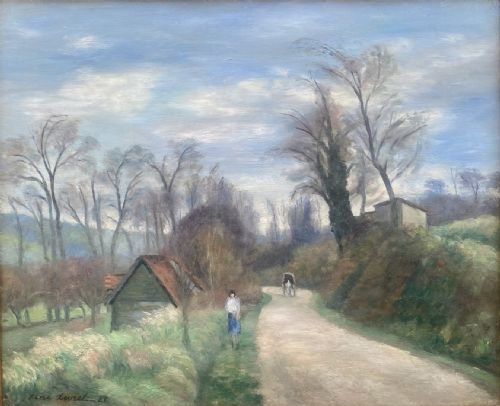
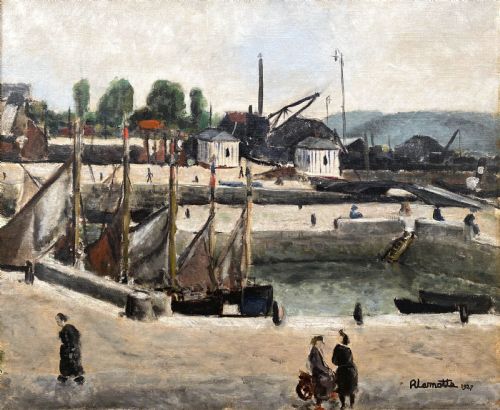
A 1920s French landscape brings together oil paintings on canvas and panel alongside cameo glass vases depicting regional scenery. Buyers encounter coastal views of Normandy and Brittany alongside sunlit scenes from Provence and the Loire.
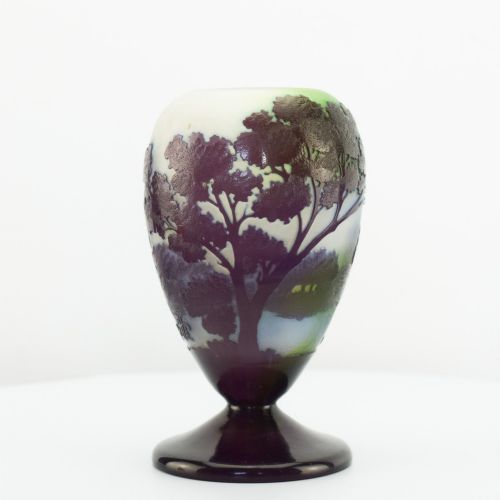
The oil paintings range from impressionist plein air views to fauvist canvases and post-impressionist panel works. Glassware takes the form of acid-etched cameo glass vases bearing aquatic or landscape motifs.
Materials and techniques
Painters applied oil paint to stretched canvas, wooden panels, or paper supports using brushwork that records the brisk movement of the hand. Artists worked en plein air to capture transient atmospheric effects across rural and coastal locations.
Makers of glassware utilised layered cameo glass techniques, applying acid-etching to reveal contrasting colours beneath the surface. Wooden frames and boxes received hand-painted decoration to complement the visual subject matter.
Among the landscapes sits a bustling scene featuring a boxer and a photographer at the seaside.
What determines quality
Quality rests upon the sureness of the brushwork and the artist's command of light and tonal harmony within the composition. Stronger oil paintings display confident handling of pigment that defines space and atmosphere without clutter.
In glassware, the depth of the acid-etching and the crispness of the cameo relief define the standard of the piece. Finer works maintain clear definition across botanical or landscape motifs rendered in multiple coloured glass layers.
Rene Levrel·Galle·Raymond Moritz·Louis Suire·Edmond Defonte·Maurice Asselin·Pierre Peltier·Fred Lawson
The 1920s French Landscape Glossary
- Plein air
- Painting outdoors directly from the subject to capture natural light and transient conditions. This practice defined much of the impressionist approach to scenery.
- Cameo glass
- Glass formed with multiple layers of distinct colours, then carved or acid-etched to create a raised design. The technique produces high-relief decoration.
- Fauvism
- A style characterised by strong brushwork and bold, non-naturalistic colours applied straight from the tube. Practitioners prioritised painterly quality over realistic representation.
- Panel
- A rigid flat support made of wood used by artists in place of canvas. Panels offered a stable surface for detailed brushwork.
- Acid-etched
- A technique using acid to eat away exposed portions of glass to form patterns or imagery. It creates textured surfaces on vases and decorative vessels.
1920s French Landscape: Frequently Asked Questions
How do I hang a framed oil painting safely?
Ensure your wall fixings match the weight of the wooden frame and canvas. Position the artwork away from direct sunlight and sudden temperature shifts.
Check the hanging wire or brackets on the back of the frame to guarantee secure support before placing the piece on the wall.
Where should I display a cameo glass vase?
Place the vase near a natural light source to let illumination pass through the coloured glass layers. Shelves away from heavy household traffic protect the delicate acid-etched surface from accidental knocks.
Keep glass items clear of heaters or damp zones to preserve the integrity of the material.
How do I clean an oil painting on canvas?
Dust the surface gently with a soft, dry brush to remove loose particles without pressing down on the paint layer. Avoid using water, soap, or cleaning solvents on the pigment.
Consult a professional conservator if the canvas requires deeper cleaning or repair.
What subjects appear in these French landscapes?
The artwork depicts coastal cliffs, river valleys, haystacks, and village scenes across regions such as Brittany, Normandy, and Provence. Figures often appear working outdoors or resting near the coastline.
Glass vessels complement these motifs with naturalistic aquatic and pastoral designs.