
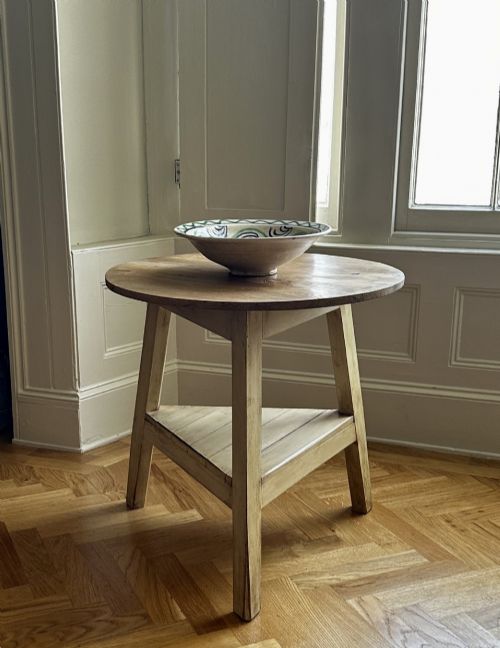


Natural Wood Accent Table
A natural wood accent table brings organic texture and raw grain into a room, offering a tactile surface shaped by tree roots, rustic branches, and solid timber.
Natural Wood Accent Table
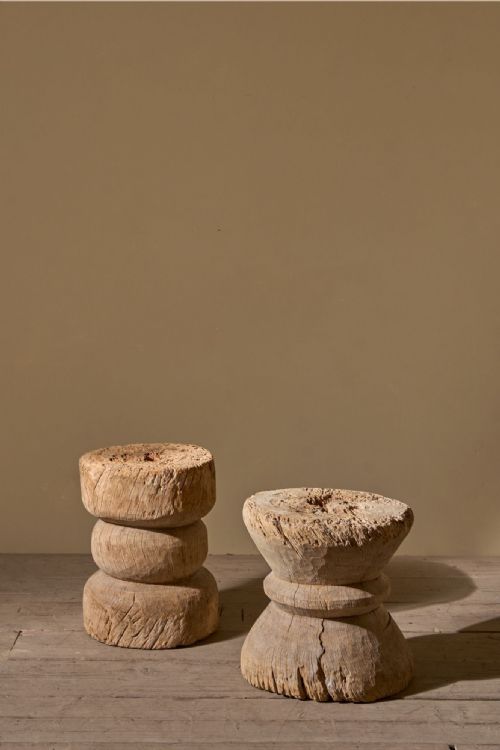
A natural wood accent table spans rustic folk art creations, country cricket tables, and sculptural rootwood pieces. These low and occasional surfaces utilise uncultivated forms, branches, bark, and burr timbers to create functional furniture.
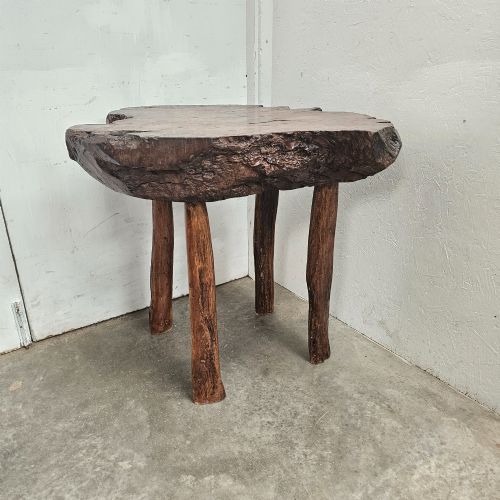
The version most commonly met on this page is the nineteenth century rustic side table or elm cricket table, alongside Chinese rootwood stands. These pieces range from simple three-legged vernacular forms to intricate carved rootwood stands inset with quartz.
Materials and construction
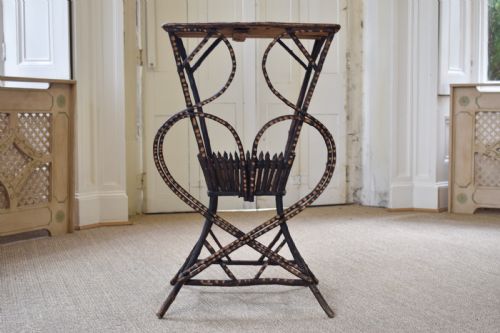
Makers utilised native and exotic timbers including elm, pine, thuya burr, and dense Chinese hardwoods, often pairing solid timber tops with natural twigs, roots, and branches. Bark remains intact on specific rustic examples, highlighting the organic contours of the raw material.
Construction methods vary from traditional joined carpentry on cricket tables to organic assembly where branches and roots are shaped to form stable bases. Iron is occasionally integrated into twentieth century examples to reinforce natural timber structures.
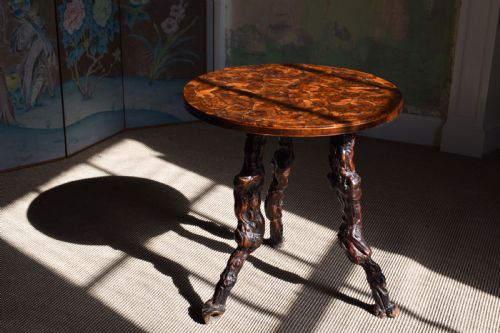
Some nineteenth century makers looked at a tangled grapevine and decided it belonged indoors holding a lamp.
Assessing quality and character
Quality rests in the harmony between natural material growth and structural integrity, where intentional shaping enhances the inherent character of the rootwood or branch. Superior pieces display thoughtful selection of grain, such as burr thuya or figured elm, rather than random assembly.
The distinction between ordinary and exceptional lies in the balance of the form and the preservation of surface texture. Finer examples show careful integration of natural elements, such as quartz tops fitted precisely into carved Chinese rootwood.
The Natural Wood Accent Table Glossary
- Cricket table
- A traditional small three-legged round table with a wooden top, originating in English vernacular furniture. The three legs provide stability on uneven floors.
- Rootwood
- Furniture formed from the subterranean growth of trees, celebrated for its twisted contours and dense grain. Chinese carvers utilised these gnarled shapes to create stands and lamps.
- Burr
- A growth on a tree where the grain has grown in a deformed manner, producing intricate patterns when sliced. Thuya burr provides a highly decorative surface.
- Vernacular
- Everyday architecture and furniture built by local craftsmen using regional materials and traditional techniques. These pieces reflect local domestic needs rather than high court fashions.
Natural Wood Accent Table: Frequently Asked Questions
What is a natural wood accent table?
A natural wood accent table is a small occasional surface constructed from raw timber, roots, twigs, or solid planks. These pieces emphasise organic forms and visible grain patterns over formal cabinetmaking.
They appear as side tables, cricket tables, and sculptural stands across various nineteenth and twentieth century traditions.
Where were these tables made?
These tables originate from diverse regions including England, Wales, China, Sweden, and Brazil. Each region utilised local timber varieties and vernacular crafting methods.
Chinese workshops focused on sculptural rootwood, while English and Welsh makers produced functional elm cricket tables and rustic twig furniture.
How do I style a natural wood accent table?
These tables function well as side tables beside seating or as stands for lamps and decorative objects. Their organic textures provide contrast against plain walls and upholstered furniture.
Allowing the piece to stand clear lets the root growth or timber grain remain visible as a sculptural element in the room.
How do I date an antique wooden table?
Dating relies on examining the tool marks, construction joints, timber species, and wear patterns consistent with specific periods like the nineteenth century. Regional styles and traditional building methods offer further clues to the age of the piece.
Comparing the joinery to documented vernacular examples helps establish whether a table belongs to the nineteenth or twentieth century.