
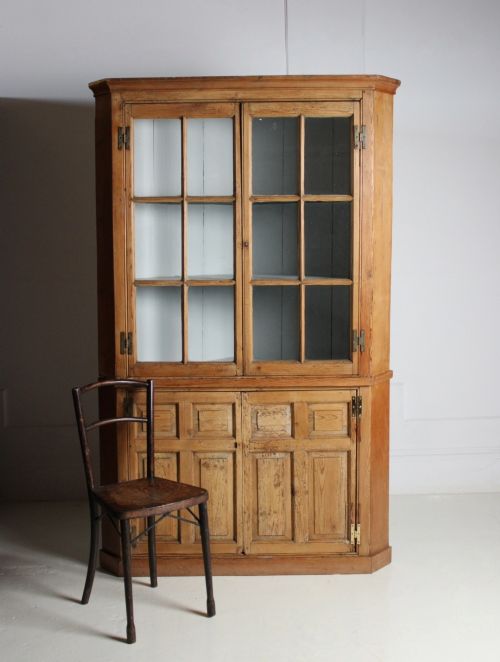
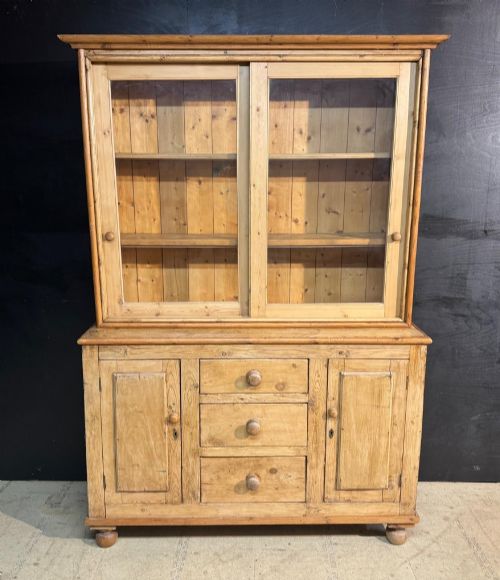
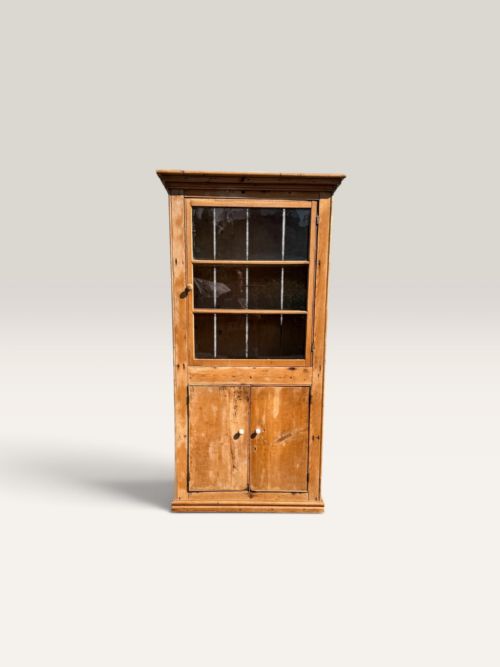
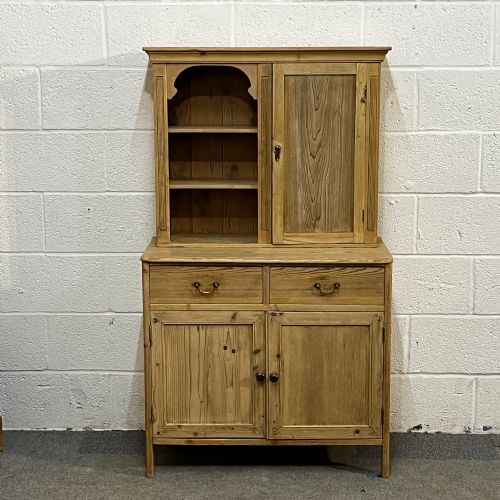
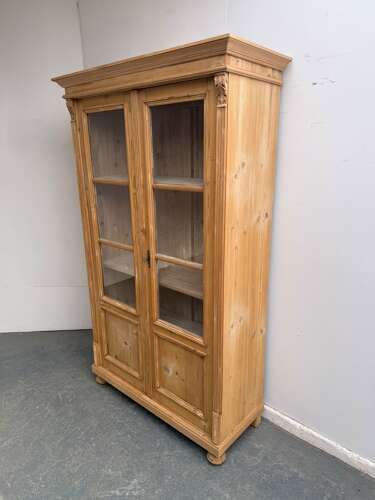
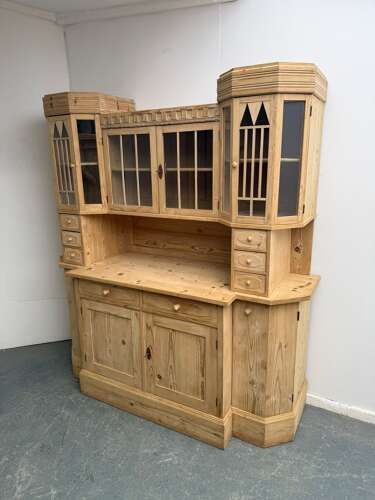
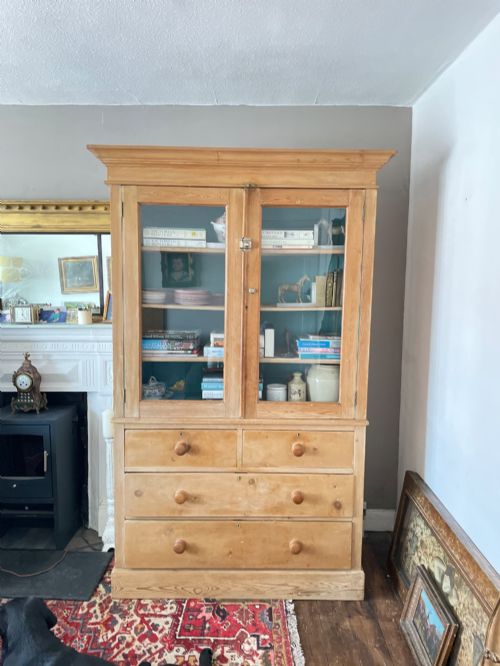
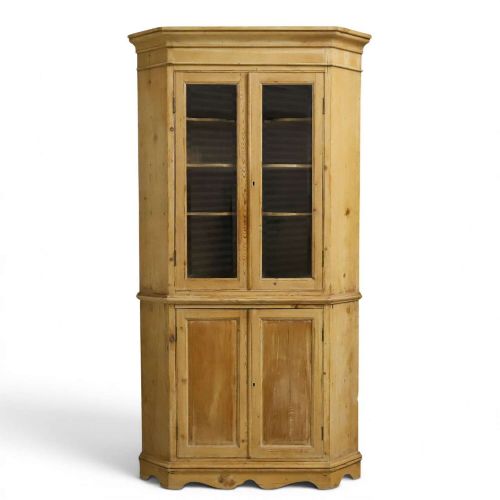
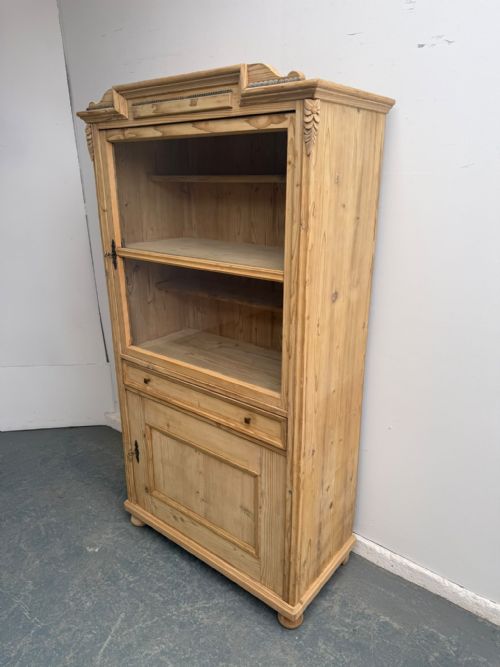
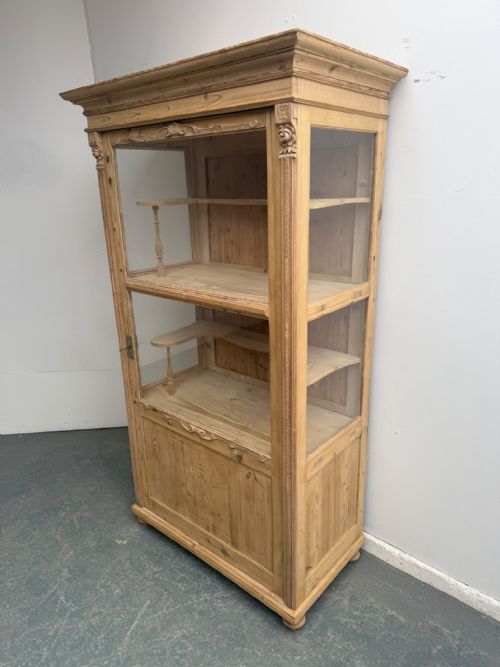
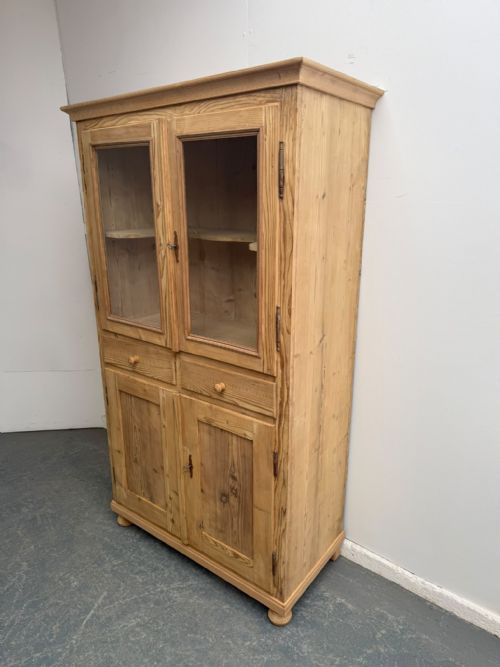
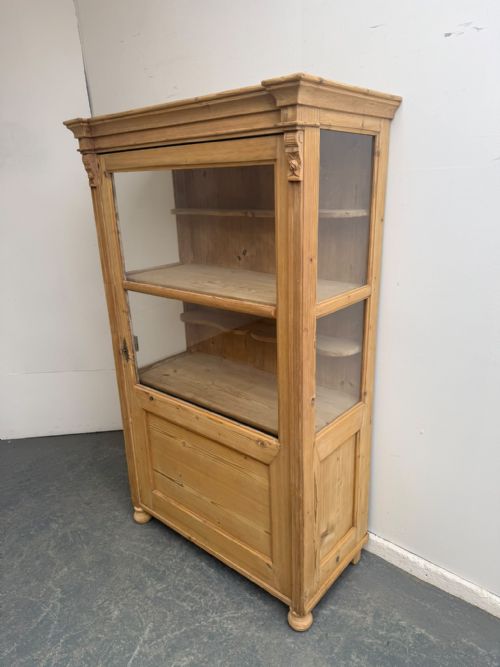
Natural Pine Display Cabinet
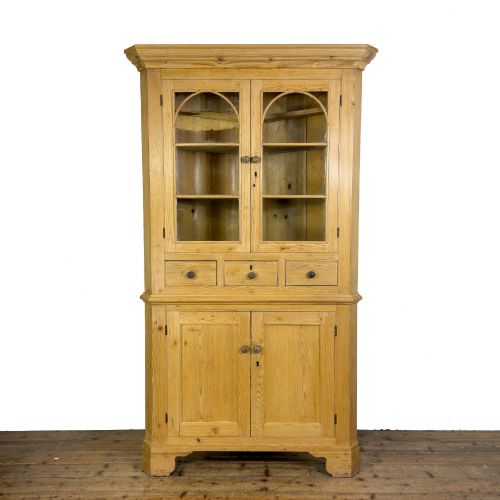
A natural pine display cabinet brings warmth and practical storage to a room, offering visible shelving behind glass for books or collections.
Natural Pine Display Cabinet
When you search for a natural pine display cabinet, you are looking at timber storage furniture designed to keep objects visible and protected behind glass doors. These pieces span several eras, appearing most frequently in Victorian and nineteenth-century formats.
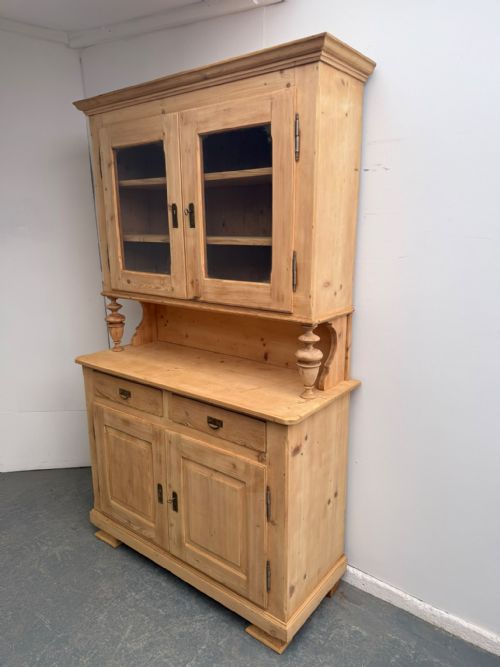
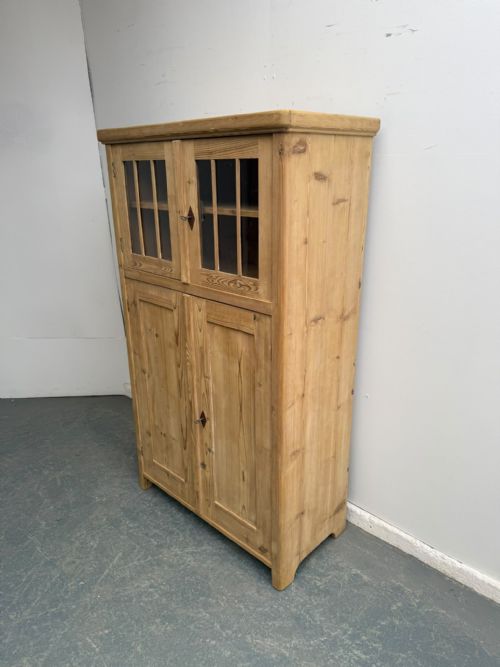
The selection includes two-part bookcases, corner cupboards, and kitchen dressers fitted with glazed upper sections. Cabinets range from modest single-door corner units to substantial four-door glazed storage units.
Origins stretch across English, French, Irish, and country house traditions, utilising woods such as standard pine, pitch pine, and Scots pine. Surfaces often arrive in stripped timber, waxed finishes, or with painted interiors.
Materials and construction
The primary construction relies on pine timber, frequently categorised as pitch pine or Scots pine, paired with glass panes for doors and shelving. Brass and iron hardware appear on hinges, latches, and internal fittings.
Makers utilised traditional joinery techniques suited to country workshops and larger cabinet-making operations, such as J.T. Crockett. Surfaces were often left to the natural grain, waxed for protection, or treated with painted details inside the glazing.
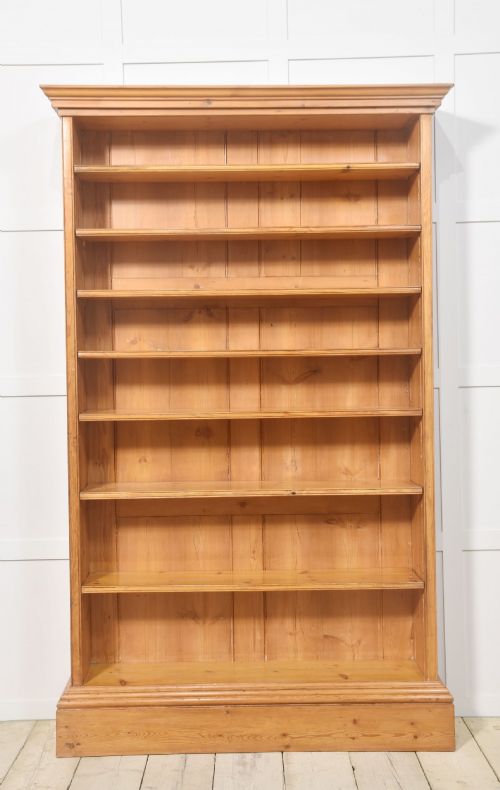
Object types span corner cabinets, kitchen dressers, open bookcases, and multi-door glazed storage units.
Assessing quality and construction
Quality in these cabinets rests upon the choice of timber and the integrity of the joinery, particularly where doors meet frames and glazing bars are fitted. Dense grain in pitch pine or Scots pine often indicates a superior construction standard.
Proportion and form separate standard country pieces from finer examples, such as George III Chippendale period double bookcases or early Georgian barrel back cabinets. The retention of original glass, hardware, and painted interiors preserves the integrity of the piece.
J.T. Crockett
The Natural Pine Display Cabinet Glossary
- Astral glazed
- Refers to glass doors divided into smaller panes by wooden glazing bars, commonly seen on Georgian and Victorian bookcases.
- Pitch pine
- A dense, resinous variety of pine timber valued for its distinct grain pattern and durability in Victorian cabinetry.
- Scots pine
- Native timber utilised across British furniture making, known for its pale colour and characteristic knot formation.
- Corner cupboard
- A triangular cabinet designed to fit directly into the corner of a room to maximise floor space.
- Kitchen dresser
- A two-part form combining a base of cupboards or drawers with an upper section of open shelves or glazed cabinets.
Natural Pine Display Cabinet: Frequently Asked Questions
What is a natural pine display cabinet?
A natural pine display cabinet is a storage unit made from pine timber featuring glass doors to showcase contents while protecting them from dust. These pieces range from corner cupboards to large double bookcases.
They appear across various periods including the Georgian and Victorian eras, often finished with wax or stripped to show the grain.
How do I date a pine cabinet?
Dating relies on construction methods, hardware, and stylistic indicators present in the woodwork. Georgian pieces often display refined proportions, while Victorian examples lean towards robust glazed storage units.
Examining the types of glass, fixings, and timber variety such as pitch pine helps narrow the production era.
Are these cabinets suitable for books?
Many of these pieces function primarily as bookcases or library cabinets with adjustable or fixed shelving behind glazed doors. Open bookcase variants also appear within the selection.
They keep volumes visible while shielding paper from dust and light exposure in living spaces.
How should I care for waxed pine?
Waxed pine benefits from occasional gentle cleaning with a soft cloth and the application of a quality beeswax to maintain the finish. Avoid placing timber furniture near direct heat sources to prevent warping.
Keeping the surface nourished preserves the natural colour and texture of the wood over time.