



Natural History Specimen Cabinet
A natural history specimen cabinet houses delicate remnants of the natural world, offering collectors a structured way to preserve and display scientific curiosities.
Natural History Specimen Cabinet
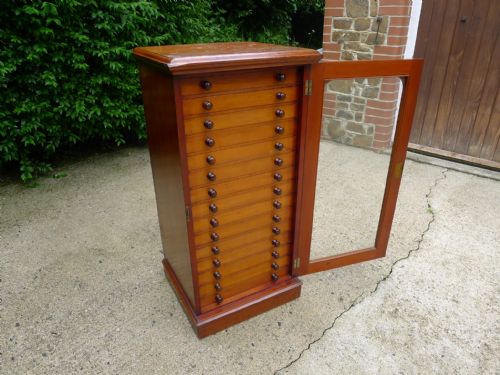
A natural history specimen cabinet provides partitioned storage specifically designed for housing collections of insects, fossils, shells, and botanical items. The examples seen here predominantly date from the Victorian and Edwardian periods, reflecting an era of intense scientific collecting and domestic natural philosophy.
Materials and Construction
Cabinet makers utilised dense hardwoods such as mahogany and ebonised wood to build sturdy carcass frames that prevent warping and protect internal contents. Brass hardware frequently appears on handles, drawer pulls, and locking mechanisms.
Glass panels are integrated into glazed doors and display lids, allowing clear visibility while maintaining a sealed environment. Internal drawers often feature fitted glass tops or lined compartments to secure delicate items like butterflies and beetles.
Listings feature nineteenth-century and early twentieth-century specimen storage built from mahogany, ebonised wood, and brass.
Assessing Quality
Quality in a natural history specimen cabinet depends on the precision of the drawer construction and the smoothness of the runners. Superior pieces feature tight-fitting joints and dust-proof ledges that safeguard vulnerable organic material over decades.
The choice of timber and the intactness of original glass panels differentiate standard storage units from exceptional examples. Cabinets retaining original brass fittings and maker signatures represent a higher tier of craftsmanship.
James Gardner of London·Rowland Ward Ltd·Messrs Watkins & Doncaster·A Pollard·J Dobson
The Natural History Specimen Cabinet Glossary
- Entomology case
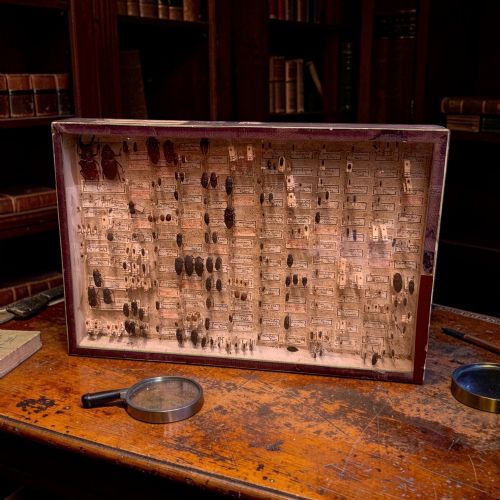
- A shallow wooden drawer or box fitted with a glass lid, designed specifically for pinning and displaying insects. These cases protect fragile specimens from physical damage and environmental decay.
- Ebonised wood
- Timber treated with a chemical stain or finish to imitate expensive ebony. This dark surface treatment was popular in nineteenth-century furniture and display cases.
- Specimen dome
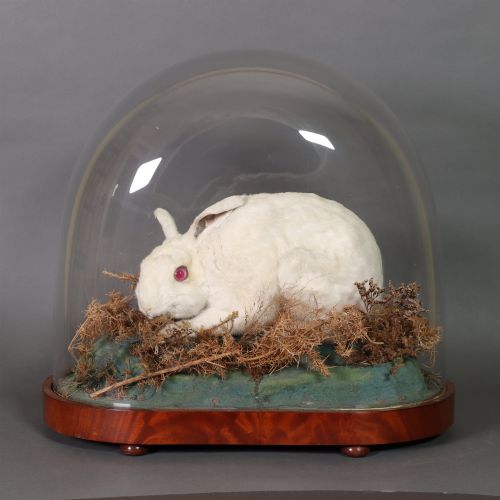
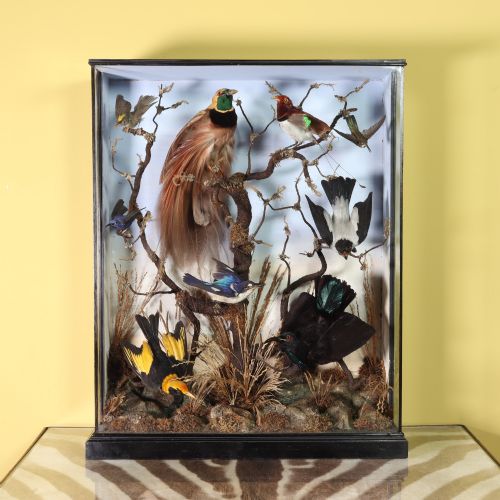
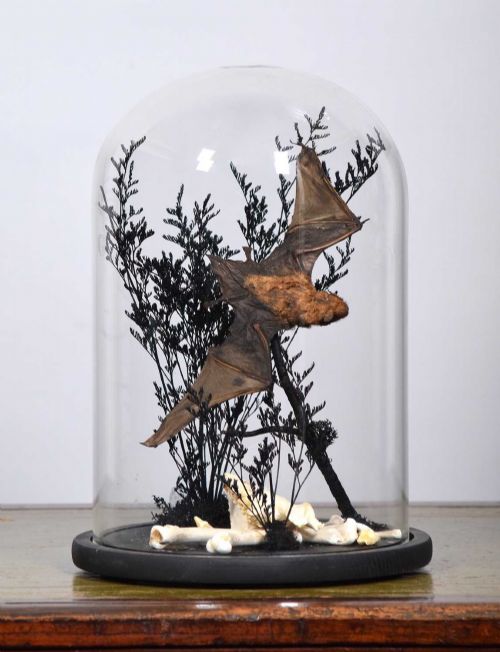
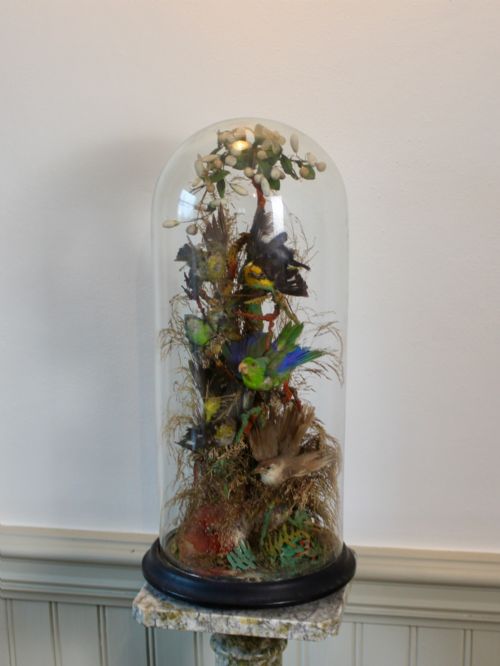
- A blown glass cover mounted on a wooden or brass base to protect taxidermy birds or botanical displays. The dome creates a sealed microclimate for delicate mounts.
Natural History Specimen Cabinet: Frequently Asked Questions
What fits inside a natural history specimen cabinet?
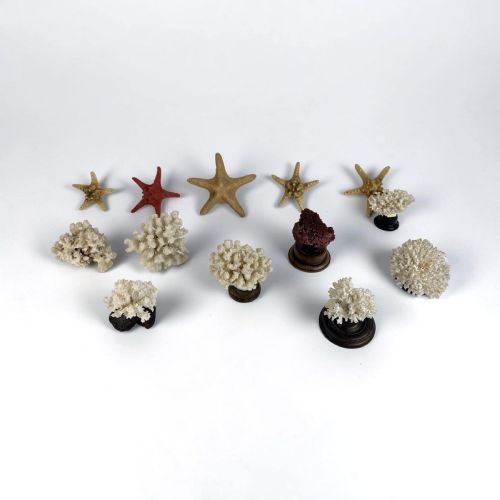
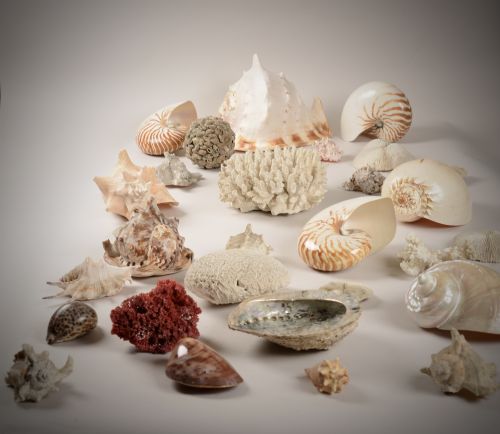
These cabinets are built to hold collections of insects, shells, minerals, fossils, and small botanical samples. The shallow drawers keep delicate items separated and organised.
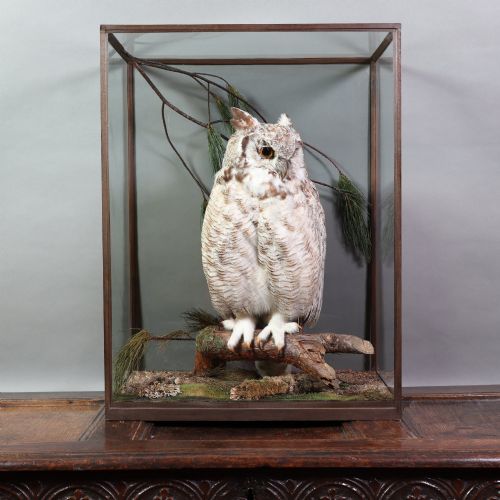
Larger compartments or glass-topped displays accommodate taxidermy mounts and larger geological specimens alongside standard drawer storage.
How do I care for an antique cabinet?
Keep the wood conditioned with appropriate furniture wax and avoid placing the cabinet in direct sunlight. Stable room temperatures protect the timber and internal linings.
Inspect the seals around glass panels periodically to ensure dust and pests do not reach stored organic materials.
Were these cabinets used by scientists?
Professionals and amateur naturalists utilised multi-drawer chests to catalogue field expeditions and academic acquisitions. Educational institutions also employed them for teaching.
Many surviving pieces originated in private Victorian studies where collectors displayed their personal findings to guests.
How do I date a specimen cabinet?
Dating relies on examining the timber species, construction techniques, and brass hardware styling. Dovetail joints and locking mechanisms often indicate the manufacturing decade.
Maker labels pasted inside drawers or on the back panels provide definitive chronological markers when present.