


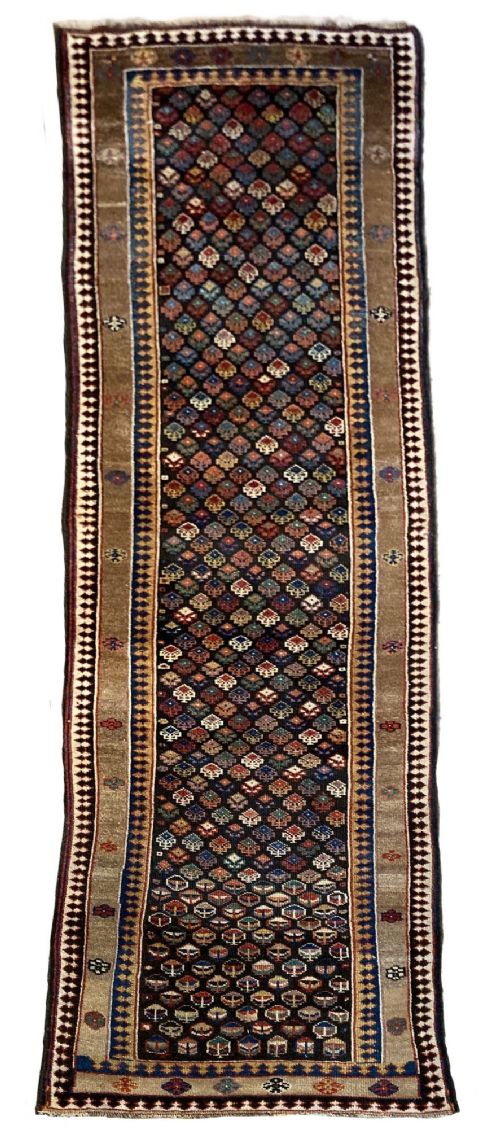


Narrow Wool Rug
A narrow wool rug brings warmth and linear rhythm to hallways and landings, bridging centuries of tribal and village weaving traditions.
Narrow Wool Rug
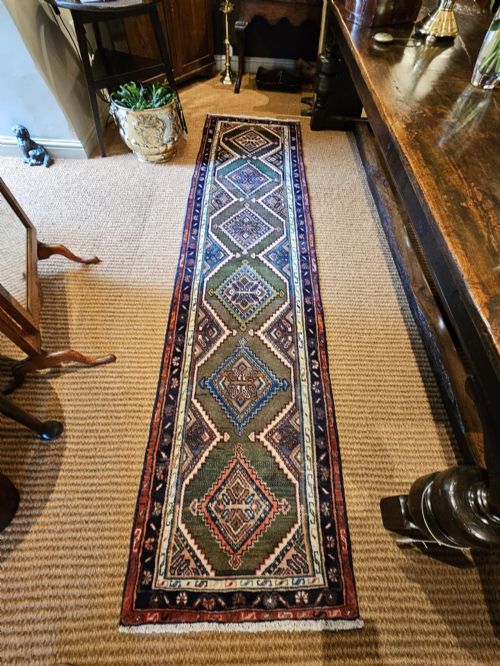
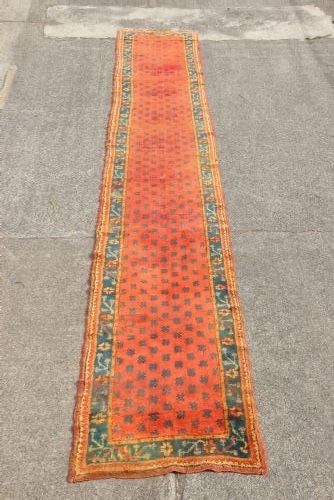
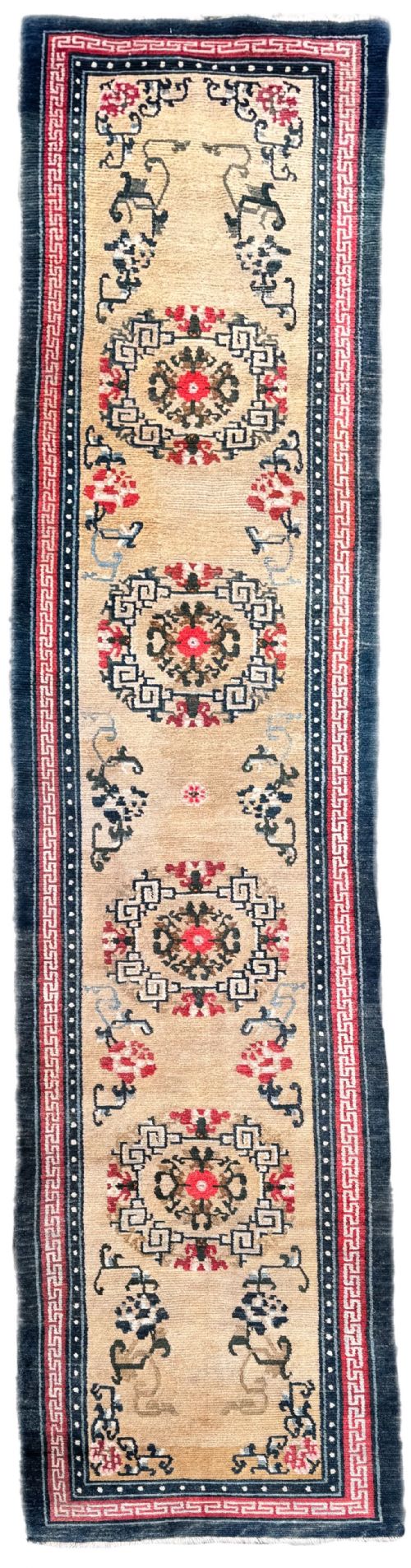
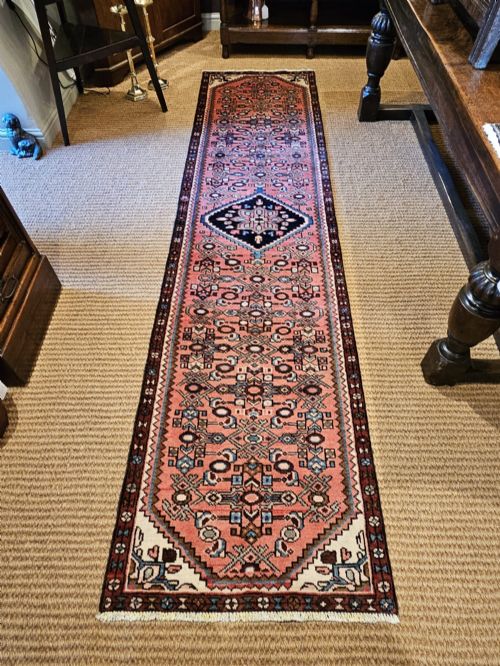
A narrow wool rug typically appears as a long runner, designed for hallways, corridors and staircases where floor space is restricted. These pieces originate from diverse weaving traditions, including Persian village workshops, Kurdish settlements, Turkish looms and Moroccan Berber communities.
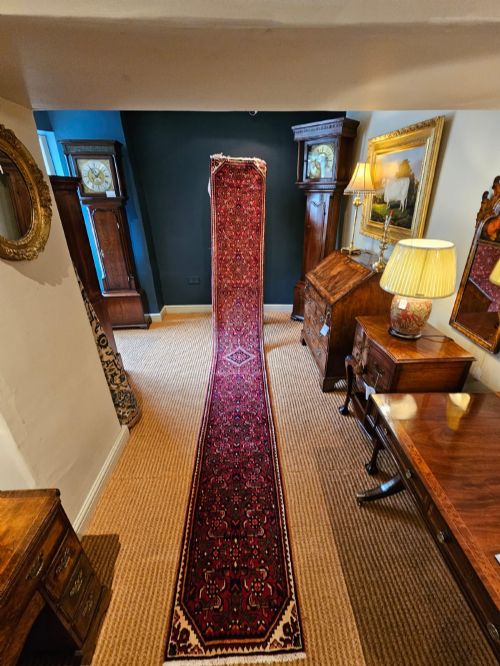
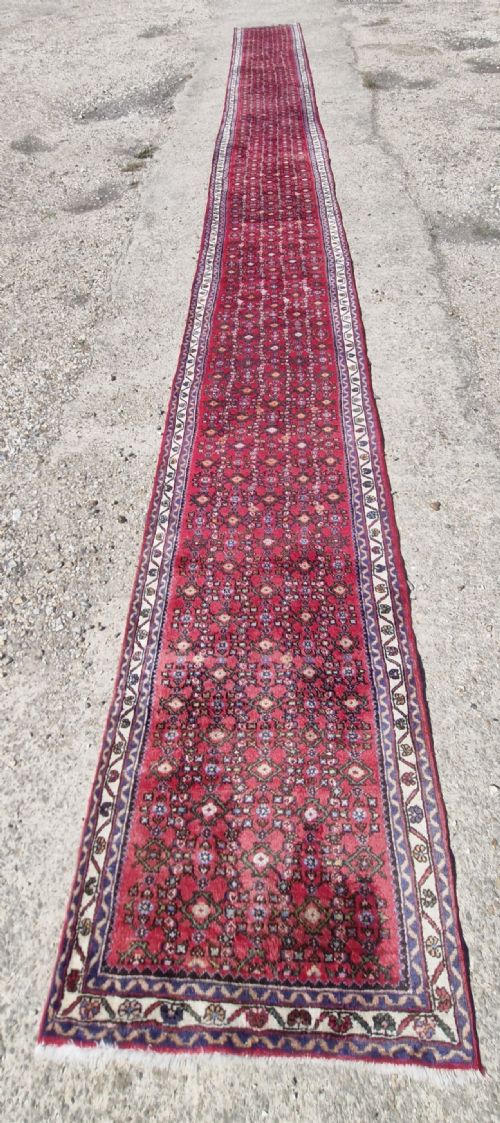
The selections span from the late nineteenth century through to the interwar decades of the twentieth century. Forms range from compact lengths of two metres up to extensive thirty-foot expanses meant for grand halls.
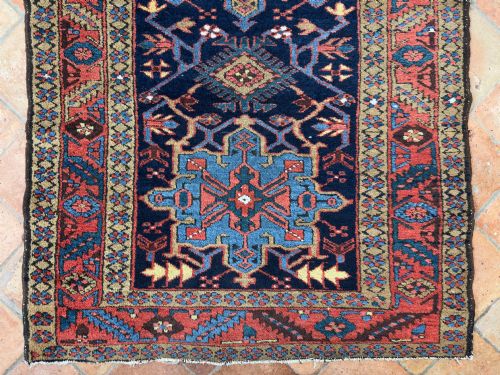
Buyers encounter regional nomenclature in titles, referencing specific weaving centres such as Heriz, Hamadan, Bidjar and Oushak. Each region contributes distinct geometric motifs or floral medallions adapted to elongated formats.
Materials and construction
The foundational structures rely primarily on durable wool, frequently hand-spun to achieve varied textures and organic irregularities along the pile. Cotton often forms the sturdy warp and weft foundation threads, providing structural tension for the dense woolen knots.
Certain pieces incorporate alternative natural fibres like camel hair alongside standard wool, yielding shifts in tone and pile resilience. Weavers executed these textiles either as knotted-pile carpets or as flatwoven kilims without a raised pile.
Some exceptional hallways require thirty-two feet of uninterrupted wool path to properly bridge the journey.
Assessing quality
Quality rests upon the tightness of the knotting and the integrity of the foundation weave, which dictate how well a runner withstands heavy foot traffic in narrow spaces. Finer knots permit more intricate geometric precision in tribal designs.
The depth and permanence of natural dye colours separate superior examples from ordinary production, with rich abrasche showing subtle tonal variations across the wool. Edge binding and original end finishes also indicate the level of care preserved over the decades.
The Narrow Wool Rug Glossary
- Runner
- A long, narrow carpet format specifically proportioned for corridors, hallways and stairs. It guides movement through domestic spaces.
- Kilim
- A flatwoven textile produced without a pile by tightly interweaving warp and weft strands. These pieces offer a lightweight and reversible alternative.
- Warp
- The stationary vertical threads stretched onto the loom that carry the structural weight of the rug. Fringe ends typically originate from these foundational threads.
- Weft
- The horizontal threads passed alternately over and under the warp threads to lock the knots securely in place. They determine the firmness of the woven body.
- Abrasche
- A natural variation in hue within a single field of colour caused by changes in dye batches or hand-spun wool. This occurrence signals traditional dyeing methods.
Narrow Wool Rug: Frequently Asked Questions
Where should I place a narrow wool rug?
These runners suit long corridors, narrow hallways, entrance passages and beside beds where floor space is restricted.
Their elongated proportions guide foot traffic and soften hard flooring in transitional spaces throughout the home.
How do I care for an antique runner?
Regular gentle vacuuming without a rotating brush roll prevents dust accumulation within the wool pile. Professional cleaning suited to antique textiles preserves the natural lanolin and dyes.
Using a quality underlay prevents slipping and cushions the foundation against hard subfloors.
How are different regional styles told apart?
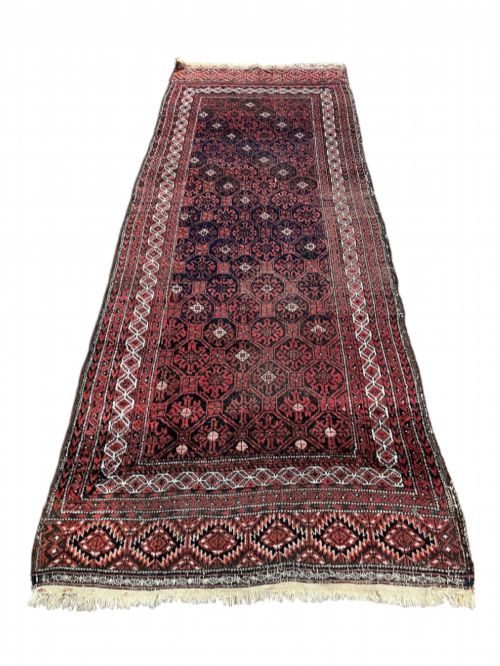
Regional styles are distinguished by specific colour palettes, border arrangements and geometric or floral motifs. Persian Heriz pieces often display bold central medallions, while Kurdish and Baluch rugs rely on repeating tribal patterns.
Turkish Oushak and Anatolian runners showcase softer floral sprays or geometric half-kilim constructions.