



Narrow Persian Hall Runner
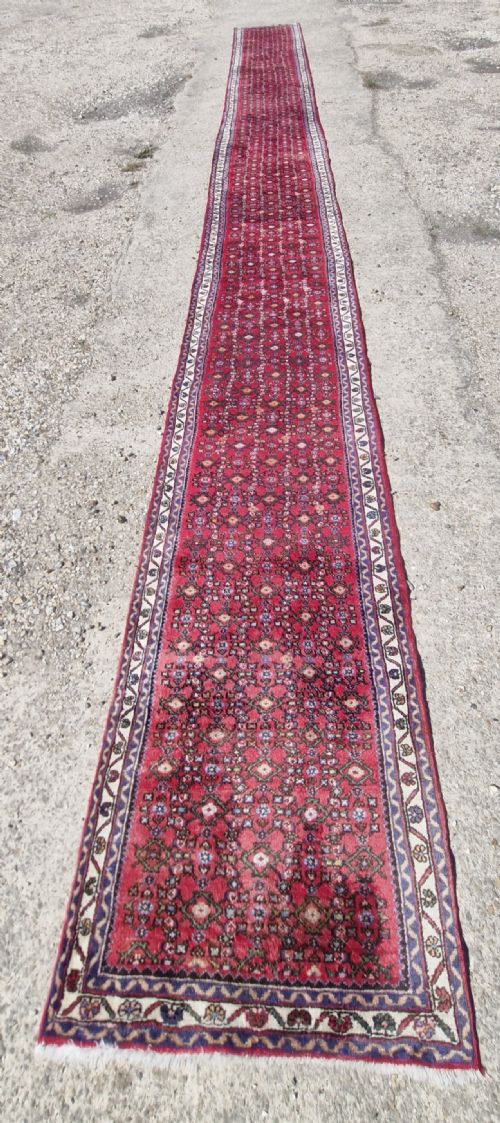
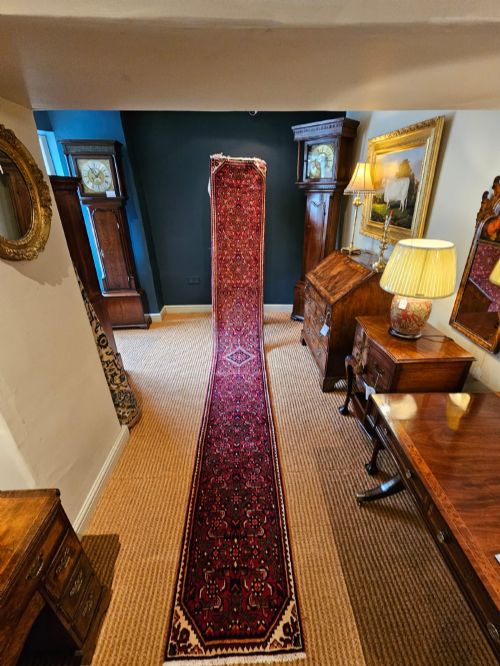
A narrow persian hall runner brings linear pattern and deep wool pile to corridors, spanning lengths from compact proportions to over thirty feet.
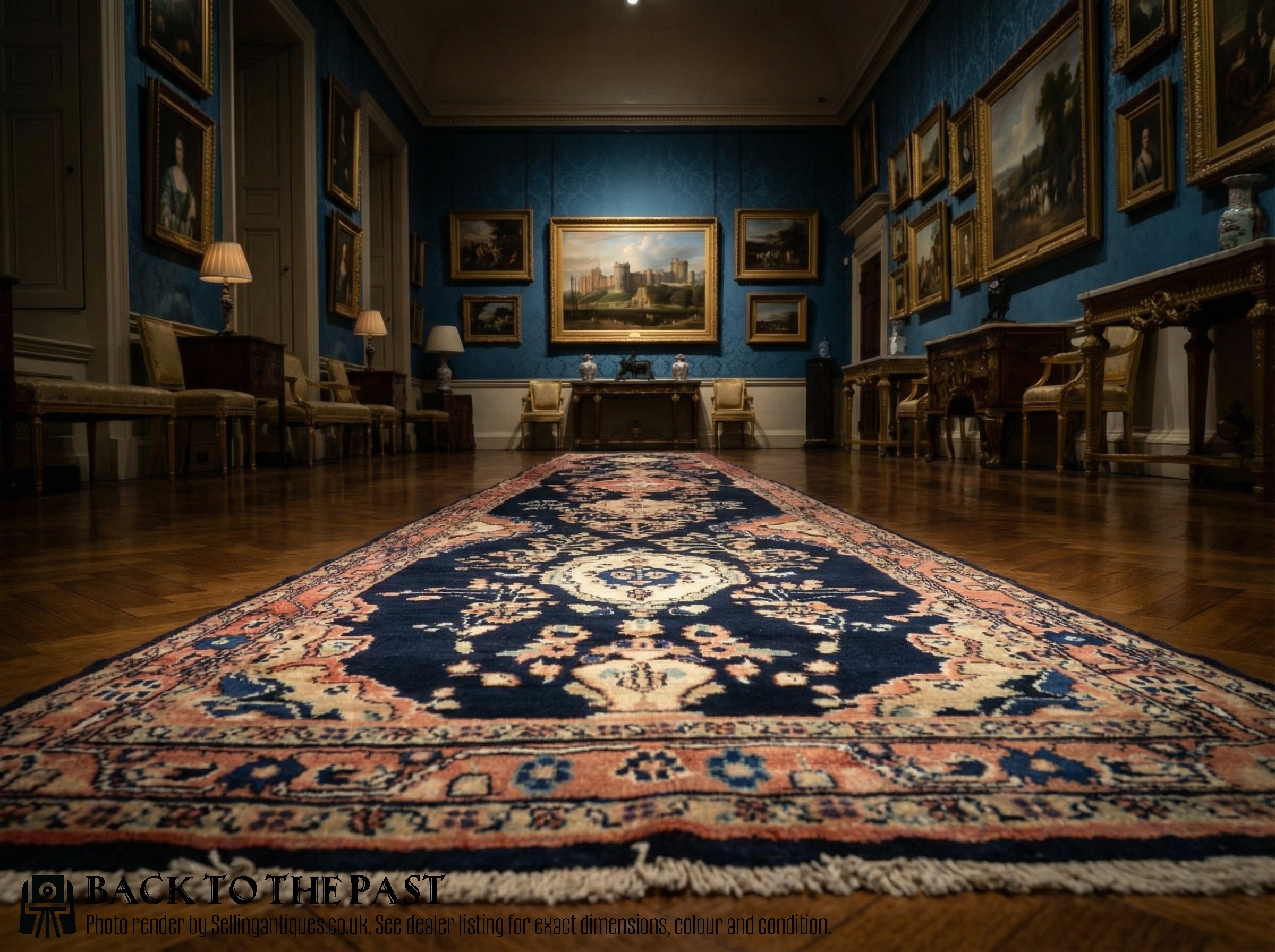
Narrow Persian Hall Runner
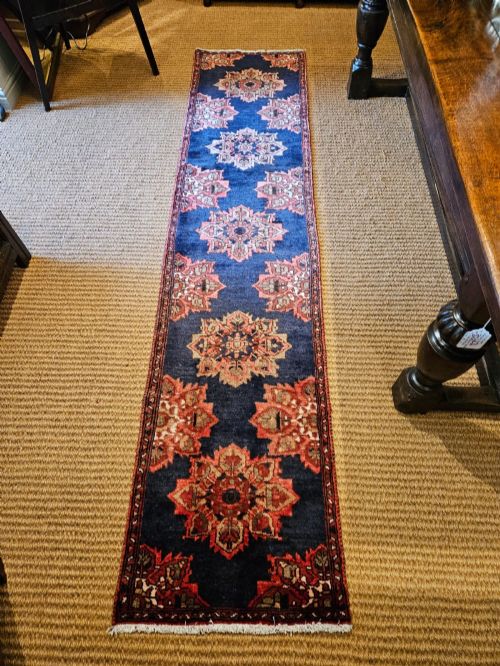
A narrow persian hall runner delivers extended linear design suited to corridors and landings. These floor coverings bridge rooms with dense woven decoration.
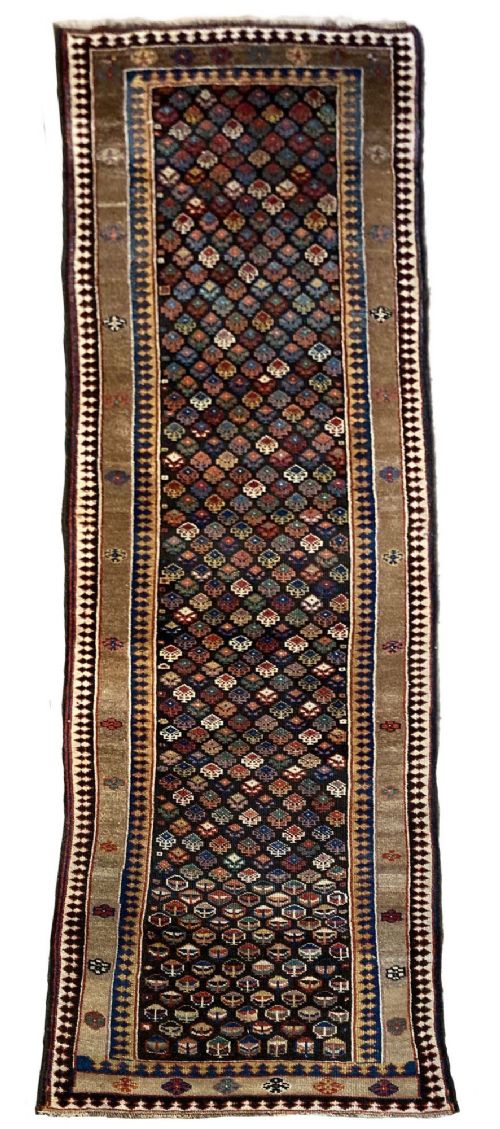
The selections span traditional village and tribal origins, including Heriz Karaja, Bidjar, Serab, Hamadan, and Kurdish examples. These types emerge across decades from the late nineteenth century into the twentieth.
Makers shaped these narrow formats for domestic pathways, creating compositions that balance length with deliberate geometric or floral motifs.
Distinctions in quality
Quality rests upon the tightness of the knotting and the crispness of the drawn motifs along the narrow field. Denser structures hold their form better over extended lengths.
The choice of dye materials and the balance of the central design dictate visual depth. Superior examples maintain clarity across extreme proportions without distortion in the geometry.
Narrow Persian Hall Runner Retail Price Guide 2026
Typical asking prices for narrow persian hall runner among the pieces listed under this phrase on Sellingantiques today, from the lower quarter to the upper quarter. They describe what is for sale here now, not the wider market.
The site listings feature wool and cotton runners spanning the decades from eighteen eighty to nineteen sixty.
The Narrow Persian Hall Runner Glossary
- Runner rugs
- Narrow rectangular floor coverings designed specifically for hallways, corridors, and staircases.
- Camel hair
- Undyed animal fibre utilised in specific vintage tribal weavings for natural warmth and tone.
- Kurdish
- Pertaining to rugs produced by tribal groups in western regions, known for robust structures.
- Bidjar
- A renowned weaving centre famous for densely packed pile and heavy construction.
- Serab
- A town and surrounding district noted for camel hair fields and geometric medallion layouts.
Narrow Persian Hall Runner: Frequently Asked Questions
Where should I place a narrow persian hall runner?
These pieces fit naturally along entrance hallways, long corridors, and bridging landings between rooms.
Their elongated dimensions protect high-traffic wooden floors while adding pattern to transitional spaces.
How do I measure for a long runner?
Measure the clear floor space of your corridor, leaving a consistent border of exposed wood or tile on all sides.
Account for door clearance to ensure the pile thickness allows doors to swing freely overhead.
Are these runners made of pure wool?
The pile is predominantly woven from wool, occasionally supplemented by natural camel hair.
Foundation warps and wefts generally utilise cotton to provide structural tension along the length.
How do I identify a Kurdish runner?
Kurdish pieces typically display robust geometric designs, saturated red and blue tones, and tribal figures.
Their construction tends to be heavy and resilient, reflecting the traditional weaving practices of northwestern regions.