


Sarouk Carpet Runner
A sarouk carpet runner brings rich Persian artistry into a long hallway, offering durable wool construction and traditional regional designs.
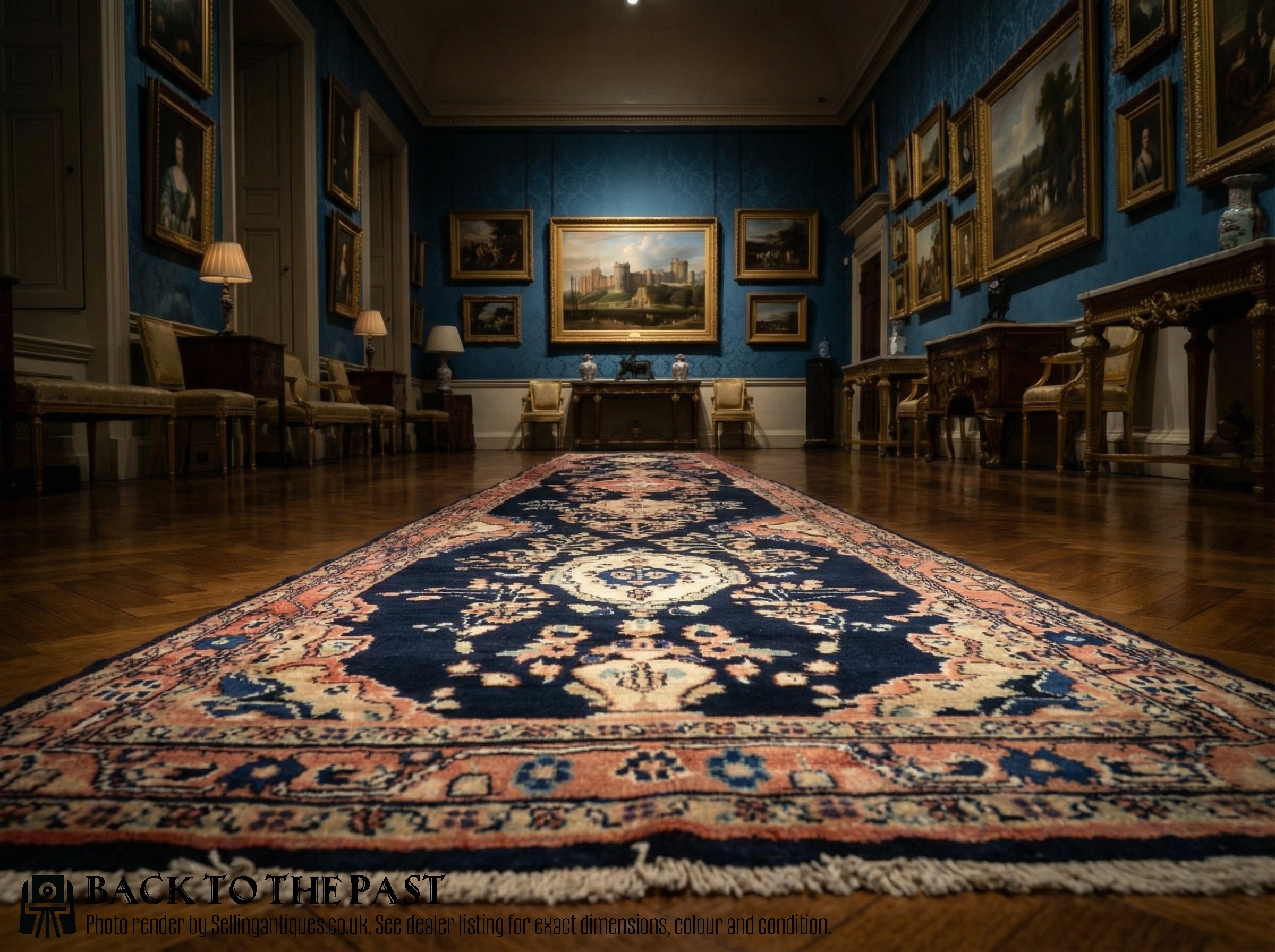
Sarouk Carpet Runner
You will encounter various traditional designations in this category, such as Ferahan, Mohajeran Saroukh, and Fereghan Sarouk variants. These runner rugs and long carpets originate from West Persia and display distinctive regional patterns.
The most common format on this page is the narrow runner, with several pieces stretching to substantial lengths while maintaining slender widths. These span from standard room-scale lengths up to exceptionally long proportions measuring over seven metres.
How they were made
Traditional weavers constructed these Persian runners using a foundation of durable cotton to support the dense pile. Hand-knotted wool forms the tactile surface of each piece, providing the resilience needed for heavy foot traffic in domestic corridors.
The materials work together to create a sturdy structure that holds intricate traditional motifs. Artisans utilised local dyestuffs and natural fibres characteristic of West Persian weaving traditions during the early twentieth century.
Sarouk Carpet Runner Retail Price Guide 2026
Typical asking prices for sarouk carpet runner among the pieces listed under this phrase on Sellingantiques today, from the lower quarter to the upper quarter. They describe what is for sale here now, not the wider market.
One remarkably long runner on record stretches past seven metres while maintaining a slender ninety-centimetre width.
What varies in quality
Quality in these Persian runners rests on the fineness of the knotting and the crispness of the traditional design execution. Finer pieces demonstrate tighter structural foundations and more intricate pictorial elements, such as birds and pomegranates.
Proportion and scale also define the upper tier of these textiles, particularly in exceptionally long narrow formats that require skilled craftsmanship to maintain straight edges and uniform width across vast lengths.
The Sarouk Carpet Runner Glossary
- Sarouk
- A style of Persian carpet and runner originating from West Persia, known for durable wool construction and traditional motifs.
- Ferahan
- A related West Persian weaving tradition associated with fine nineteenth and early twentieth-century antique rugs.
- Mohajeran
- A specific village and weaving centre within the Sarouk district renowned for producing distinct high-quality carpets.
- Runner
- A long, narrow carpet format specifically designed for hallways, corridors, and stairs.
- Pile
- The upright wool yarn loops or tufts that form the usable surface of a hand-knotted rug.
Sarouk Carpet Runner: Frequently Asked Questions
Where should I place a sarouk runner?
These narrow Persian carpets are traditionally suited for long hallways, entryways, and corridors where their elongated proportions fit linear spaces. Their robust wool pile stands up well to regular foot traffic in high-use domestic areas.
Ensure you place a quality underlay beneath the runner to prevent slipping and to protect the cotton foundation from premature wear against hard flooring surfaces.
How do I date an antique sarouk runner?
Dating relies on stylistic markers, construction methods, and recorded production periods typically spanning the early twentieth century, from nineteen hundred through to the nineteen thirties. Examining the types of wool and regional design traits helps place a piece within this era.
Consulting the specific details recorded for comparable pieces provides a reliable benchmark for establishing the approximate age of an individual runner.
What motifs appear on these runners?
Traditional Persian designs dominate this category, often featuring intricate floral arrangements, classical medallion layouts, and symmetrical patterns. Some unusual examples incorporate pictorial elements such as birds alongside traditional botanical motifs like pomegranates.
The specific combination of motifs often points toward particular West Persian villages and weaving workshops active during the production period.
How do I clean an antique wool runner?
Professional cleaning is recommended for antique Persian carpets to protect the hand-knotted wool pile and natural dyes. Regular gentle vacuuming without a beater bar helps remove surface dust from the fibres.
Avoid soaking the cotton foundation and address spills immediately by blotting gently with a clean, dry cloth rather than rubbing the affected area.