
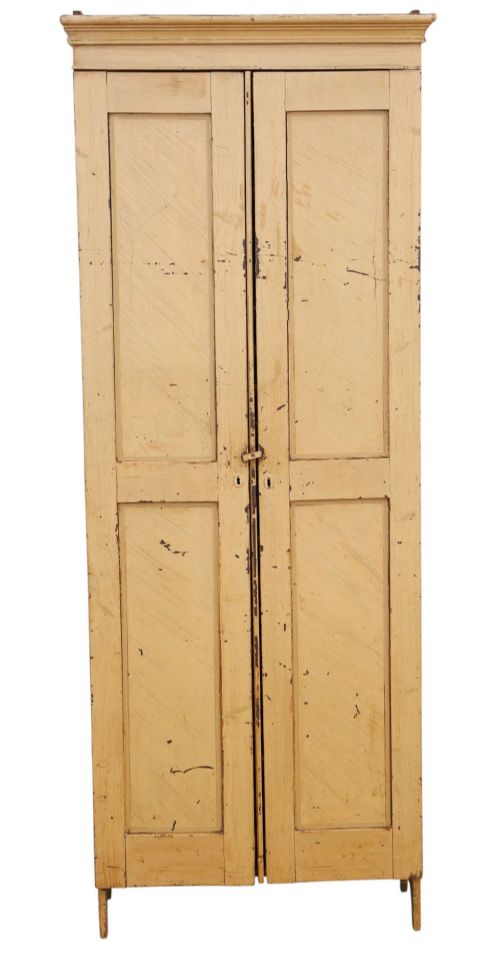
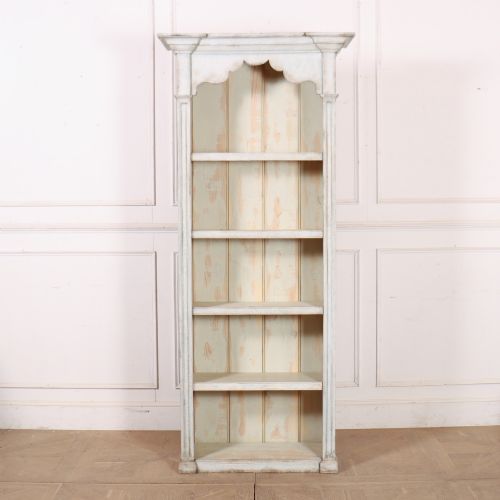
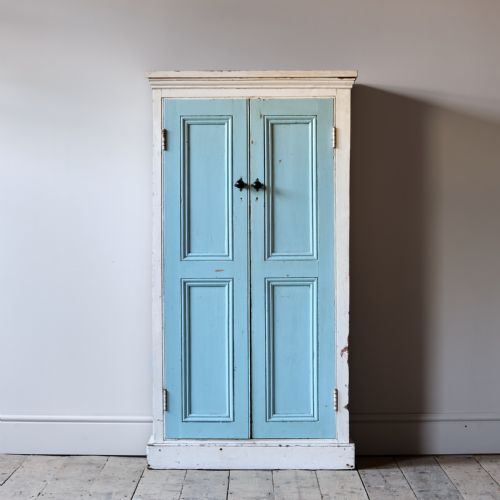
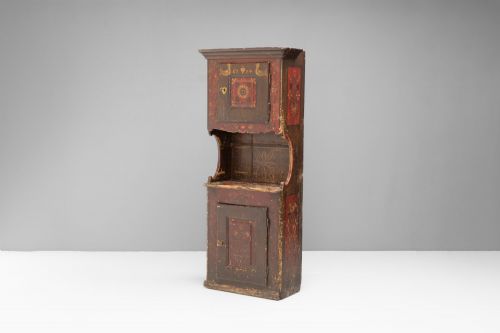


Narrow Painted Pine Cabinet
These narrow painted pine cabinet pieces offer practical storage with period character, shaped by nineteenth-century utility.
Narrow Painted Pine Cabinet
A narrow painted pine cabinet brings upright storage into compact spaces, drawing on forms like cupboards, bookcases, and linen cupboards. These pieces emerge from nineteenth-century utility, spanning Victorian, French Provincial, and Scandinavian country styles.
The inventory on this page ranges from tall kitchen housekeepers' cupboards to single-door skeleton cupboards and pharmacy chests. Buyers encounter items from the eighteen-eighties, eighteen-nineties, and early twentieth century.
Originating across England, France, and Sweden, these items reflect regional vernacular furniture traditions. Each version provides functional shelving or drawer space within a slender footprint.
How they were made
Makers constructed these carcasses predominantly from solid pine, utilising iron and metal for hinges, handles, and structural brackets. Some forms incorporate glass panels within doors designed for display.
Surfaces feature applied paint finishes, ranging from original coatings to later treatments, applied over plain wood. Construction methods include knockdown frames for wardrobes and multi-drawer assemblies for pharmacy chests.
Listings span the Victorian period, eighteen-eighties, eighteen-nineties, and nineteen-twenties, incorporating pine, metal, glass, and paint.
What varies in quality
Quality rests in the preservation of original painted surfaces versus later overpainting, and the integrity of the structural pine carcass. Pieces retaining their initial finish and uncompromised joinery stand apart from heavily altered examples.
Proportion and execution define the better specimens, where hardware, timber selection, and period characteristics align harmoniously. Finer examples maintain crisp detail in mouldings and smooth operation in doors and drawers.
The Narrow Painted Pine Cabinet Glossary
- Pine
- A soft timber extensively used for utilitarian furniture throughout the nineteenth century. It provides a stable base for painted finishes.
- Skeleton cupboard
- A specialised storage piece featuring a minimal frame, often designed with single doors to house specific household goods. These items highlight functional interior shelving.
- Housekeeper's cupboard
- A large storage furniture form traditionally used in domestic quarters for linens and provisions. They typically combine upper shelving with lower drawers or cupboards.
- Knockdown wardrobe
- A large cabinet designed to be disassembled into flat components for transport. This method permitted easier movement between rooms and properties.
Narrow Painted Pine Cabinet: Frequently Asked Questions
How do I date a painted pine cabinet?
Dating relies on construction methods, hardware types, and stylistic indicators present in the woodwork. Nails, hinges, and joint types shift across the nineteenth century.
Paint layers also provide chronological clues, though many pieces received subsequent coats over time. Comparing the carcass construction with known regional forms helps narrow the decade.
Where were these cabinets used?
These cabinets served utilitarian storage roles in kitchens, bedrooms, and storerooms across domestic and institutional settings. Linen cupboards held household textiles, while housekeepers' cupboards stored dry goods and provisions.
Pharmacy chests originated in apothecary or commercial environments before entering domestic interiors. Their slender proportions allowed placement in narrow hallways and compact rooms.
Are painted finishes original?
Surfaces frequently show a mix of original paint and later decorative layers applied during subsequent decades of use. Evaluating the wear patterns and underlying timber helps determine the age of the coating.
Some items retain their earliest finish, while others present later painted schemes that reflect evolving interior tastes. Both conditions appear across nineteenth-century vernacular furniture.
How do I care for antique pine?
Protect painted pine surfaces by maintaining stable humidity levels and avoiding direct exposure to strong sunlight. Gentle dusting with a dry cloth preserves the integrity of the paint layer.
Avoid harsh chemical cleaners that might strip historic finishes or damage the soft wood underneath. Wax can be applied sparingly to unpainted wooden elements to prevent drying.