

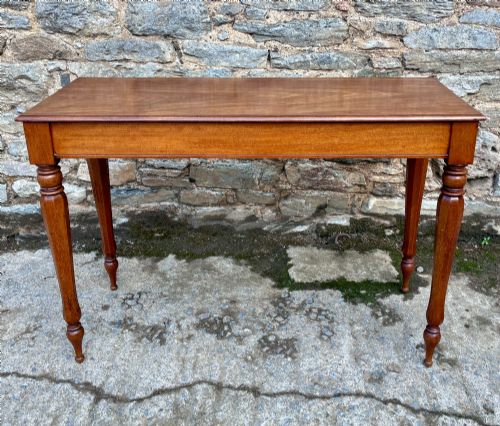
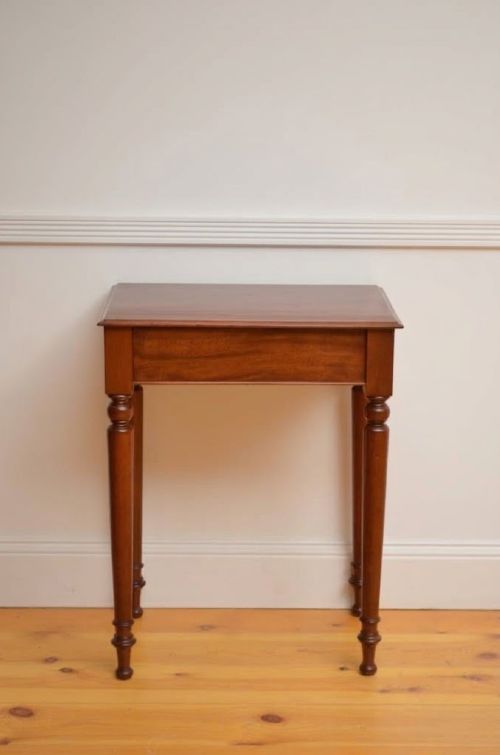
Narrow Mahogany Table
A narrow mahogany table brings disciplined form to tight spaces, offering practical surface area without crowding a hallway or bedroom.
Narrow Mahogany Table
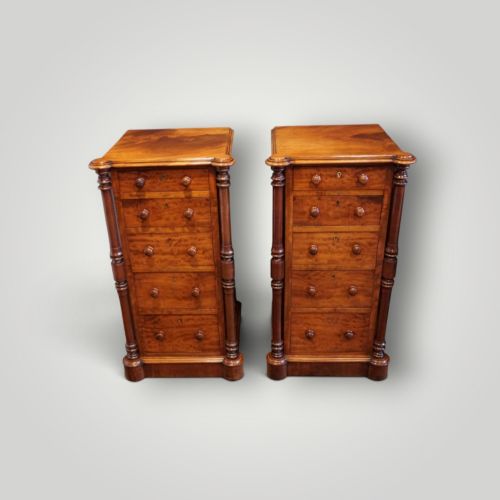
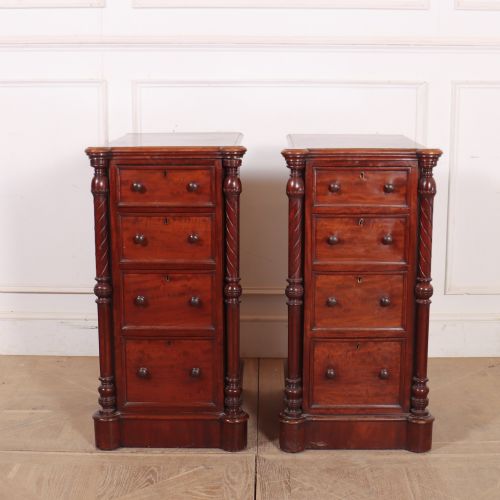
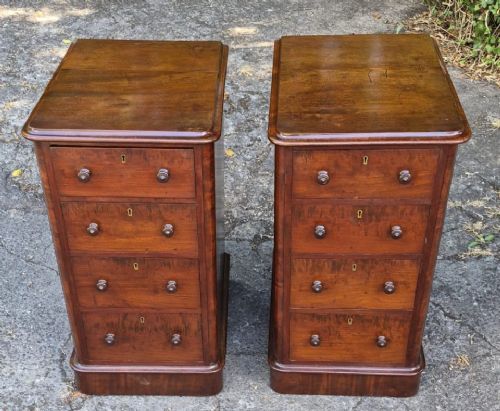
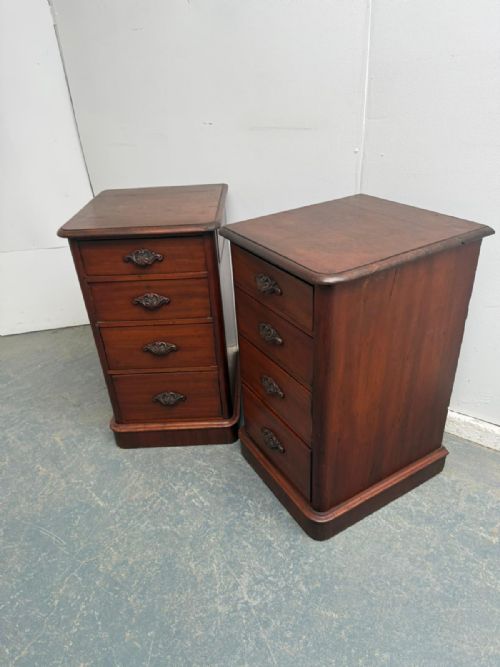
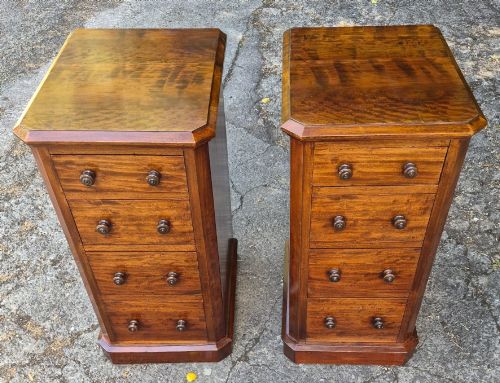
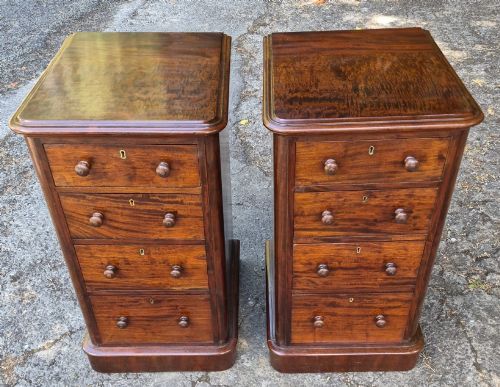
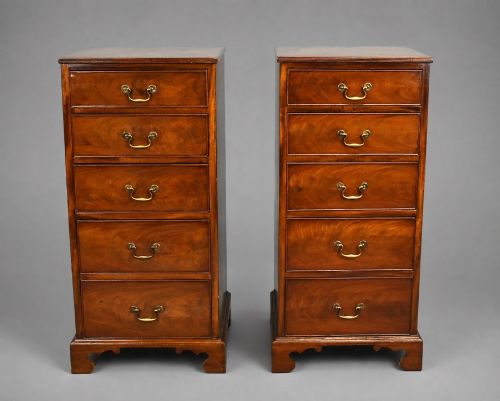
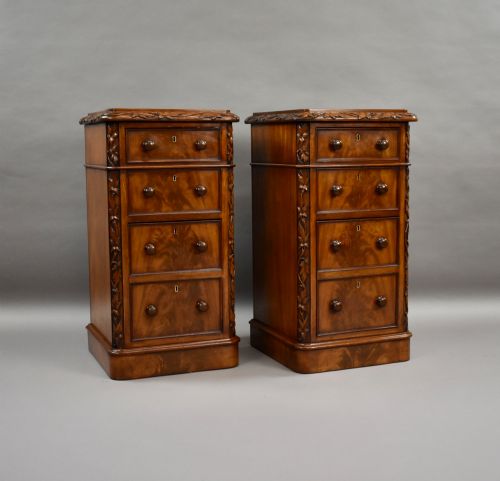
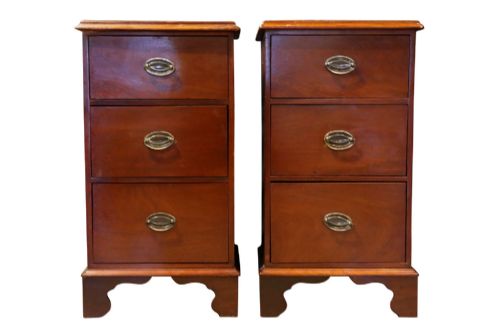
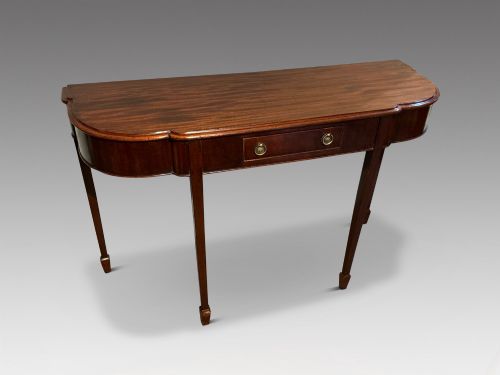
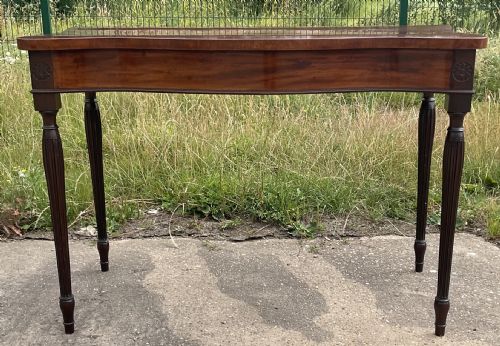
A narrow mahogany table encompasses a range of compact domestic furniture designed for halls, bedrooms and drawing rooms. Buyers seeking this phrase most frequently encounter Victorian bedside chests, console tables and slender side tables dating from the nineteenth and early twentieth centuries. These pieces serve specific spatial functions where depth is limited but storage or surface utility remains necessary.
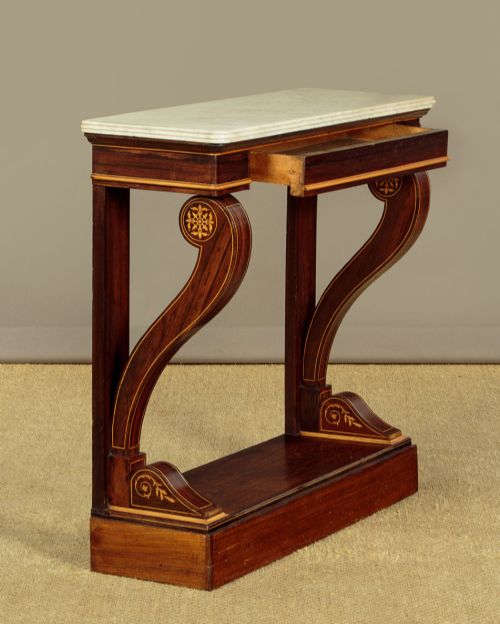
The selection ranges from Georgian style console tables and Edwardian occasional pieces to campaign chests and tiered etageres. Makers from the Victorian era onward adapted the narrow footprint to suit domestic interiors through console designs, hall tables and bedside lockers. Mahogany provides the structural continuity across these diverse forms, often paired with satinwood inlay, marble tops or brass fittings.
Factors That Separate Examples
Quality in a narrow mahogany table rests upon the choice of timber, particularly the depth of figuring in the mahogany veneer and the precision of any satinwood inlay. Finer examples display meticulous attention to proportion, clean drawer action and original brass hardware or marble surfaces.
Later adaptations and alterations, such as chests modified for bedside use, distinguish heavily restored pieces from those retaining their original configuration. The crispness of carved details and the integrity of the structural joints ultimately determine the standing of an individual piece.
Narrow Mahogany Table Retail Price Guide 2026
Typical asking prices for narrow mahogany table among the pieces listed under this phrase on Sellingantiques today, from the lower quarter to the upper quarter. They describe what is for sale here now, not the wider market.
Listings feature Victorian, Edwardian, and George III periods, utilising materials such as mahogany, marble, satinwood inlay, and brass.
Druce and Co·Warings Liverpool
The Narrow Mahogany Table Glossary
- Console table
- A table designed to stand against a wall, frequently secured with brackets or resting on slender legs, suited for narrow hallways and reception rooms.
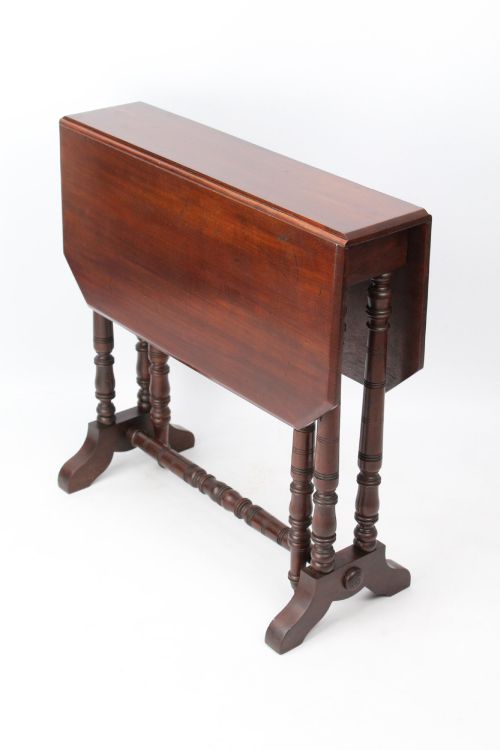
- Sutherland table
- A type of narrow drop-leaf table featuring exceptionally narrow drop leaves supported by swinging gate legs when raised.
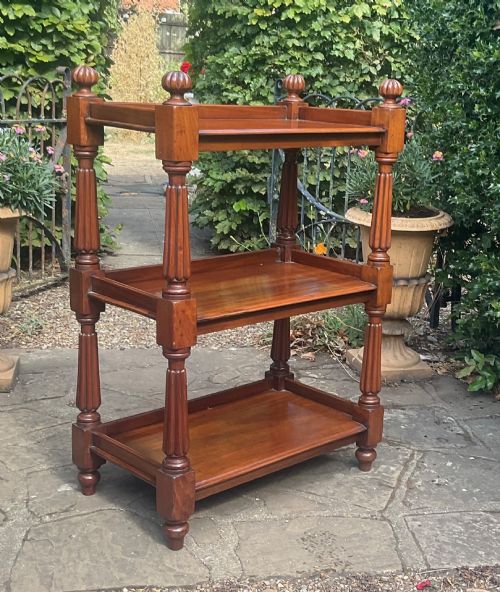
- Etagere
- A set of open shelves arranged in tiers, used for displaying small objects or serving items within a compact footprint.
- Campaign furniture
- Portable pieces constructed for travel, typically featuring recessed brass carrying handles, corner braces and durable hardwood construction.
- Satinwood inlay
- Decorative contrasting wood veneer inserted into the mahogany surface in geometric or floral patterns to enhance visual detail.
Narrow Mahogany Table: Frequently Asked Questions
Where should I place a narrow mahogany table?
These tables find natural placement in narrow entrance halls, tight corridors or beside a bed where floor space is at a premium. Their shallow depth allows them to sit flush against a wall without obstructing walkways.
They also function effectively as sofa tables or small display surfaces in compact sitting rooms where larger furniture would overwhelm the space.
How do I distinguish a Victorian piece from a Georgian style piece?
Victorian examples date from the nineteenth century and often display heavier proportions, rich dark mahogany grains and functional brass hardware suited to domestic storage. Pieces described as Georgian style are typically later reproductions built with classical proportions and restraint.
Examining the construction methods inside the drawers and the composition of the secondary timbers helps clarify the actual period of manufacture.
Are narrow mahogany tables suitable for everyday use?
Mahogany is a robust hardwood that withstands regular daily use, making these tables practical surfaces for lamps, books and daily essentials. Waxed and polished finishes require simple maintenance with a soft cloth to preserve the timber.
Care should be taken with marble-topped variants to avoid staining from acidic liquids, while standard wood surfaces benefit from coasters and sensible placement away from direct heat.