
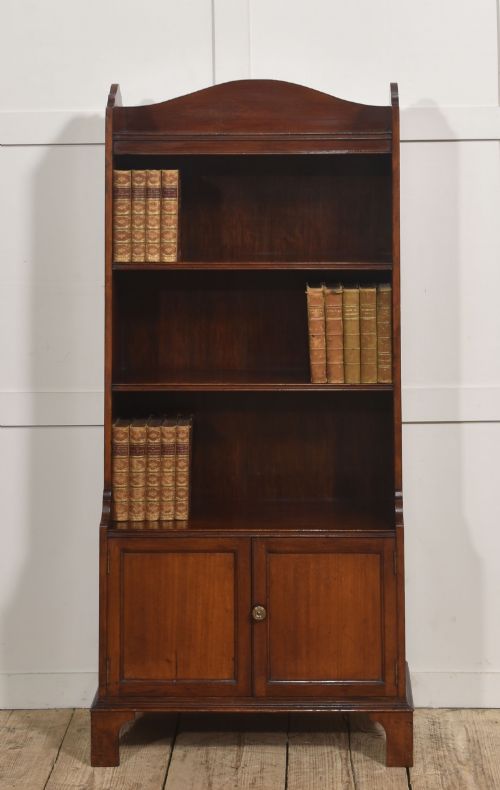
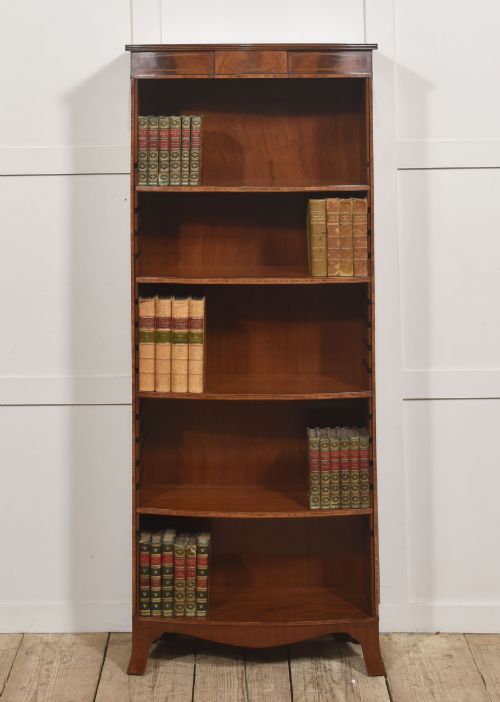
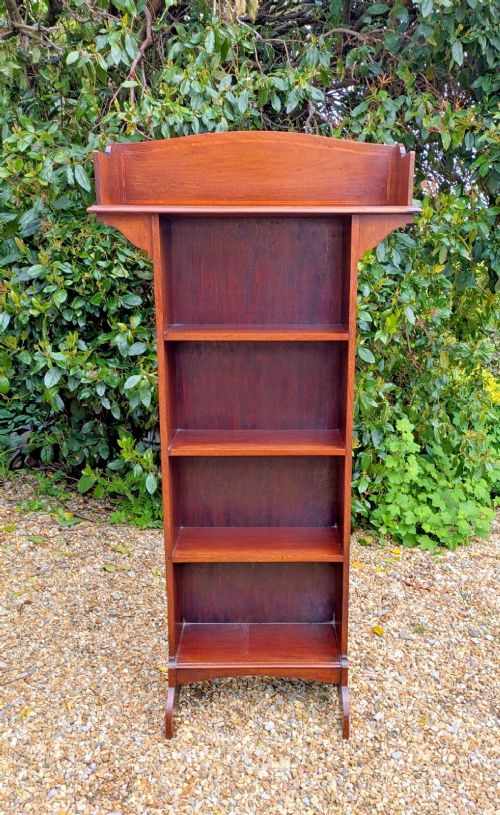


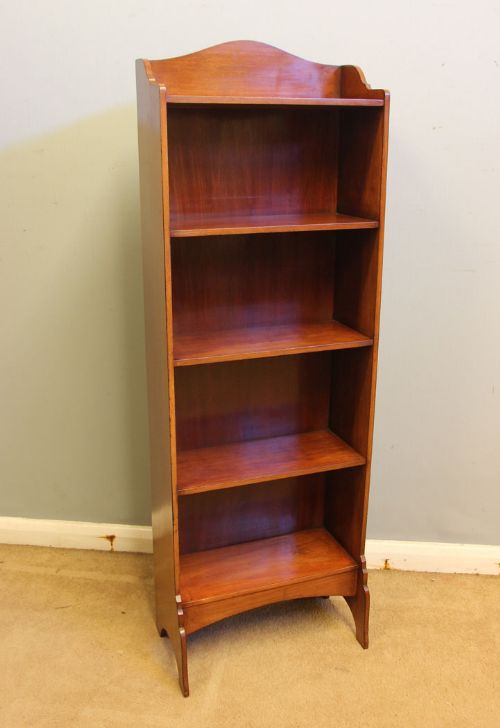


Narrow Mahogany Shelving Unit
A narrow mahogany shelving unit brings compact vertical storage and rich timber grain to smaller rooms without dominating the floor space.
Narrow Mahogany Shelving Unit
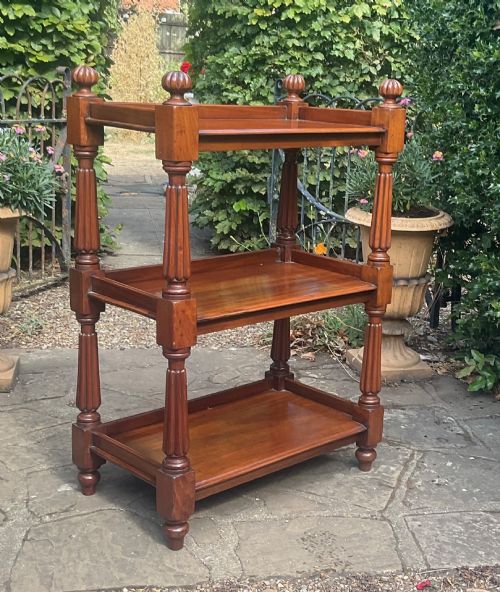
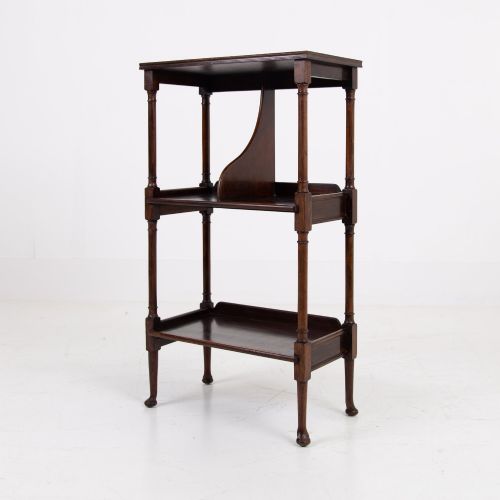
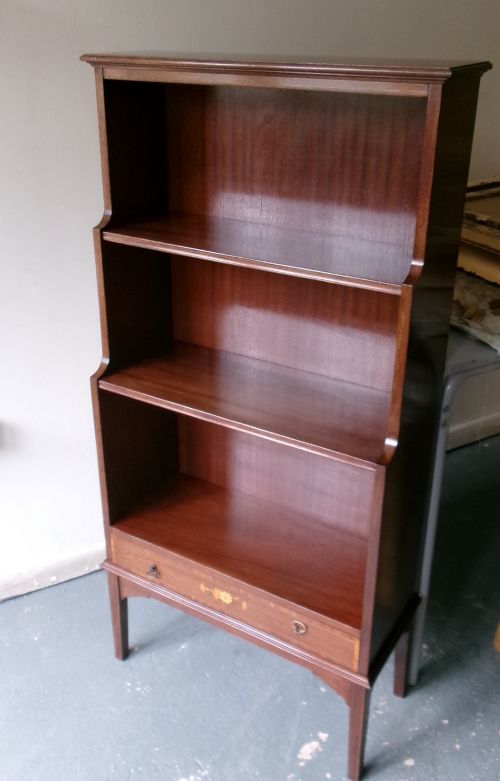
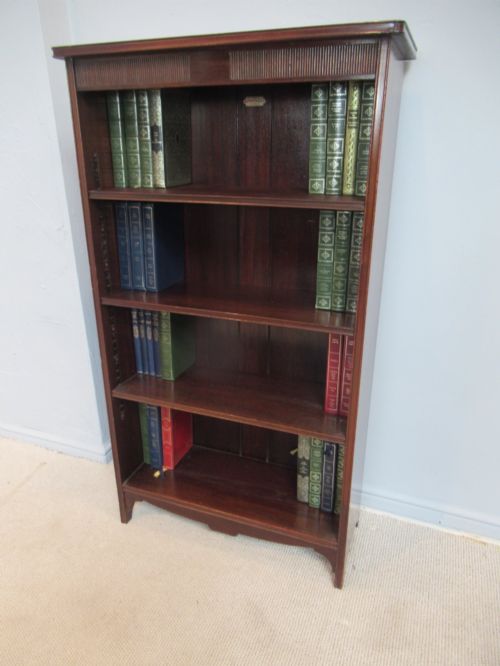
A narrow mahogany shelving unit serves as a practical space-saving bookcase or display stand for tight spaces. Buyers searching this phrase will find pieces spanning from the mid-nineteenth century through to the mid-twentieth century, including open bookcases, tiered etageres, and whatnots. The most common versions met here are open bookcases and small-proportion cabinets from the Victorian and Edwardian eras.
Forms range from simple multi-tiered shelves on turned feet with castors to tall open bookcases and corner cabinets. Many incorporate single drawers at the base or delicate boxwood and fruitwood inlay across the facade. These pieces originated to house compact libraries or display prized objects in period drawing rooms and studies.
How they were made
Cabinetmakers built these units primarily using solid mahogany and mahogany veneers, frequently accented with contrasting satinwood, boxwood, and fruitwood inlay. Structural integrity relied on traditional joinery, with timber selected for its rich grain depth and warm colour.
Many examples incorporate turned wooden feet, sometimes fitted with their original brass castors to allow easy movement across the floor. Surface finishing involved polishing the timber to a deep lustre that highlights the natural figuring of the mahogany.
A nineteenth-century shelving stand comes equipped with its original castors, ready to roll across the parlour floor.
What varies in quality
The distinction between standard examples and superior pieces rests upon the crispness of the cabinetwork and the refinement of any decorative inlay. Finer pieces demonstrate precise timber selection, ensuring the mahogany grain matches harmoniously across the visible panels and shelves.
Proportion and detail separate the ordinary from the exceptional, particularly in how neatly the uprights meet the shelves and whether original brass hardware and castors remain intact. The sophistication of the fruitwood or boxwood stringing also indicates the level of craftsmanship invested in the workshop.
waring and gillows
The Narrow Mahogany Shelving Unit Glossary
- Etagere
- A set of open shelves for displaying small objects, popular in nineteenth-century interiors. These tiered pieces provide light, airy storage.
- Inlay
- A decorative technique where contrasting woods such as boxwood or satinwood are inserted into recesses in the mahogany surface. This creates delicate borders and geometric patterns.
- Castor
- A small wheel mounted on a swivel assembly attached to the feet of the unit. Original brass examples allow the shelving stand to be repositioned smoothly.
Narrow Mahogany Shelving Unit: Frequently Asked Questions
Where do I put a narrow mahogany shelving unit?
These compact pieces fit easily into alcoves, narrow hallways, or beside a fireplace where standard furniture proves too bulky.
Their restrained footprint allows them to provide useful storage in small rooms without cluttering the floor space.
How do I clean mahogany shelves?
Dust the timber regularly with a soft, dry cloth to prevent a buildup of grit that might scratch the polish.
Apply a traditional beeswax polish sparingly every few months to maintain the moisture and warm lustre of the wood.
Can these shelves hold heavy books?
Most antique open bookcases and shelving units feature sturdy timber construction capable of supporting moderate book collections.
Distribute heavier volumes across the lower shelves to maintain overall balance and stability.
How do I distinguish Victorian from Edwardian pieces?
Victorian units tend to display heavier proportions, darker timber tones, and robust turned feet or original castors.
Edwardian examples often incorporate lighter satinwood or boxwood inlay work, reflecting a preference for more delicate ornamentation.