
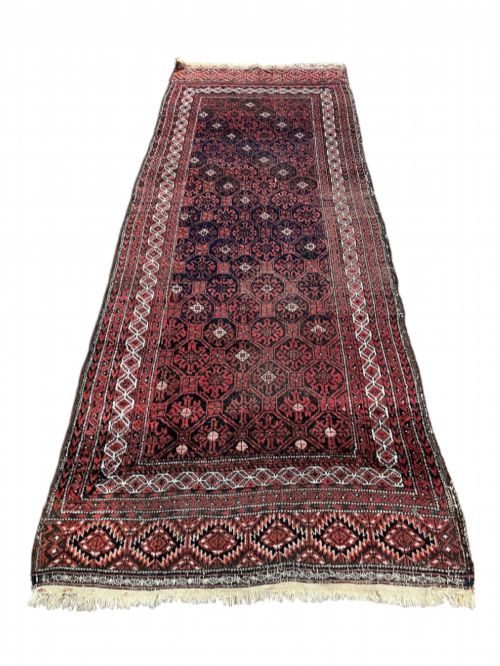
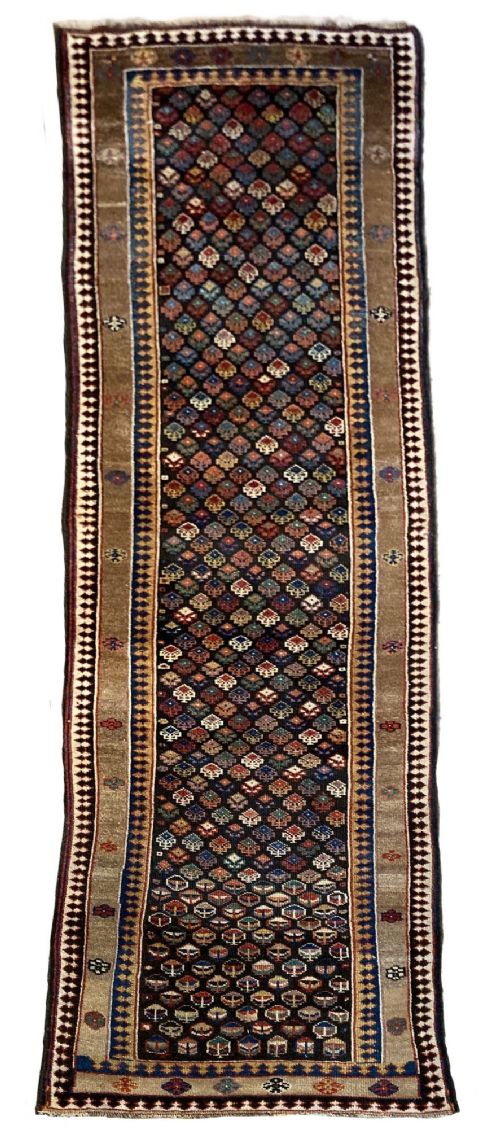


Narrow Hallway Rug
A narrow hallway rug brings character and warmth to confined corridors through traditional hand-knotted designs.
Narrow Hallway Rug
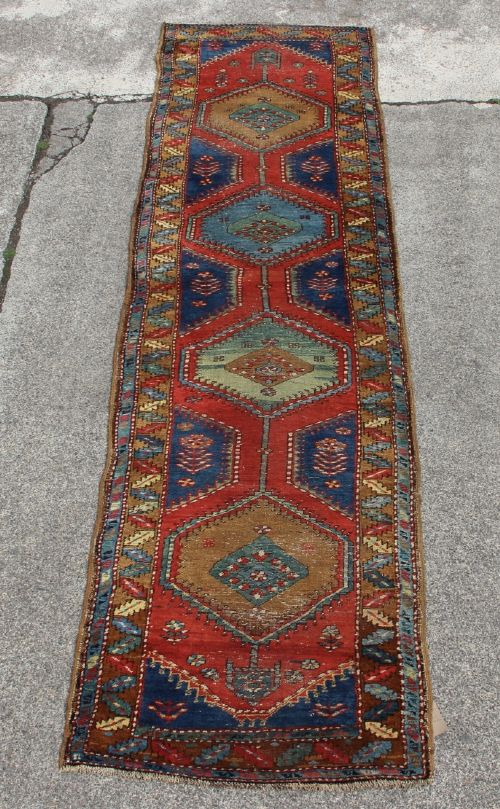
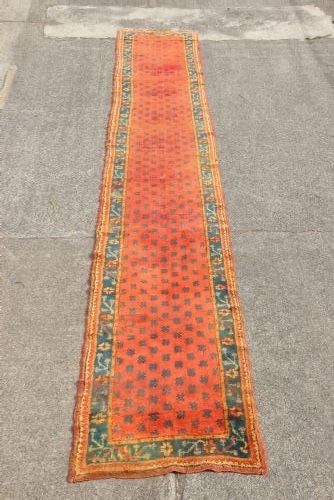
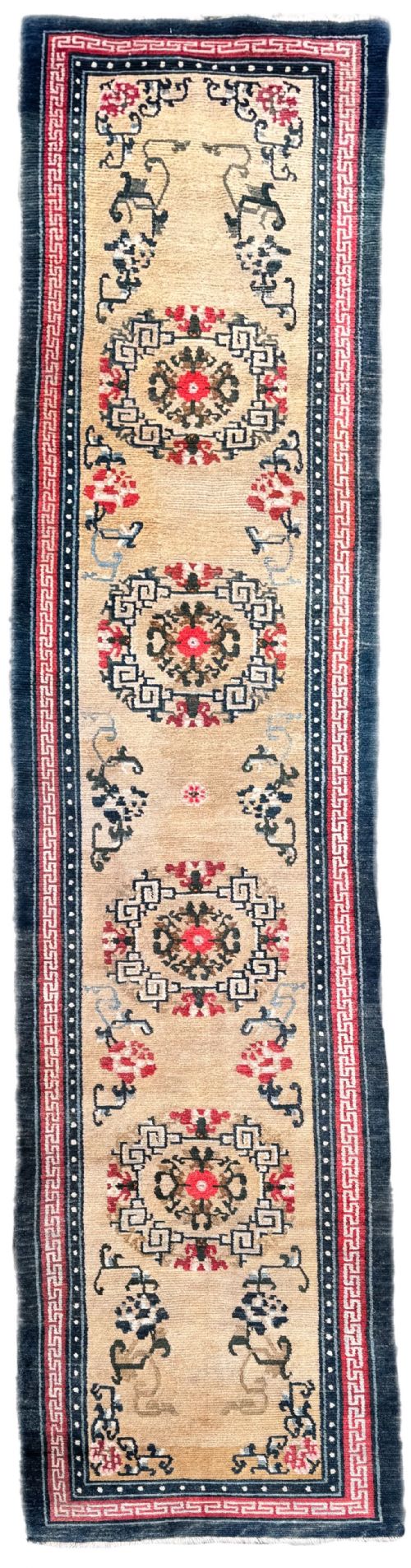
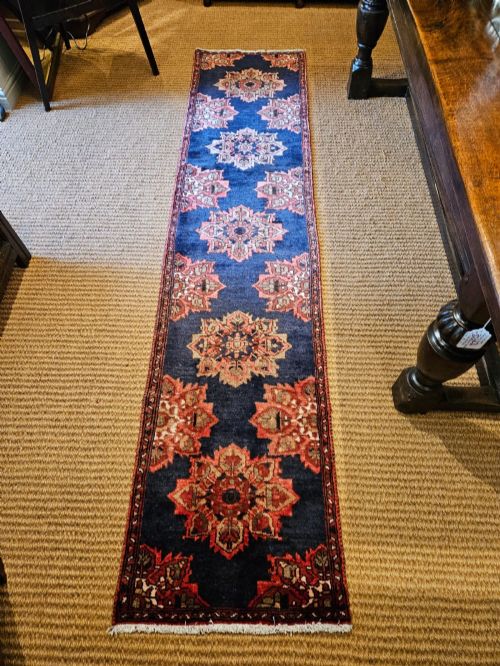
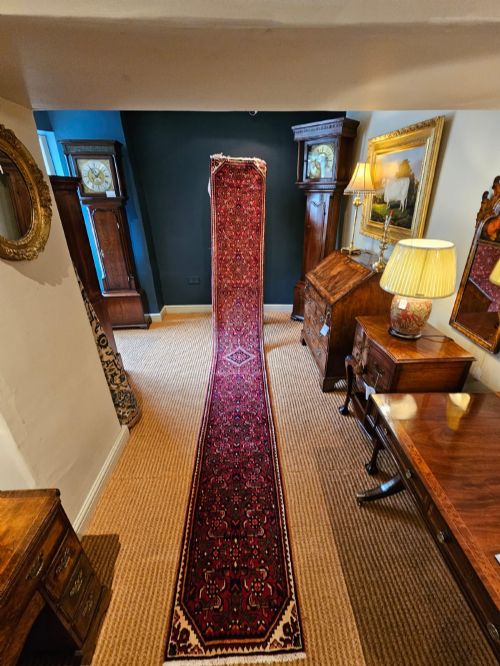
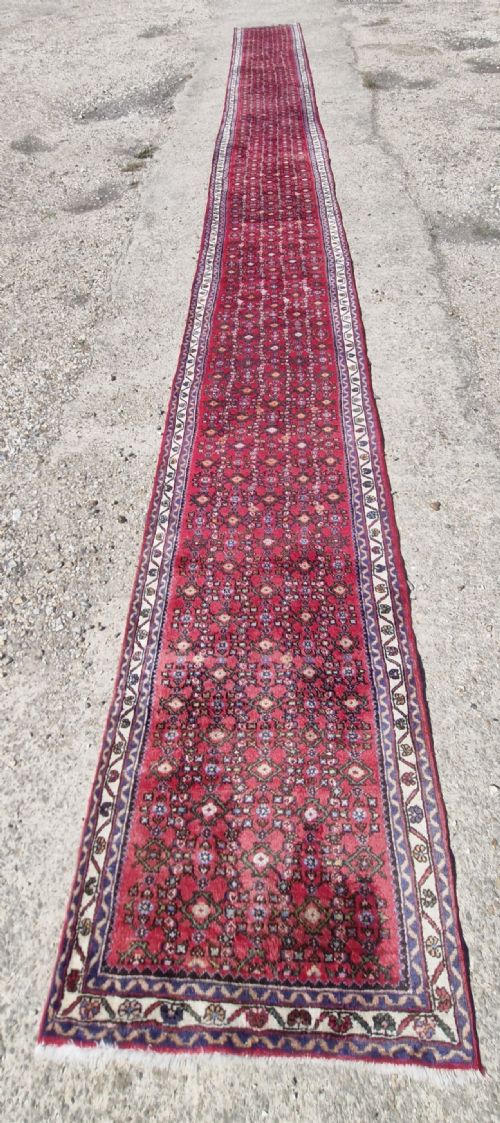
A narrow hallway rug spans extended floor spaces with elongated proportions designed specifically for corridors, landings and narrow passages. These pieces emerge from Persian, Turkish, Moroccan and Tibetan traditions spanning the nineteenth and early twentieth centuries.
The selections encountered here include tribal runners, village carpets and long kilims woven in wool, hand-spun wool, cotton and camel hair. Formats range from modest six-foot lengths to exceptional spans exceeding thirty feet.
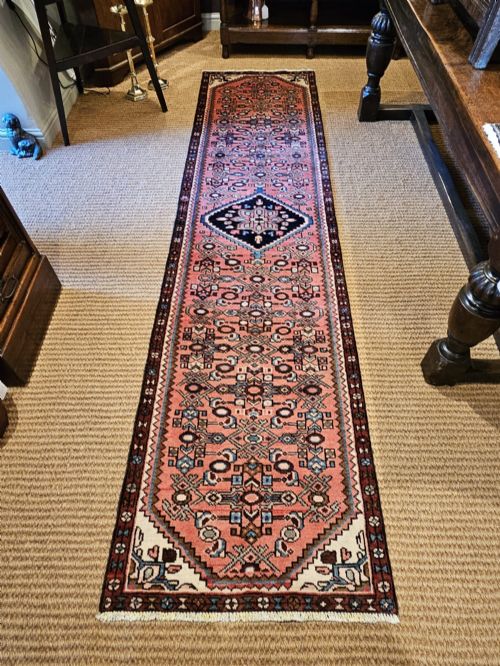
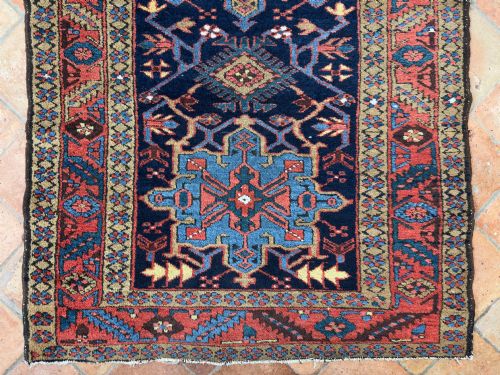
Makers utilised regional motifs such as Heriz geometry, Hamadan medallions and Berber linear patterns to ornament these utilitarian floor coverings. Each runner reflects the specific weaving culture of its origin, whether North West Persia or Anatolia.
Construction and materials
Weavers constructed these runners using wool, hand-spun wool, cotton foundations and occasionally camel hair, knotting pile tightly to withstand heavy corridor traffic. Natural dyes provided durable hues of navy blue, olive green and rich reds that mellow gracefully over decades.
Nomadic and village workshops employed traditional upright looms, tying symmetrical or asymmetrical knots by hand over cotton or wool warp and weft threads. Flatweave kilim techniques also appear in pieces produced across Turkish and Caucasian regions.
Listings feature traditional wool and hand-spun wool runners originating from Persian, Turkish, Moroccan and Tibetan weaving traditions dating from the late nineteenth century to the mid-twentieth century.
Evaluating quality in runners
Quality rests in the density of the knotting and the crispness of the tribal or geometric design rendered across the narrow format. Finer wool selection and steady tension during weaving create a resilient pile that maintains structural integrity under constant footfall.
The nuance of natural dye colours and the precision of proportion distinguish exceptional village and tribal examples from standard commercial output. Balance in design across an extended length reveals the skill of the original hand.
The Narrow Hallway Rug Glossary
- Runner
- A long, narrow carpet designed for corridors, hallways and staircases. This format dictates the stretched proportions seen across Persian and Turkish examples.
- Kilim
- A flatweave carpet produced without a pile by tightly interweaving warp and weft strands. These pieces offer a flat, durable surface often utilised in hallway settings.
- Warp
- The vertical foundation threads stretched lengthwise on the loom before knotting begins. Cotton and wool serve as the primary materials for these structural elements.
- Weft
- The horizontal threads passed alternately over and under warp threads to bind the knots in place. This technique secures the structural rigidity of the rug.
- Pile
- The upright cut or looped yarn surface forming the soft upper layer of a knotted carpet. Dense pile provides comfort and protection against wear.
Narrow Hallway Rug: Frequently Asked Questions
Are these runners durable for heavy traffic?
Traditional hand-knotted wool runners naturally withstand sustained foot traffic due to the resilience of animal fibres and dense construction. The lanolin present in wool acts as a natural soil repellent.
Pairing the rug with a quality underlay prevents slipping and absorbs impact, further protecting the foundation threads from premature wear in busy passages.
How do I distinguish regional Persian runner types?
Heriz runners display bold geometric medallions and robust corner spandrels woven in durable wool. Hamadan and Bidjar pieces often feature denser overall patterns with distinct indigo and madder red tones.
Kurdish and Afshar tribal runners incorporate more spontaneous, angular motifs and rich, varied dye palettes reflecting nomadic workshop traditions.
How do I care for an antique wool runner?
Vacuum the rug regularly with a suction-only attachment, avoiding rotating brush bars that can pull at vintage pile knots. Rotate the runner periodically to ensure even exposure to foot traffic and sunlight.
Address spills immediately by blotting with a clean cloth rather than rubbing. Professional cleaning suited to antique textiles is recommended every few years.