

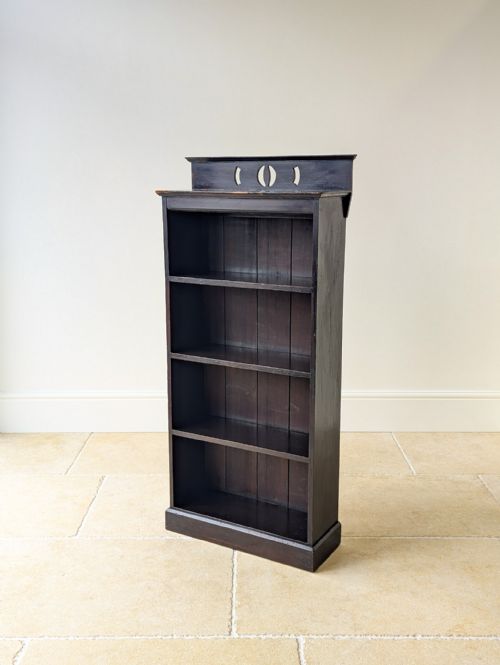

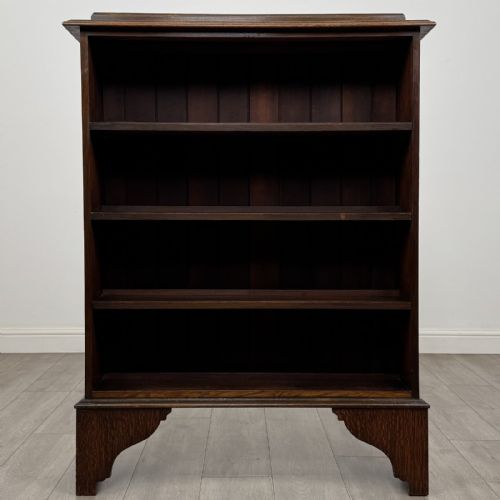


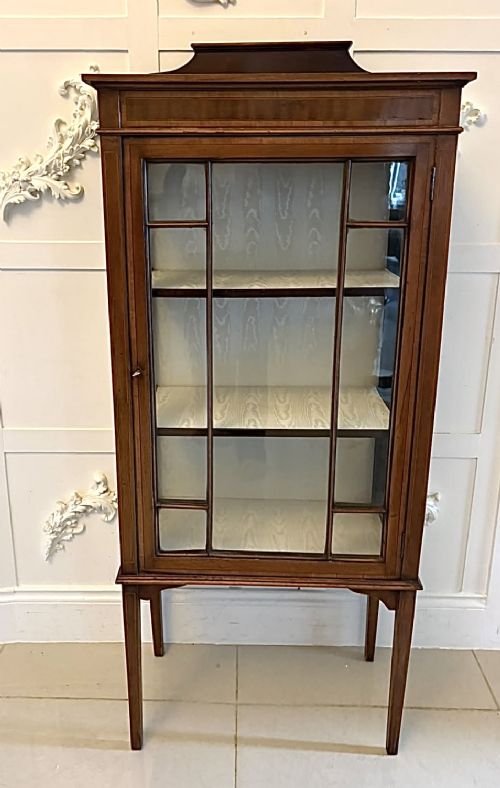
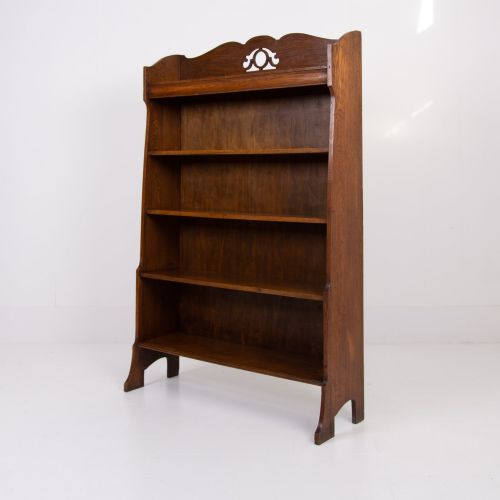
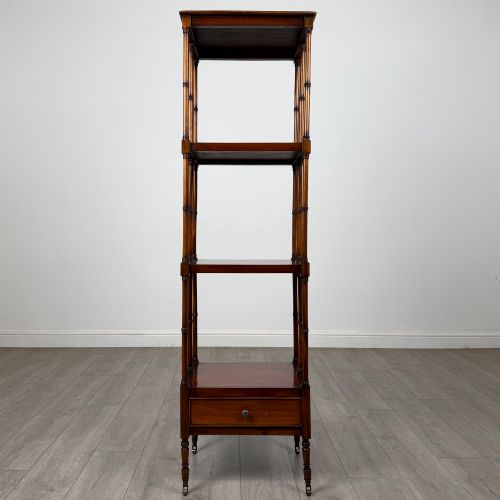
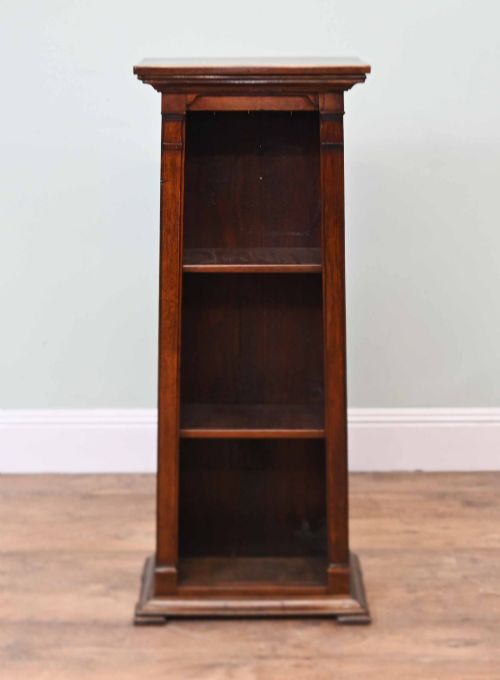
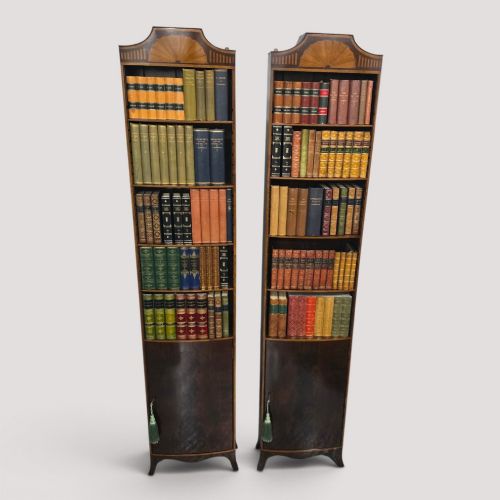
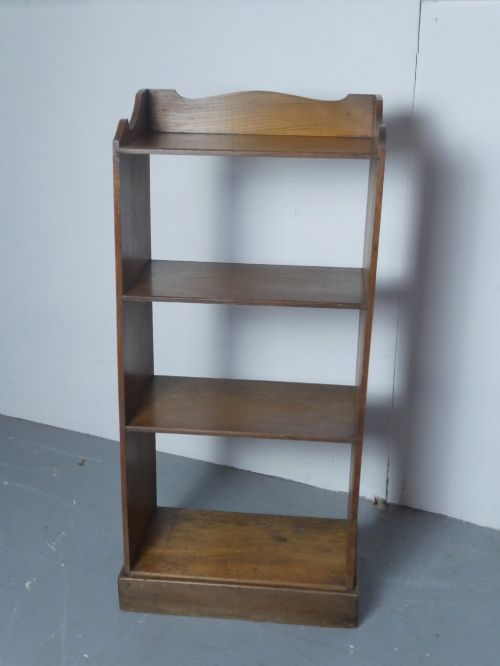
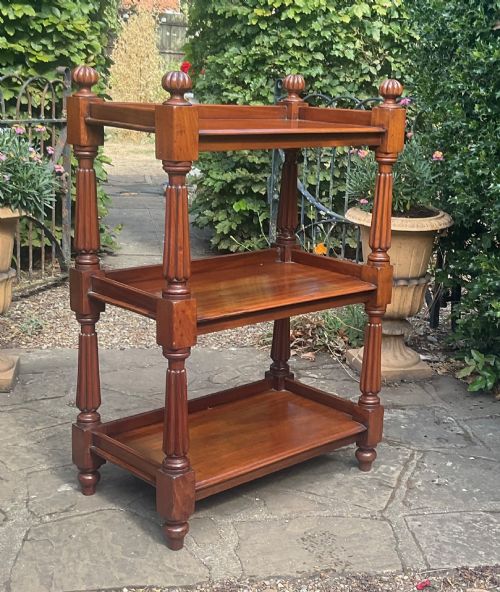
Narrow Display Stand
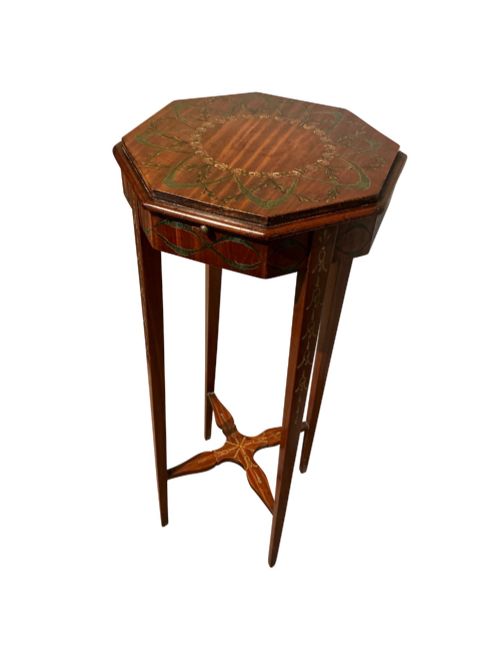
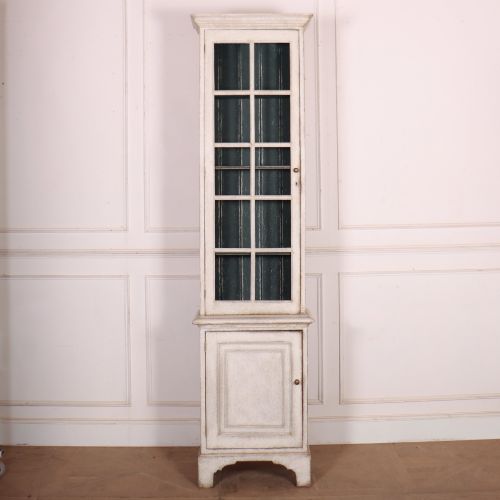
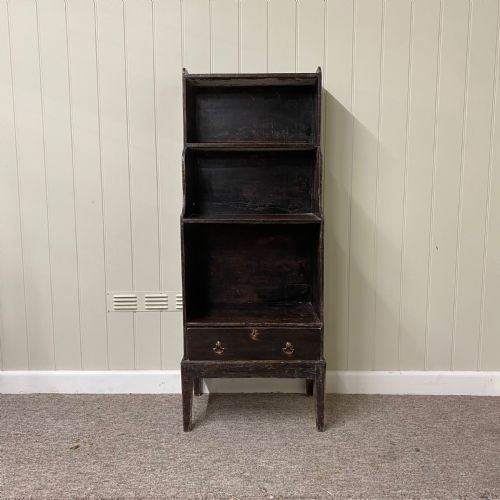
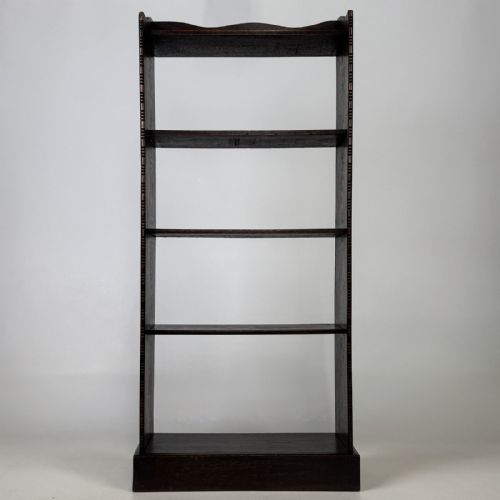
A narrow display stand holds books and ornaments without crowding a room, taking varied vertical forms from open oak bookcases to inlaid cabinets.
Narrow Display Stand
When you search for a narrow display stand, you look for compact furniture designed to exhibit small collections or organise books in restricted floor space. The pieces appearing here span bookcases, corner cabinets, etageres, and glazed display cabinets.
Oak and mahogany versions dominate the selection, stretching from Victorian examples down through Edwardian and 1930s pieces. You meet open shelves with raised galleries as frequently as enclosed cabinets with glass panels or claw feet.
The slender proportions serve alcoves and tight landings where standard furniture overwhelms the architecture. Makers achieved this through shallow depths and vertical tiered shelving.
Materials and construction methods
Timber selection leans heavily on oak and mahogany, supplemented by rosewood, walnut, and pine. Craftsmen utilised solid boards for structural uprights and applied decorative grain matching or satinwood inlay to key visual surfaces.
Construction techniques include adjustable shelving systems supported by pegged brackets or slotted interiors. Glazed doors feature timber framing holding glass panes, while open models incorporate beaded edges, raised galleries, and decorative cut-outs.
Narrow Display Stand Retail Price Guide 2026
Typical asking prices for narrow display stand among the pieces listed under this phrase on Sellingantiques today, from the lower quarter to the upper quarter. They describe what is for sale here now, not the wider market.
Some Edwardian shelves come equipped with decorative cut-outs designed strictly to make dusting a less tedious chore.
Distinctions in construction and design
Lower tiers of quality present simpler utility forms with heavier, unarticulated timber and plain pegged joints lacking decorative refinement or finish depth.
Ercol
The Narrow Display Stand Glossary
- Etagere
- A piece of furniture consisting of a series of open shelves for displaying small objects. These tiered stands date largely from the mid-nineteenth century onwards.
- Whatnot
- A standing set of open shelves used for books or ornaments. They typically feature slender upright supports and multiple tiers.
- Gallery
- A raised ornamental border running along the top edge of a shelf or cabinet. This rail prevents items from sliding off the surface.
- Inlay
- A decorative technique where contrasting materials are inserted into recessed portions of a base timber. Satinwood frequently provides the lighter contrast in mahogany pieces.
- Glazed display cabinet
- A standing storage unit featuring glass door panels. This allows contents to remain visible while protected from dust.
Narrow Display Stand: Frequently Asked Questions
Where should I put a narrow display stand?
These compact pieces suit narrow hallways, tight bedroom corners, and empty wall spaces beside fireplaces where standard cabinets fail to fit.
Their shallow depth allows them to hold books or ornaments without obstructing walkways.
How do I adjust the shelves?
Many period bookcases utilise wooden support pegs or slotted interior uprights that let you lift and reposition boards by hand.
Simply slide the shelf free of its rests and place it into the alternate slots provided inside the cabinet carcass.
Are these stands stable enough for heavy books?
Solid oak and mahogany construction provides sufficient rigidity for standard volume collections, particularly in standing open formats.
For taller tiered pieces, distributing heavier items on the lower shelves maintains balance.
How do I tell Edwardian pieces from Victorian ones?
Victorian examples tend to use heavier timber sections and darker finishes, often reflecting robust Arts and Crafts or revival ideals.
Edwardian items frequently display lighter mahogany frames, delicate satinwood inlay, and slender pillars characteristic of the Sheraton revival.