

Narrow Bedroom Chest
A narrow bedroom chest saves floor space while offering deep storage, which is why these compact pieces remain essential for smaller rooms.
Narrow Bedroom Chest
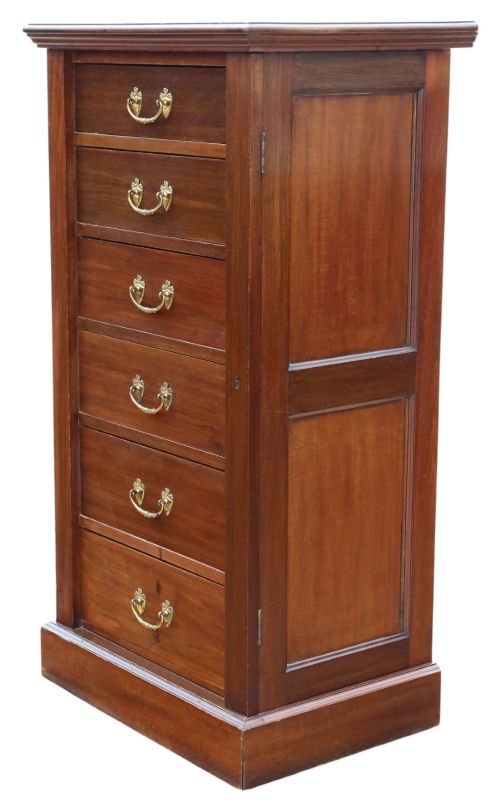
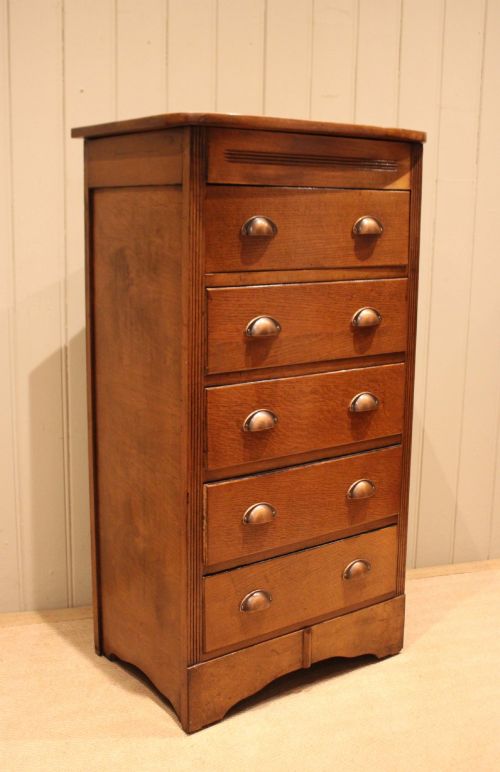
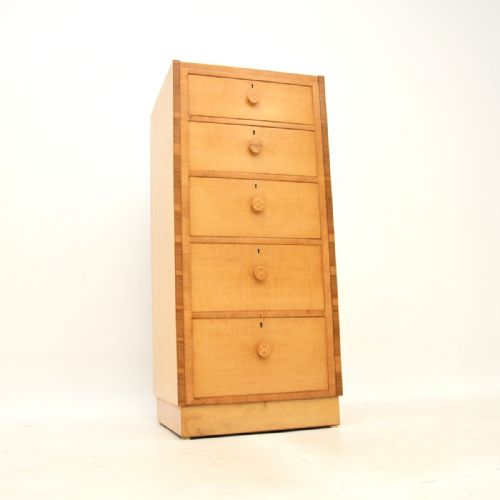
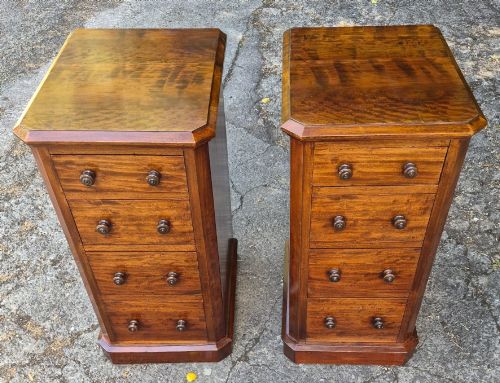
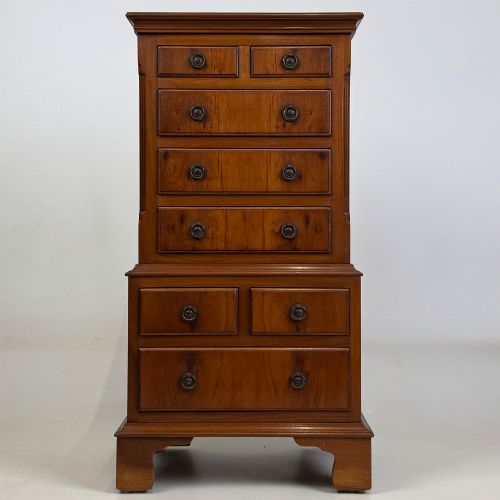
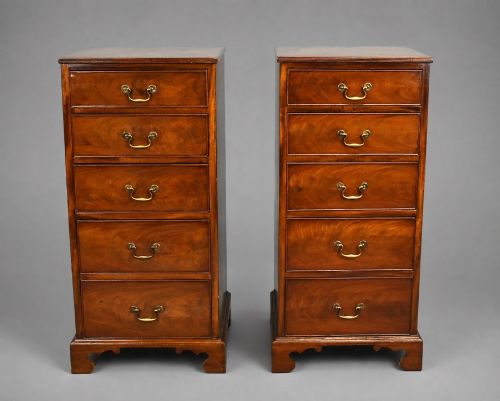
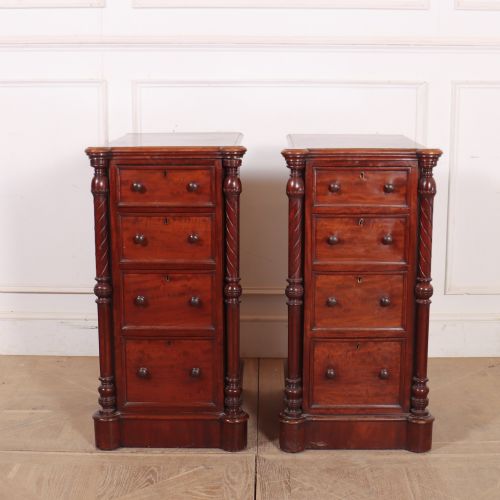
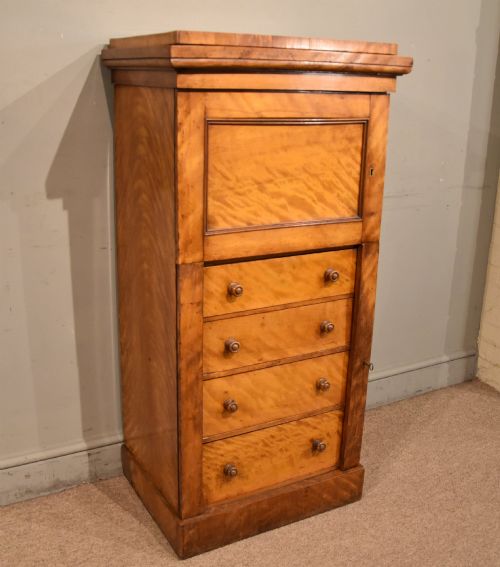
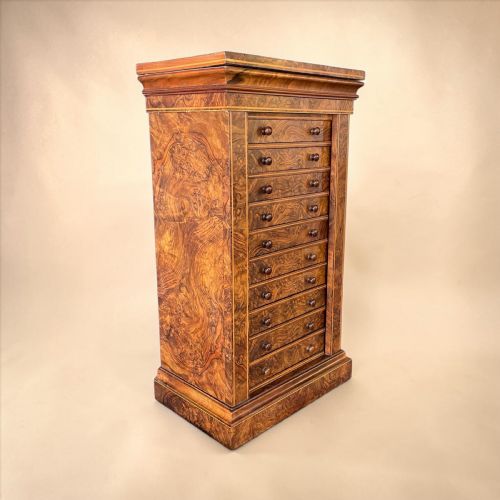
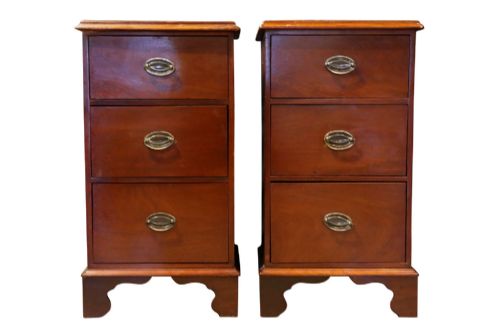
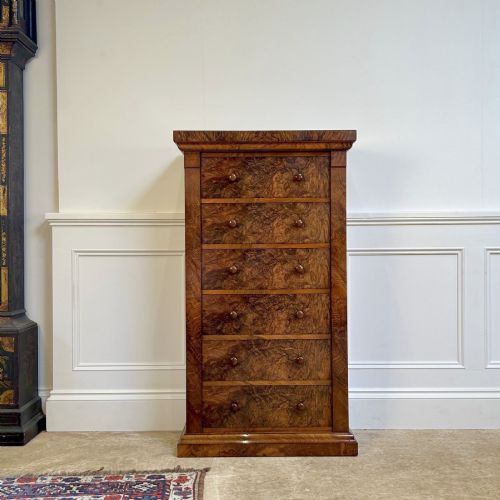
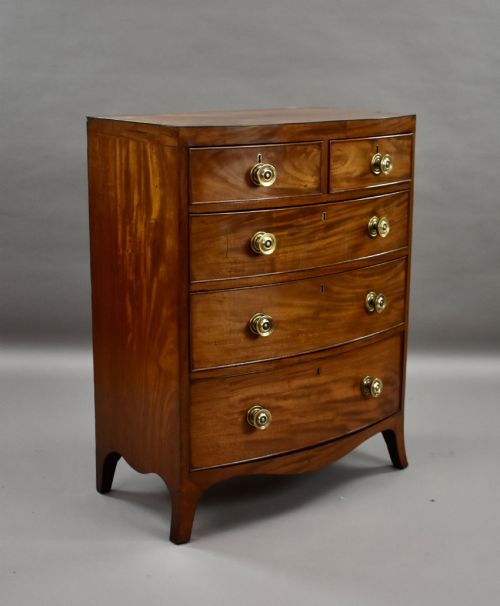
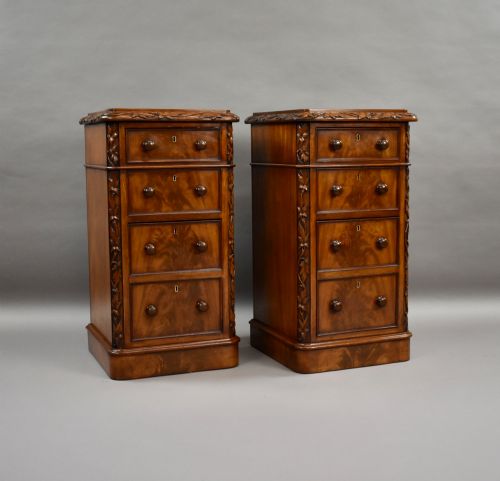
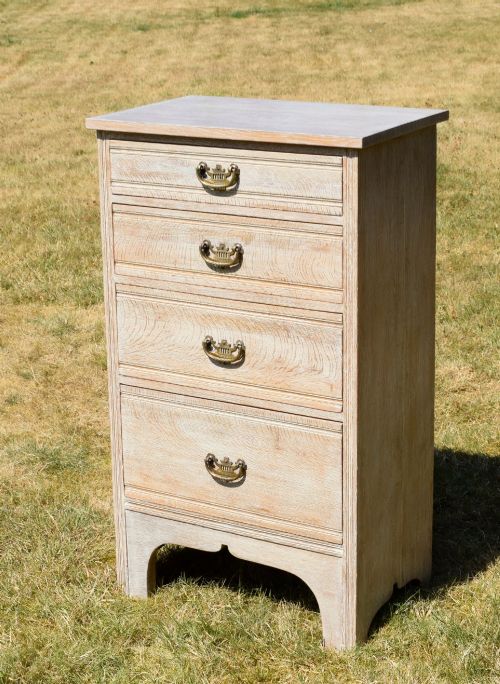
When searching for a narrow bedroom chest, buyers encounter vertical forms designed to maximise storage without dominating limited floor space. The selection spans distinct types, including tallboys, semainieres, and upright Wellington chests alongside compact bedside cabinets.
Most examples originate from the Victorian and Edwardian eras, constructed in forms ranging from six-drawer formats to slender bedside chests. Materials vary from dense hardwoods to painted country pine, offering options suited to both formal interiors and relaxed bedrooms.
How they were made
Cabinetmakers utilised timber boards of mahogany, walnut, oak, and pine, frequently selecting figured veneers such as burr walnut or satin birch for primary display surfaces. Solid secondary timbers like deal or oak formed the drawer linings and internal framing.
Joinery relied on traditional dovetail construction for drawer boxes, ensuring structural resilience under regular daily use. Exterior finishes ranged from polished French polish to applied scumble paint and decorative mahogany or boxwood stringing.
Periods represented span the Victorian era, Edwardian period, and Georgian style revivals.
What varies in quality
Distinctions in quality often rest upon the selection of timber figures and the precision of the cabinetwork, particularly in veneered surfaces and moulded cornices. Superior examples display carefully matched grain patterns across drawer fronts and tight, hand-cut dovetails.
Hardware and mechanisms also separate standard items from finer productions, seen in original brass drop handles, working locking side pilasters, and smooth drawer runners. Altered heights or adapted configurations introduce variations that influence historical integrity.
Gillows·Hille·S. Mordan & Co
The Narrow Bedroom Chest Glossary
- Wellington chest
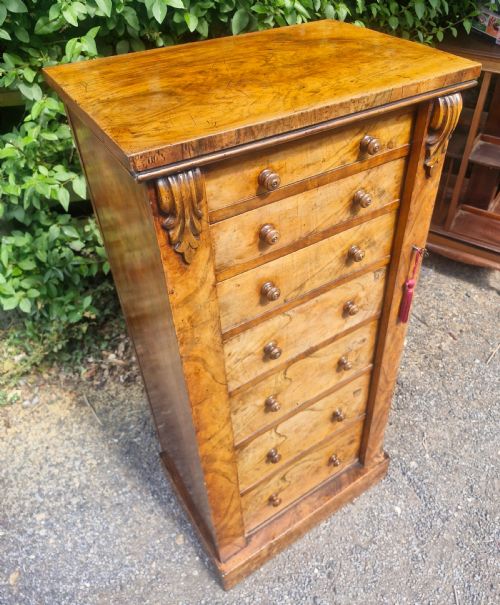
- A tall, narrow chest of drawers featuring a hinged locking stile on one side that secures all drawers simultaneously. This specific form typically contains six or seven graduated drawers.
- Semainiere
- A slender, seven-drawer chest traditionally designed to hold a week of undergarments or daily attire. Originating in France, the form translates closely to the tall narrow English formats.
- Tallboy
- A tall chest of drawers, often constructed in two stacked sections to facilitate movement. These pieces combine a narrow footprint with substantial vertical storage capacity.
- Scumble paint
- A decorative surface treatment involving translucent pigmented glazes manipulated to imitate grained wood or aged finishes. Country pieces frequently showcase this textured technique.
- Bowfront
- A curved cabinet front where the central section projects outward in an arc. This shaping softens the linear geometry of a narrow chest.
Narrow Bedroom Chest: Frequently Asked Questions
What is a Wellington chest?
A Wellington chest is a tall, narrow set of drawers distinguished by a locking wooden pilaster bar down one side. This locking bar secures the entire column of drawers when engaged.
Originally designed for secure storage of papers or personal items, these pieces offer deep vertical storage within a minimal floor area.
How do I choose a bedside chest?
Selecting a bedside chest involves measuring your mattress height to ensure the surface aligns comfortably for nighttime use. Narrow proportions prevent the piece from crowding tight spaces beside the bed.
Consider whether you require enclosed cupboard space, open shelving, or multiple small drawers for bedside organisation.
Are narrow chests stable?
Narrow chests utilise tall vertical proportions, which means their stability depends upon balanced weight distribution within the drawers. Heavier items belong in the lower drawers to keep the centre of gravity low.
Many period examples include structural provisions or wall-attachment fixings to ensure safety in daily use.
How do I date a Victorian chest?
Dating a Victorian chest relies on examining construction methods, timber choices, and hardware styles across the piece. Hand-cut dovetails and solid mahogany linings generally point to earlier decades, while machine-sawn elements suggest later production.
Design motifs such as applied burr walnut veneers or brass ring handles help narrow the manufacturing period further.