


Napoleon III Side Cabinet
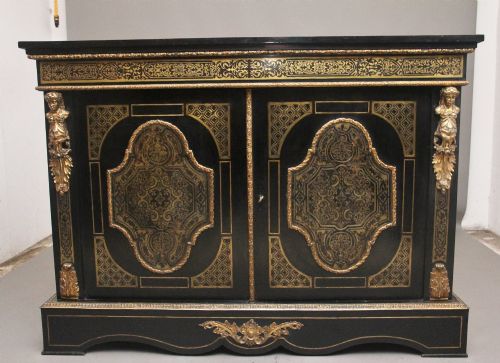
A napoleon iii side cabinet brings French Second Empire opulence into a room with striking mounts and rich timbers.
What a Napoleon III Side Cabinet Is
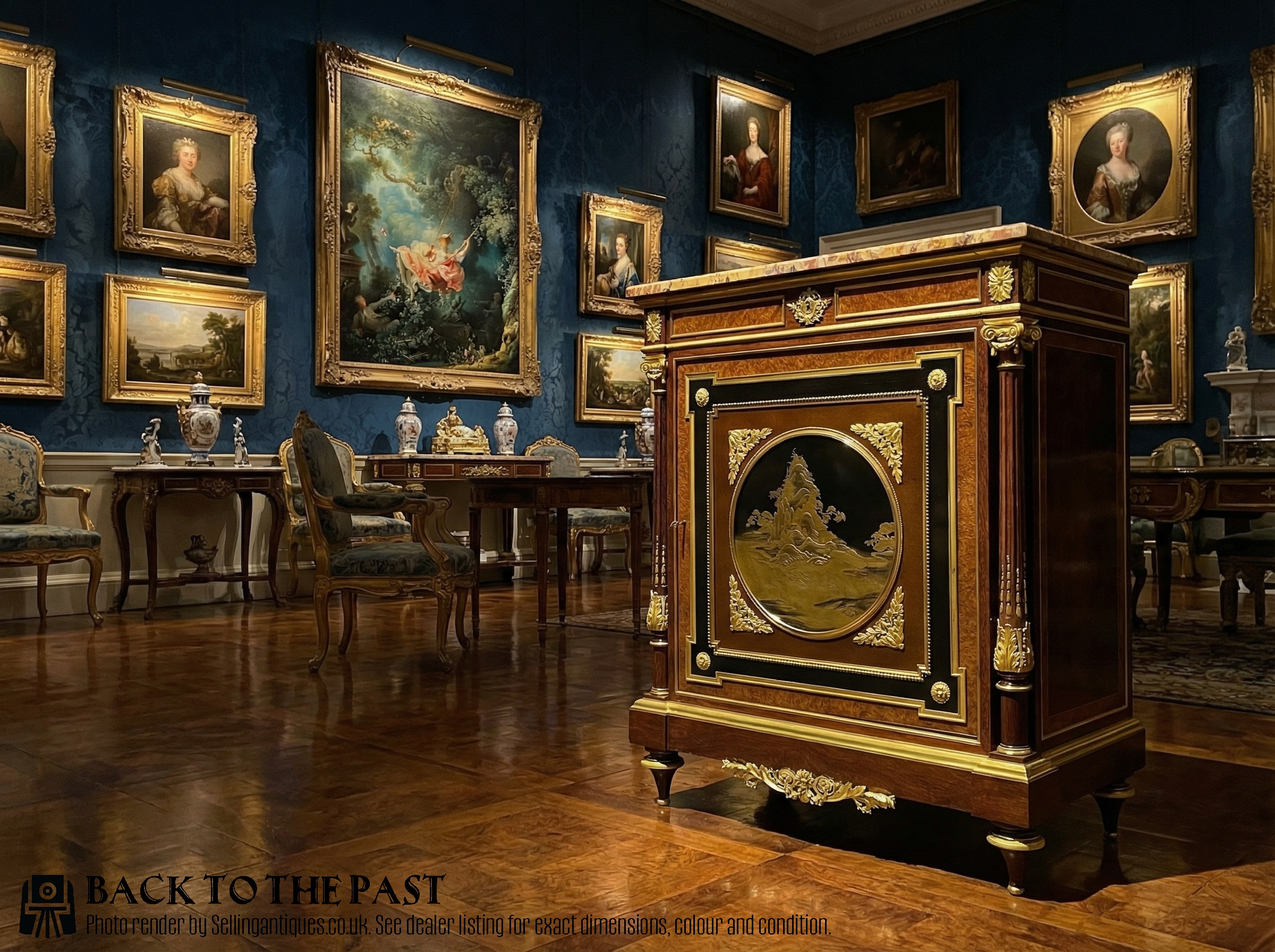
A napoleon iii side cabinet is a substantial French furniture form dating from the nineteenth century, often reflecting Louis XVI revival tastes or Second Empire grandeur. These pieces appear as side cabinets, fitted with marble tops and decorative mounts, designed to anchor a formal interior.
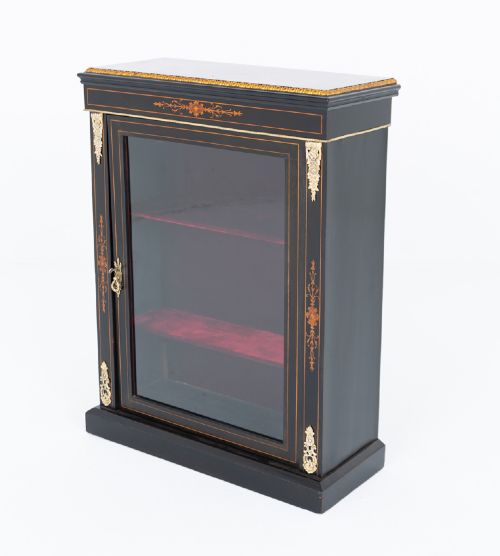
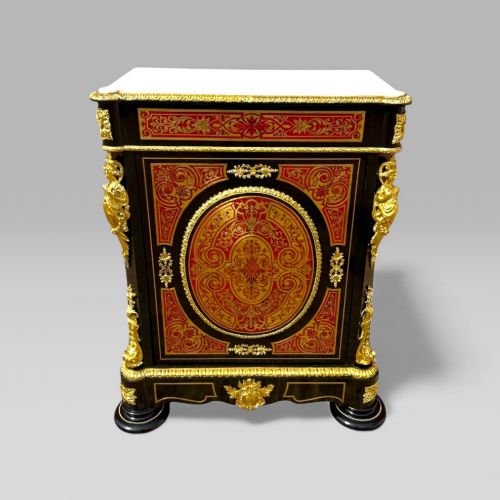
The versions most commonly met on this page are ebonised or boulle-inlaid cabinets, frequently accented with ormolu mounts and porcelain plaques. Alongside these stand marquetry pieces and lacquer examples, representing the diverse aesthetic strands of the period.
What Varies in Quality
Quality rests in the precision of the marquetry and the crispness of the ormolu casting, where sharper chiselling and deeper relief separate finer works from simpler production. The choice of primary timbers and the depth of the lacquer or polish dictate the overall visual resonance.
Maker attribution elevates certain pieces, particularly when associated with celebrated workshops like Befort or Beurdeley. The complexity of the brass and tortoiseshell inlay or the artistic merit of the painted porcelain plaques determines the upper tier of the range.
Retail Price Guide 2026
Typical UK retail prices for napoleon iii side cabinet, calculated from the Sellingantiques database of over a million retail prices indexed since 2003. This retail price guide relies exclusively on Sellingantiques data; no external sources or auction records are used, so the figures do not describe the wider market.
Listings feature 19th Century pieces utilising ormolu, marble, ebonised wood, porcelain, satinwood, lacquer, kingwood, and walnut.
Mathieu Befort·Beurdeley
The Napoleon III Side Cabinet Glossary
- Ormolu
- Gilt bronze mounts applied to furniture. This technique involves amalgamating gold and mercury onto a bronze base, creating a durable golden finish.
- Boulle
- An elaborate form of marquetry using brass and tortoiseshell. Developed in France, it creates intricate contrasting patterns across cabinet doors.
- Pietra Dura
- Inlaid work using cut and fitted polished coloured stones. This technique forms pictorial designs of marble and semi-precious minerals.
- Sevres Style
- Porcelain painted in imitation of the Sevres royal factory. These plaques feature hand-painted scenes or florals framed within gilt borders.
Frequently Asked Questions
What defines a Napoleon III side cabinet?
These cabinets date from the nineteenth-century French Second Empire period. They combine exuberant revival styles with rich materials like ebonised wood, ormolu, and boulle work.
Many examples feature marble tops and inset porcelain plaques. Their design draws heavily on earlier Louis traditions while embracing Victorian manufacturing skill.
How were boulle cabinets constructed?
Boulle work involves cutting thin sheets of brass and tortoiseshell together in stacked layers. This creates matching positive and negative panels for the cabinet doors.
Craftsmenship required steady hands to glue and pin these delicate materials to the wooden carcase. The resulting surfaces catch the light with contrasting metallic and organic tones.
Where did these cabinets sit in a home?
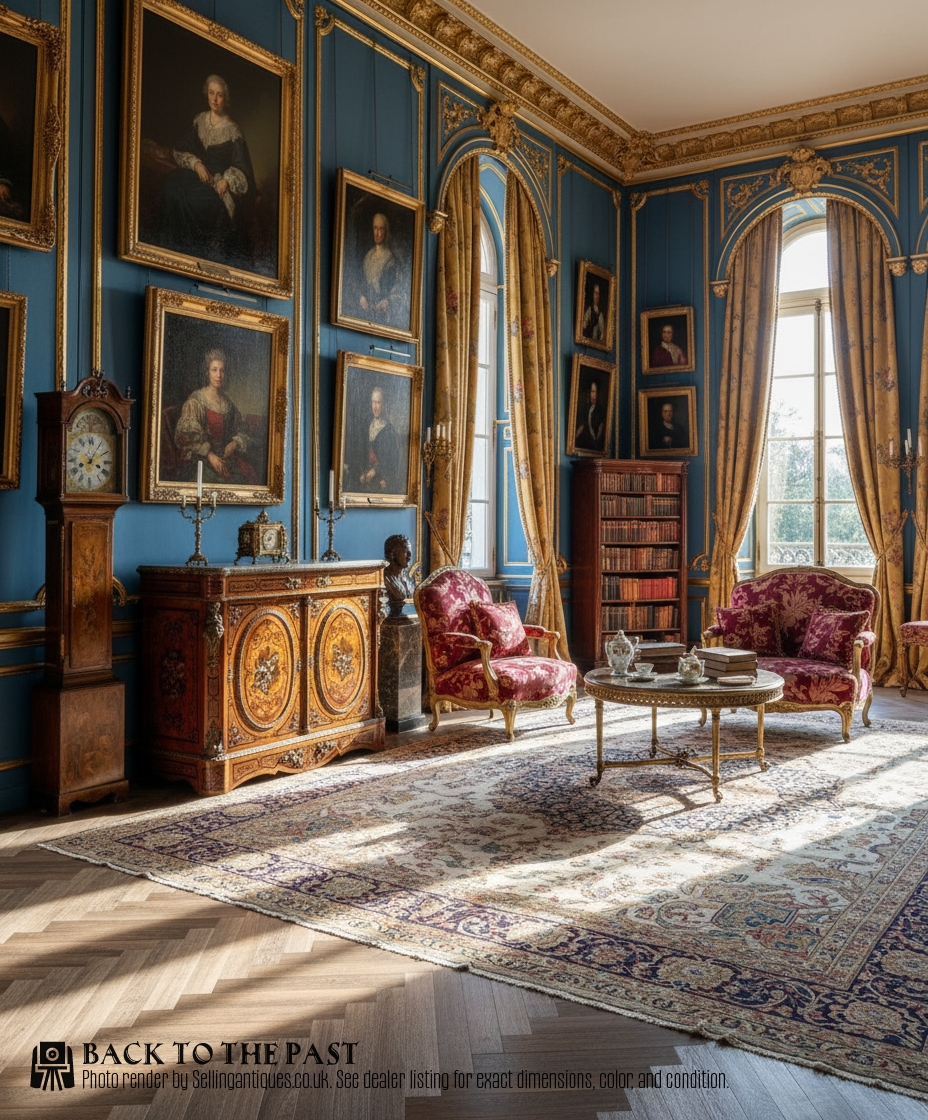
Owners placed them in reception rooms, salons, and formal parlours to display status and taste. Their flat marble tops served as surfaces for clocks, candelabra, and decorative bronzes.
Inside, the shelving accommodated porcelain, linens, or writing materials. They functioned as both decorative centerpieces and practical storage.
How do I care for marble and ormolu?
Clean marble surfaces gently with warm water and a soft cloth, avoiding acidic substances that etch the stone. Ormolu mounts require only light dusting to preserve their gilt finish.
Keep the timber and veneer away from direct sunlight and strong heat sources. Wax polish applied sparingly will maintain the lustre of rosewood, walnut, and ebonised finishes.