




Napoleon III Pier Cabinet
A napoleon iii pier cabinet brings heavy nineteenth century French elegance to a room, offering sleek display space topped with marble.
Napoleon III Pier Cabinet
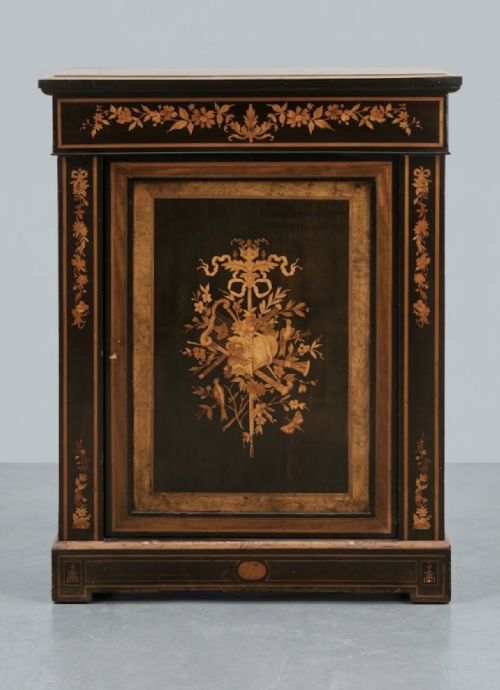
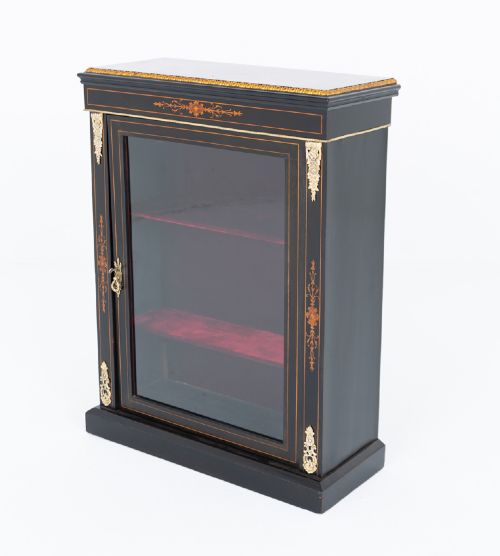
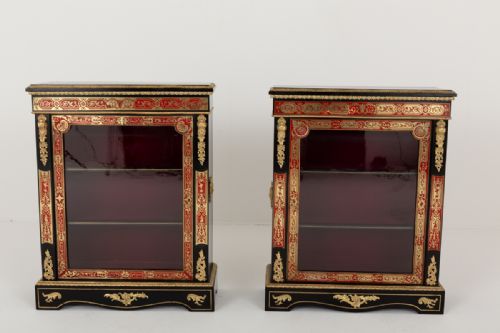
A napoleon iii pier cabinet stands as a formal nineteenth century display piece, most frequently encountered in ebonised wood fitted with glass doors and marble tops. These cabinets often appear in pairs or single side configurations, designed to fit narrow wall spaces between windows.
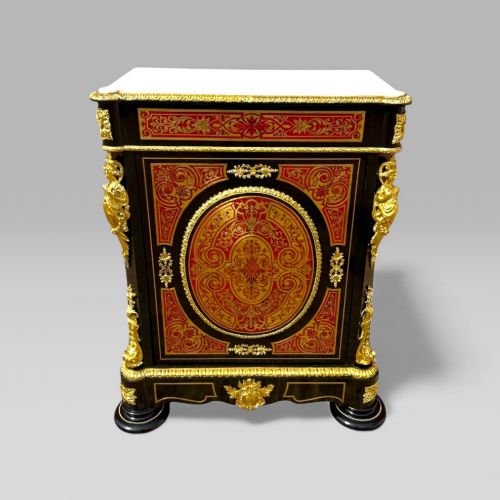
The dominant style draws heavily from French revivals, combining nineteenth century manufacturing methods with Louis XV and Boulle aesthetic traditions. Examples emerge from the 1850s through the 1880s, reflecting Victorian interpretations alongside direct French imports.
Materials and construction
Cabinets rely on ebonised wood, walnut, and rosewood as primary structural timbers, frequently inlaid with brass and tortoiseshell using Boulle techniques. Ormolu mounts and gilt metal enrich the corners and borders, whilst pietra dura plaques or Sevres style porcelain panels decorate the doors and friezes.
Surfaces culminate in heavy marble slabs, often cut with serpentine fronts to match the curved wooden carcase underneath. Glass panels set into single doors or side panels complete the construction, allowing light into the shelved interior.
Napoleon III Pier Cabinet Retail Price Guide 2026
Typical asking prices for napoleon iii pier cabinet among the pieces listed under this phrase on Sellingantiques today, from the lower quarter to the upper quarter. They describe what is for sale here now, not the wider market.
Tortoiseshell inlays contain actual marine turtle shell beneath delicate brass filigree scrolls.
Assessing craftsmanship
Quality rests upon the precision of the brass and tortoiseshell marquetry and the crispness of the cast ormolu mounts. Finer pieces demonstrate tight joinery in the serpentine wooden carcases and feature hand-painted porcelain plaques rather than simple printed decoration.
The choice and thickness of the marble top also indicate grade, with heavily figured or shaped stone marking superior production. Secondary woods and the weight of the gilt metal hardware further distinguish standard workshop output from exceptional examples.
The Napoleon III Pier Cabinet Glossary
- Boulle
- A form of marquetry using brass and tortoiseshell inlaid in intricate scroll patterns, named after the cabinetmaker André-Charles Boulle.
- Ormolu
- Gilt bronze mounts used to decorate furniture corners, feet, and friezes, cast and chased by hand.
- Pier cabinet
- A narrow cabinet designed specifically to stand against the wall space between two windows.
- Pietra dura
- An inlay technique using cut and fitted polished coloured stones to create pictorial designs.
- Sevres style
- Painted porcelain panels or plaques imitating the soft-paste porcelain produced by the French royal factory.
Napoleon III Pier Cabinet: Frequently Asked Questions
Where should I place a pier cabinet?
These cabinets suit narrow wall spaces, hallways, or living rooms where floor space is limited. Their narrow depth allows them to sit flush against walls without dominating the room.
Position them away from direct sunlight to protect tortoiseshell inlays and fragile wood finishes from fading or warping over time.
How do I clean marble tops?
Wipe marble surfaces with a soft damp cloth using neutral soap if necessary, avoiding acidic cleaners like vinegar or lemon juice. Acidic substances etch the stone and ruin the polished finish.
Dry the surface thoroughly after cleaning to prevent water spots from forming on the polished stone.
Can these cabinets hold heavy books?
Interior shelves in these pieces serve primarily for displaying porcelain, glassware, or small collections rather than heavy storage. The internal wooden supports are scaled for decorative items.
Distribute weight evenly across the shelves if you place heavy volumes inside to prevent sagging over extended periods.
How do I date a piece?
Examine the timber construction, the style of the ormolu mounts, and any backboards to establish the period. Pieces dating from the 1850s to the 1880s typically show machine-cut veneers combined with hand-chased metal mounts.
Compare the brass inlay work and overall silhouette against documented Victorian and French revival examples from the same decade.