



Floral Marquetry Sideboard
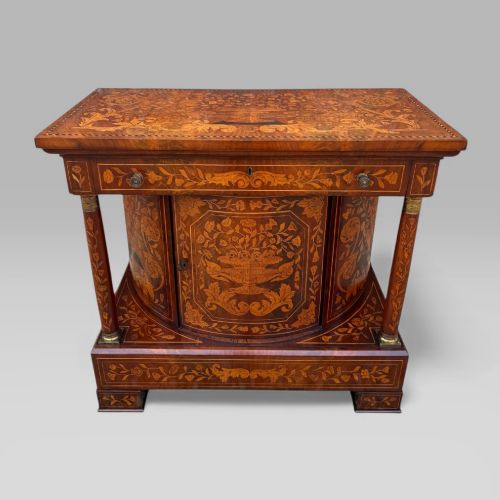
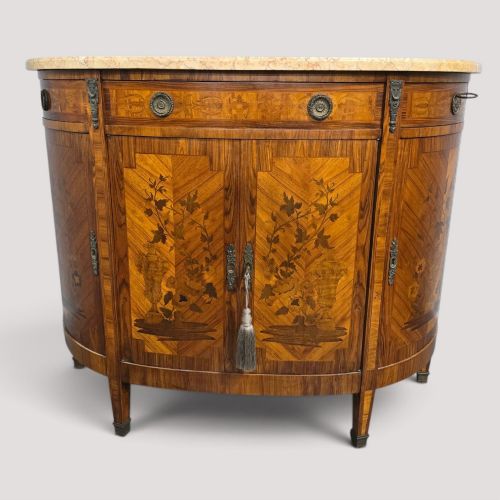
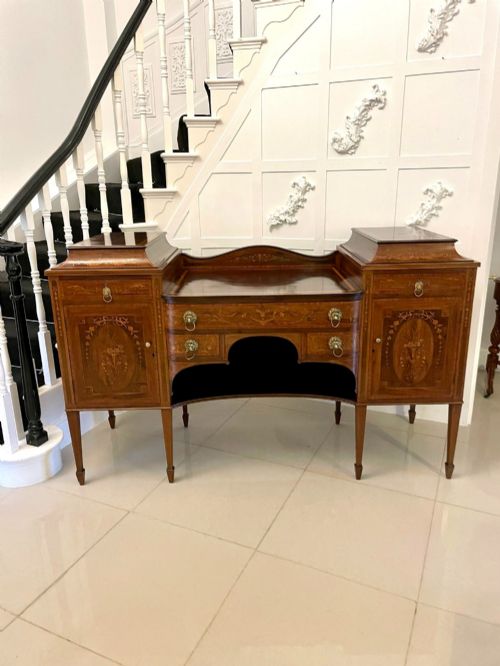
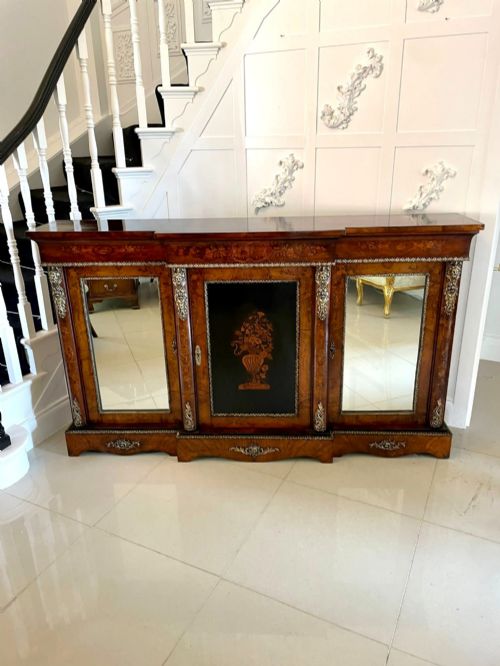
A floral marquetry sideboard brings together rich timber surfaces and intricate floral picture veneers to anchor a formal interior.
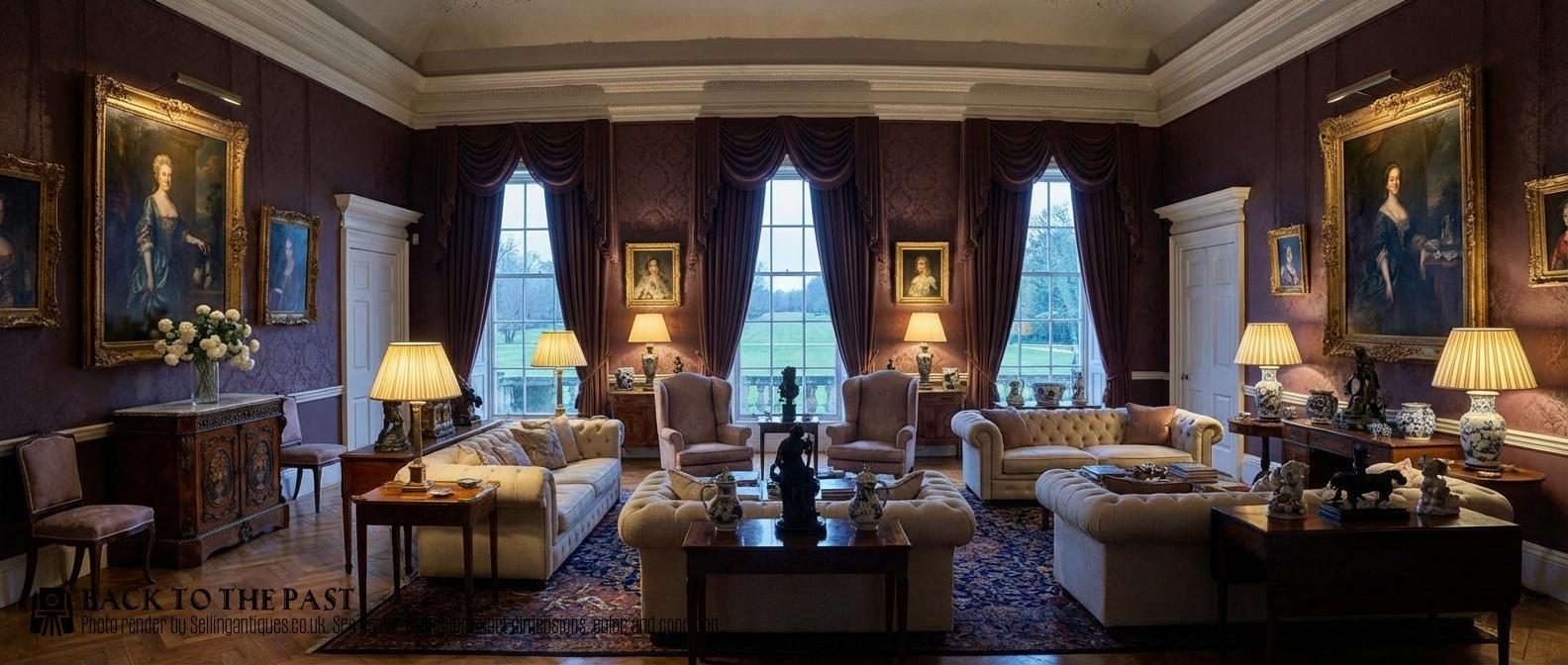
Floral Marquetry Sideboard
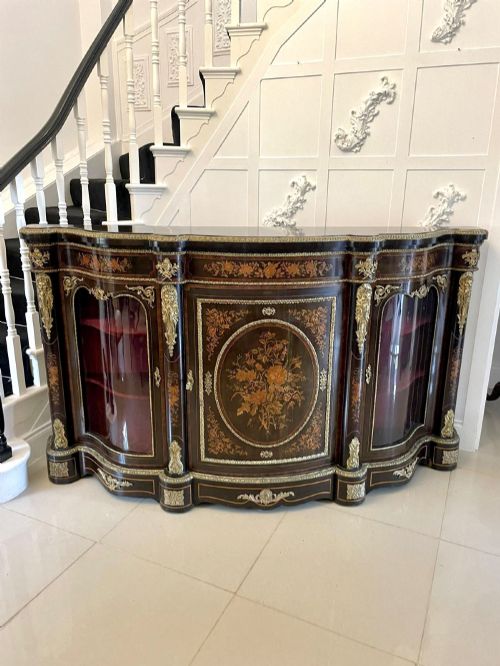
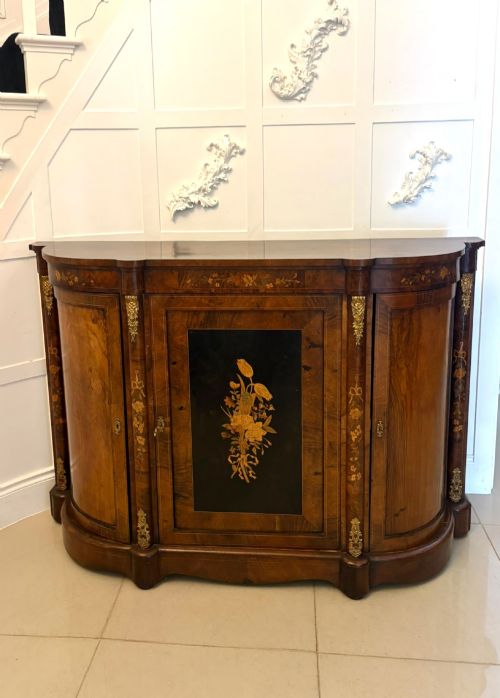
A floral marquetry sideboard typically manifests as a Victorian credenza or serpentine cabinet displaying detailed wood-inlaid botanical motifs across the doors and frontage. Buyers search for these pieces to secure large statement storage units that combine practical shelving with elaborate decorative facades.
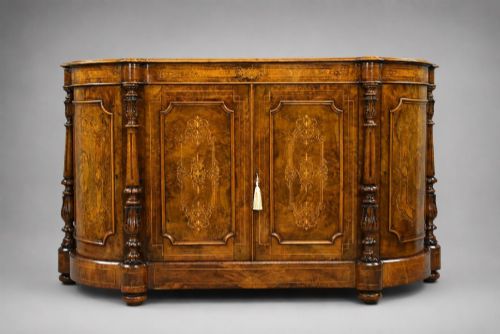
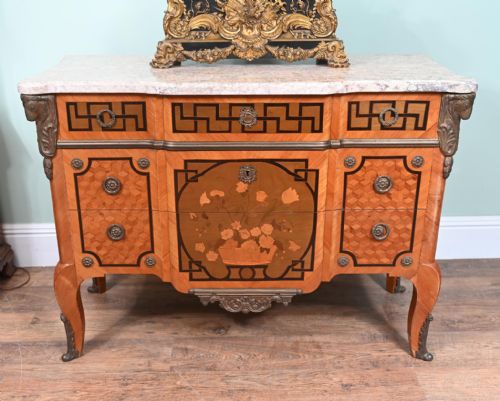
The versions most commonly met on this page date from the nineteenth century, particularly the Victorian era, alongside French revival models and eighteenth-century Dutch examples. They appear as credenzas, breakfront cabinets, and sideboards featuring figured walnut or ebonised carcases.
The form often incorporates glazed central doors, side display sections, and serpentine shaping that softens the heavy timber silhouette. These items served historically to display fine china and glassware in principal reception rooms.
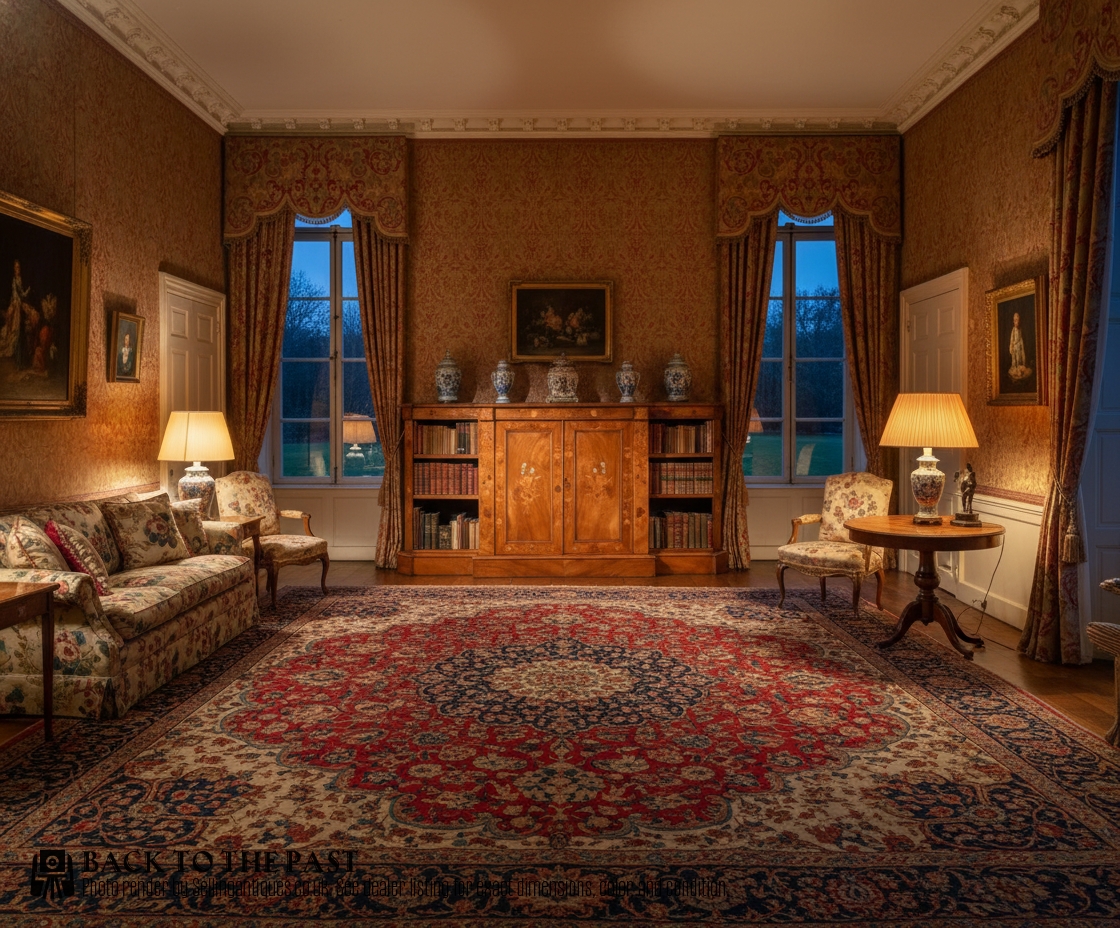
Materials and construction
Cabinetmakers constructed the foundational carcase using solid timbers such as mahogany or walnut, frequently overlaying them with burr walnut veneers to create rich, swirling grain patterns. The decorative floral marquetry uses contrasting fine woods cut into delicate pictorial arrangements and pressed into the surface.
Many examples incorporate cast or chased ormolu mounts, brass stringing, and Carrara marble tops that frame the inlaid wood panels. The combination of dark ebonised finishes or warm polished walnut with bright metal details defines the aesthetic of the period.
Listings feature eighteenth-century Dutch items alongside nineteenth-century Victorian walnut credenzas and twentieth-century French marble-top cabinets.
Evaluating craftsmanship
The standard of a floral marquetry sideboard rests upon the precision of the veneer cutting and the botanical detail rendered in the wood inlay. Superior examples display subtle tonal gradations within the floral petals and leaves, achieved by scorching veneer edges in hot sand.
Construction depth also dictates standing, marked by heavy serpentine timber bending, solid brass ormolu mounts rather than plated substitutes, and thick marble slabs fitted accurately to the cabinet top. The integration of curved glass doors and secondary mahogany drawer linings points to high workshop standards.
Hewetsons London·Paul Sormani
The Floral Marquetry Sideboard Glossary
- Marquetry
- A decorative technique where small pieces of tinted or natural wood veneer are assembled into pictorial patterns on a carcase. It differs from inlay by covering the entire surface rather than resting within hollowed recesses.
- Credenza
- A low dining or reception room cabinet, often featuring three or more doors and curved end sections. In Victorian pieces, this form frequently carries extensive floral marquetry and ormolu mounts.
- Ormolu
- Gilded bronze mounts applied to cabinet furniture for decorative emphasis and corner protection. The material adds metallic contrast to dark walnut and ebonised timber surfaces.
- Serpentine
- A furniture front or top shaped with a curving line, convex in the centre and concave at the sides. This contour demands advanced woodworking skill to match the veneer grain accurately around the bends.
- Burr Walnut
- Timber taken from the gnarled growth of a walnut tree, yielding dense, swirling grain patterns. Cabinetmakers prize this material for creating highly decorative veneer panels.
Floral Marquetry Sideboard: Frequently Asked Questions
What is a floral marquetry sideboard?
A floral marquetry sideboard is a large storage cabinet featuring elaborate wood-inlaid flower designs across its doors and panels. These pieces combine functional shelving with decorative frontages designed for formal reception rooms.
Most examples seen here date from the nineteenth century, utilising figured timbers and curved silhouettes to create an imposing visual presence.
How were these sideboards used?
Historically, these cabinets stood in dining rooms and parlours to store tableware, linens, and documents while displaying decorative ceramics on top. Glazed compartments allowed owners to exhibit valued porcelain safely behind glass.
Today, they serve similar display functions while acting as primary focal points in large living spaces.
How do I care for burr walnut?
Burr walnut veneer requires stable room temperatures and protection from direct sunlight to prevent the timber from drying and the glue from failing. Regular dusting with a soft, dry cloth preserves the polished surface.
Applying occasional specialist wax feeds the grain without building up heavy chemical residues that dull the marquetry detail.
How do I distinguish French and English styles?
English pieces often favour figured burr walnut with restrained ormolu mounts and robust proportions. French items, including Louis XVI revival models, frequently feature ebonised finishes, Carrara marble tops, and lighter floral compositions. Nomenclature in historical listings also guides attribution, with French pieces frequently described as credenzas or meubles d'appui.