



Napoleon III Enamel
Napoleon iii enamel brings together rich metalwork and vibrant glass colour to create decorative objects that anchor a room.
Napoleon III Enamel
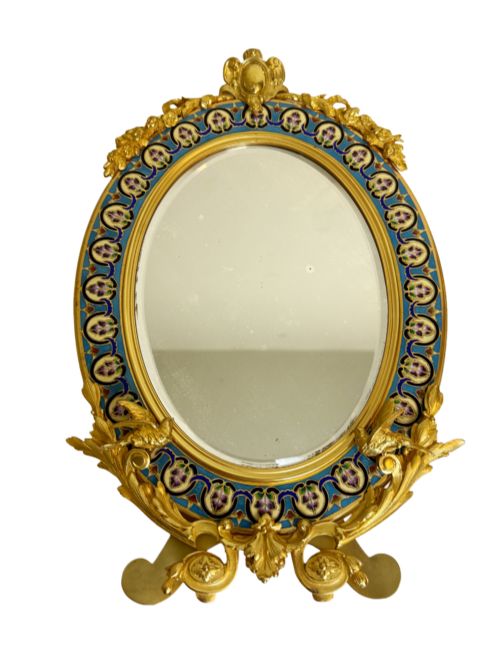
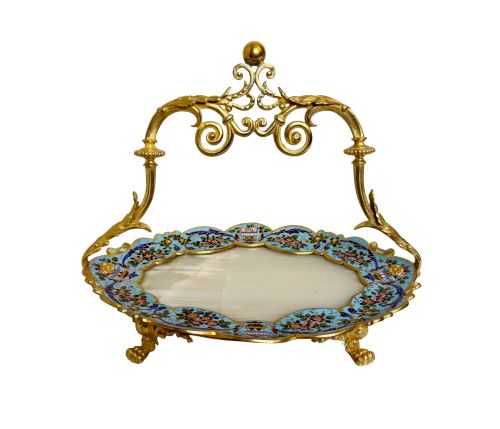
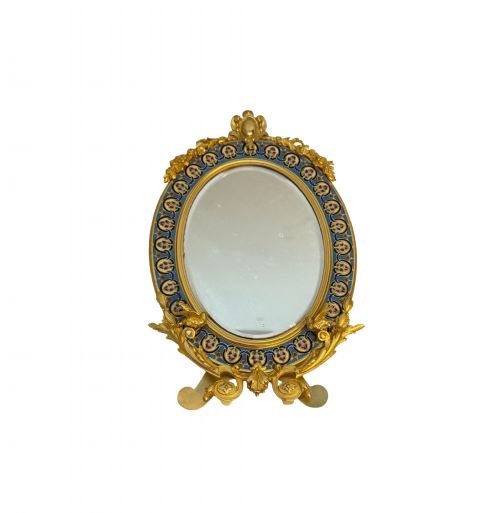
Napoleon iii enamel objects encompass a distinct group of nineteenth century French decorative items designed for domestic display. Buyers seeking this phrase encounter mantel clocks, centrepieces, wall clocks, and tabletop mirrors framed in heavy metal.
The objects stem from the nineteenth century, with specific pieces dated across decades from eighteen forty to nineteen hundred. Styles draw heavily upon French Rococo Revival and Louis XVI Revival aesthetics, showing ornate decorative vocabularies.
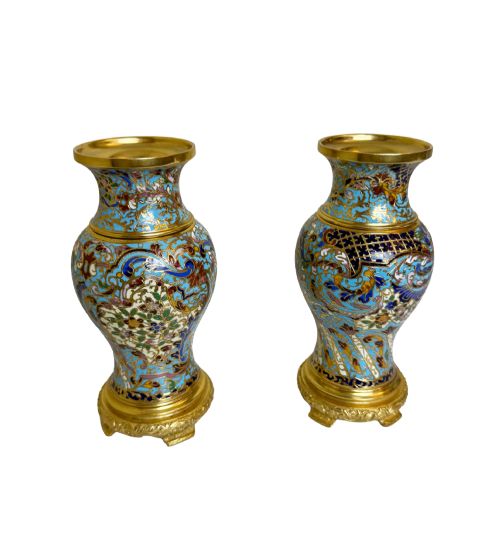
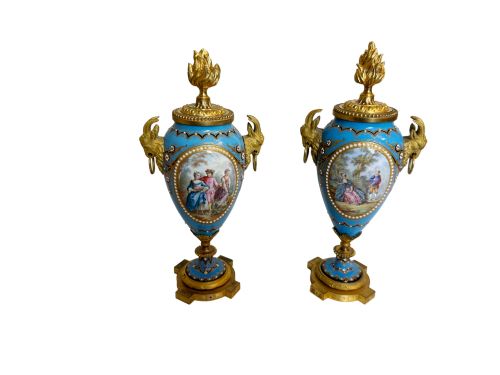
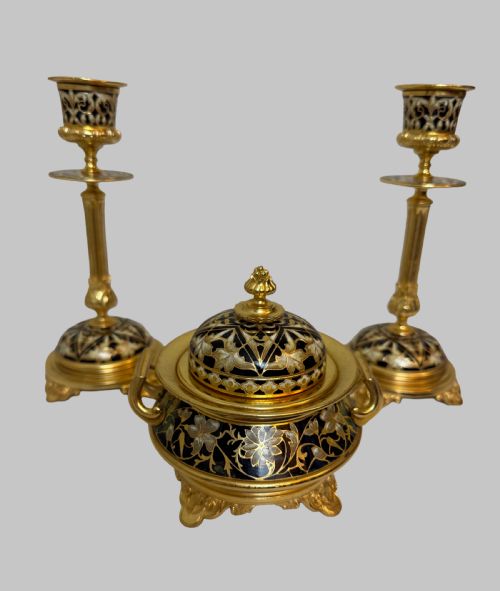
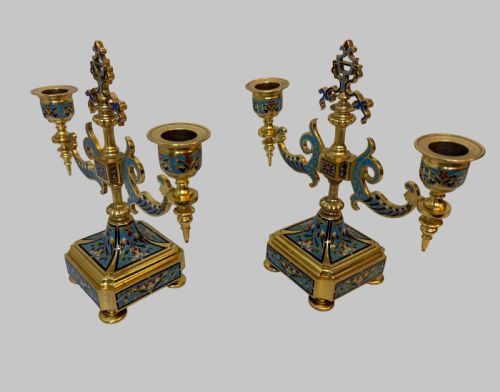
Mantel clocks and champlevé enamel vessels dominate the selection, often accompanied by matching pairs of cassolettes, vases, and candlesticks. These forms reflect the interior taste of the period, prioritising dense ornamentation and polished surfaces.
Materials and construction
Gilt bronze and ormolu form the heavy structural foundations for these items, providing stable mounts and frames. Brass, ebonised wood, glass, porcelain, green onyx, and pink marble appear alongside the metalwork to add varied textures and contrasting tones.
Champlevé enamel work involves carving recesses into a metal base to receive coloured glass pastes before firing and polishing. Limoges enamel plaques and turquoise blue enamelled details also occur, showcasing skilled hand application across flat and curved surfaces.
Materials recorded across the inventory include enamel, gilt bronze, ormolu, glass, champleve enamel, brass, porcelain, ebonised wood, green onyx, and pink marble.
Judging quality
Quality rests upon the crispness of the gilt bronze chasing and the depth of the champlevé enamel cells. Superior examples display sharply defined metal casting and smooth, evenly polished enamel work that sits flush with the surrounding gilt borders.
The integration of secondary materials such as Sevres porcelain, green onyx, or crystal boxes distinguishes finer pieces from standard production. Cohesion of the revival style and the weight of the metal mounts signal high workshop standards.
Leroy and Fils
The Napoleon III Enamel Glossary
- Champleve Enamel
- An enamelling technique where troughs are dug into a metal plate and filled with vitreous enamel before firing. This method creates bold coloured patterns bordered by thin lines of exposed metal.
- Ormolu
- Gilding technique of applying finely ground high-carat gold to a bronze object. It gives a rich golden surface finish typical of nineteenth century French luxury goods.
- Cassolette
- A decorative vase or urn designed with a reversible lid that functions as a small bowl or burner. These vessels often incorporate champlevé enamel detailing and gilt bronze mounts.
- Tazza
- A shallow ornamental cup or plate mounted on a stem and foot. They frequently display painted Limoges enamel plaques or detailed metalwork.
- Rococo Revival
- A nineteenth century design movement reviving the asymmetrical curves and naturalistic motifs of the eighteenth century. This style heavily influences the silhouettes of many clocks and mirrors.
Napoleon III Enamel: Frequently Asked Questions
What is champleve enamel?
Champleve enamel is a technique where metal surfaces are hollowed out to hold coloured glass paste before being fired in a kiln.
This process produces rich patterns enclosed by raised metal walls that catch the light.
How were these items used?
These pieces served as functional ornaments and timepieces within formal nineteenth century domestic interiors. Mantel clocks, inkstands, and centrepiece trays decorated drawing rooms and studies.
Mirrors and picture frames adorned dressing tables and walls, displaying wealth and taste.
How do I date a piece?
Dating relies on stylistic markers, material combinations, and occasional maker signatures found on the clock movements or bronze mounts.
Nineteenth century French items often combine Louis XVI revival motifs with distinct Victorian production methods.
How should I clean them?
Cleaning requires gentle dusting with a soft, dry cloth to protect the delicate gilt bronze and enamel surfaces.
Harsh metal polishes and liquid cleaners must be avoided because they strip the original gilding and damage the glass enamels.