




Napoleon III Console Tables
Napoleon iii console tables bring opulent 19th-century French design into a room, offering striking surfaces of marble, brass, and marquetry.
Napoleon III Console Tables
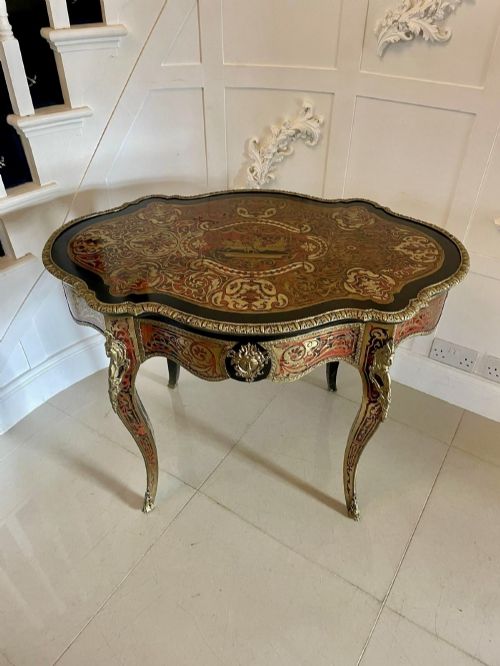
Napoleon iii console tables sit within a rich lineage of 19th-century French furnishings that also encompasses centre tables, card tables, and writing desks. These pieces frequently draw upon French Rococo Revival, Louis XV styles, and French Empire aesthetics, spanning decades from the 1860s through to the 1890s.
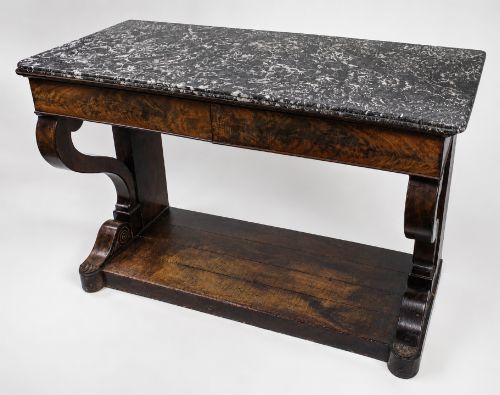
The selections encountered here range from grand console tables with marble tops to pairs of card tables and smaller centre tables. Walnut, mahogany, and ebonised wood form the structural foundation of these varied forms, often complemented by intricate surface decoration.
Judging quality and execution
Quality rests upon the crispness of the ormolu chasing and the precision of the brass and tortoiseshell inlay. Finer examples display tight, seamless joins in the marquetry and substantial, well-figured timber beneath the polish.
The weight and selection of the marble top also dictate grade, with thicker, richly veined slabs marking superior pieces. Structural integrity in the legs and aprons separates everyday items from masterworks of the period.
Listings feature 19th-century pieces incorporating ormolu, ebonised wood, brass, tortoiseshell, mahogany, marble, walnut, and marquetry inlay.
The Napoleon III Console Tables Glossary
- Boulle work
- A method of marquetry using brass and tortoiseshell, cut together in matching negative and positive designs. This technique defined much of the high-end furniture output of the era.
- Ormolu
- Gilt-bronze mounts applied to the corners, legs, and aprons of furniture. These decorative elements provided metallic contrast to dark woods.
- Marquetry
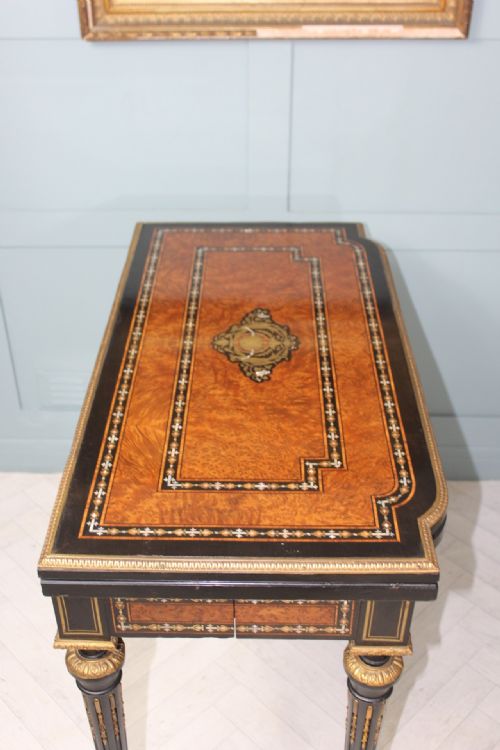
- The art of applying small pieces of veneer to a structure to form decorative patterns. Floral motifs and geometric scrolls frequently appear on these surfaces.
- Ebonised
- Wood treated to imitate ebony, giving a deep black finish. This dark surface enhanced the brightness of applied brass inlay.
- Console table
- A table designed to stand against a wall, sometimes supported by brackets or front legs. These pieces served decorative and functional roles in formal interiors.
Napoleon III Console Tables: Frequently Asked Questions
How do I style a console table?
Place the table against a prominent wall in a hallway or reception room to anchor the space. Pair it with a decorative mirror or a matching lamp to complete the arrangement.
Keep surface objects minimal to let the wood and ormolu mounts remain the focal point. Ensure the piece has sufficient clearance from heavy foot traffic.
Were these tables used for dining?
Most pieces in this category, such as card tables and centre tables, served social or display functions rather than formal dining. Card tables feature folding tops designed for evening games.
Writing tables and side tables accommodated correspondence and small decorative items. Their proportions suit occasional use rather than heavy daily service.
How do I clean marble tops?
Wipe the marble surface regularly with a soft, damp cloth and mild, neutral soap. Avoid acidic cleaners or abrasive pads that can etch or dull the polished stone.
Dry the surface thoroughly after cleaning to prevent water spots. Promptly blot any spilled liquids, particularly wine or citrus.
How do I date these tables?
Examine the secondary woods, construction joints, and style markers such as Louis XV revival curves or Empire symmetry. Pieces spanning the 1860s to the 1890s often show subtle shifts in proportion and decorative restraint.
Look for the quality of the ormolu casting and the wear patterns on the underside. Archival records and historical design books help narrow down the decade of production.