
Marble Top Wall Consoles
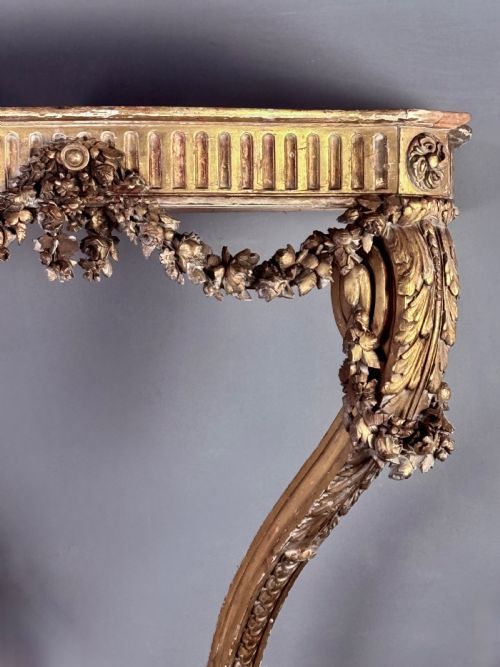
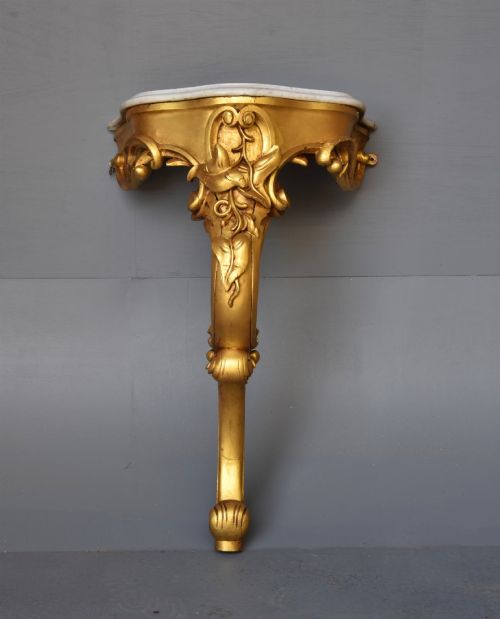
Marble top wall consoles are architectural ledges fixed to structural masonry, combining heavy stone surfaces with ornate wooden frames.
Marble Top Wall Consoles
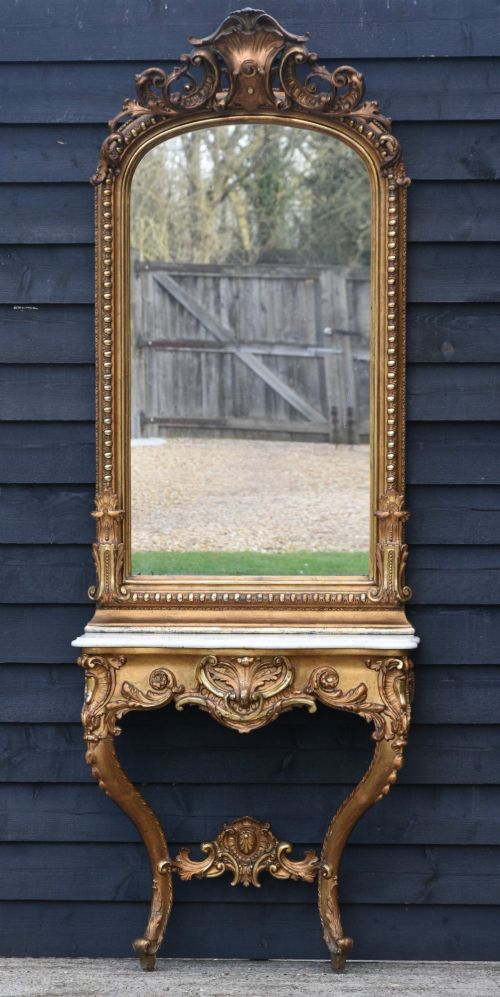
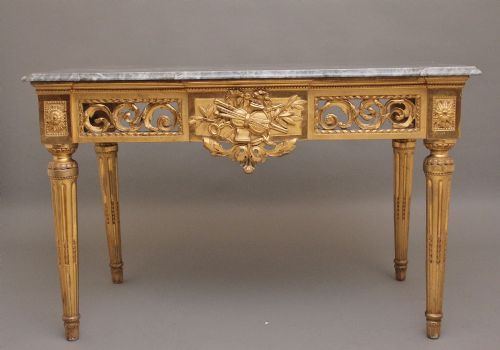
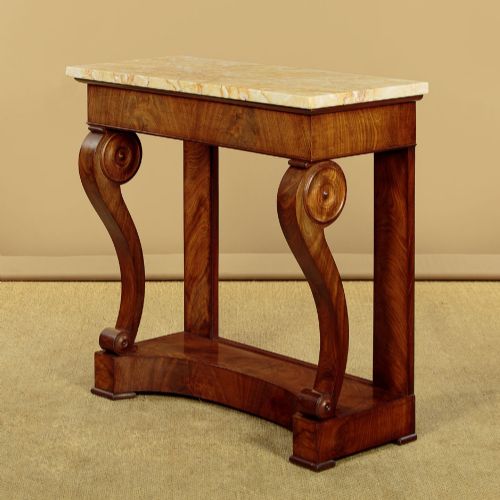
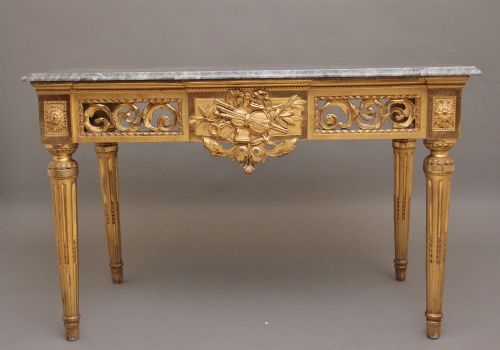
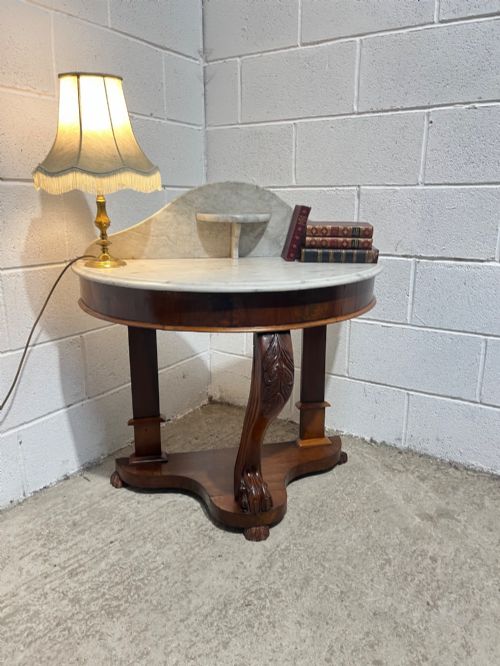
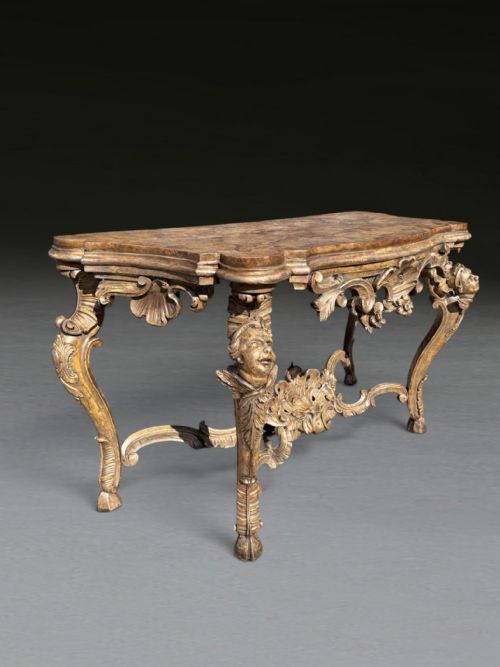
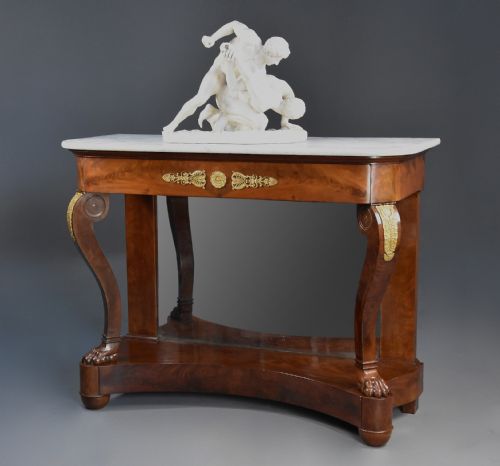
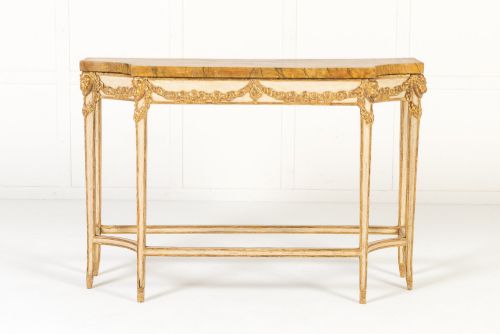
Marble top wall consoles are ledge-like tables designed to anchor against a wall, frequently paired with matching pier mirrors to maximise light in formal rooms. These pieces emerge predominantly from the eighteenth and nineteenth centuries, taking forms that range from restrained English mahogany carcases to exuberant continental giltwood creations.
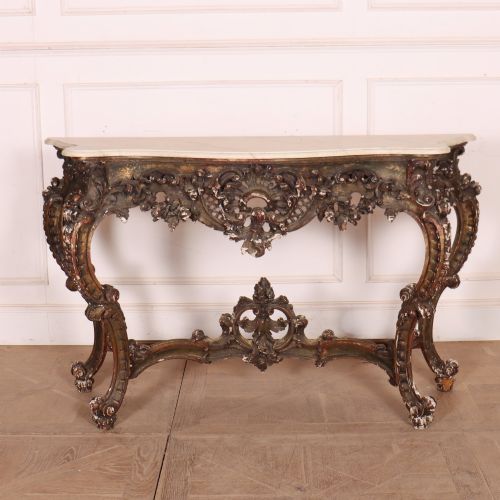
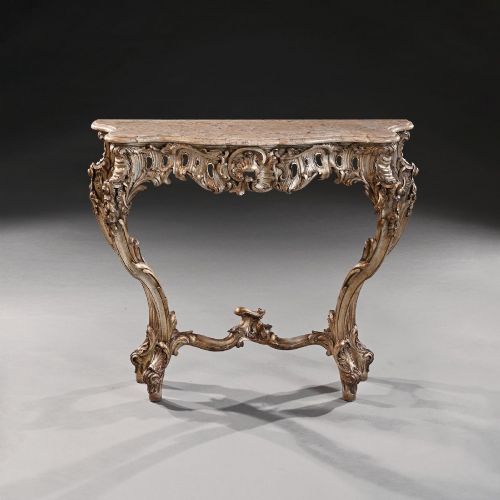
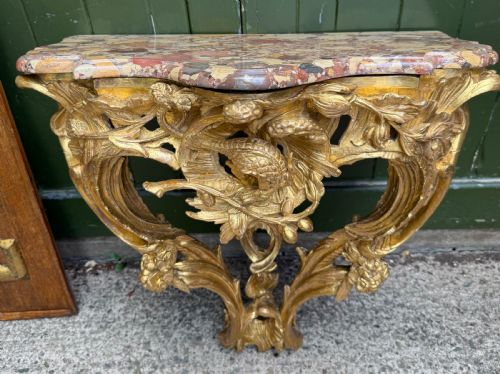
The varieties met most frequently on this page include French Rococo and Italian Neoclassical examples alongside later Victorian interpretations. They appear as console tables, side tables, and paired pier tables built to occupy narrow spaces between tall windows.
Materials and Construction
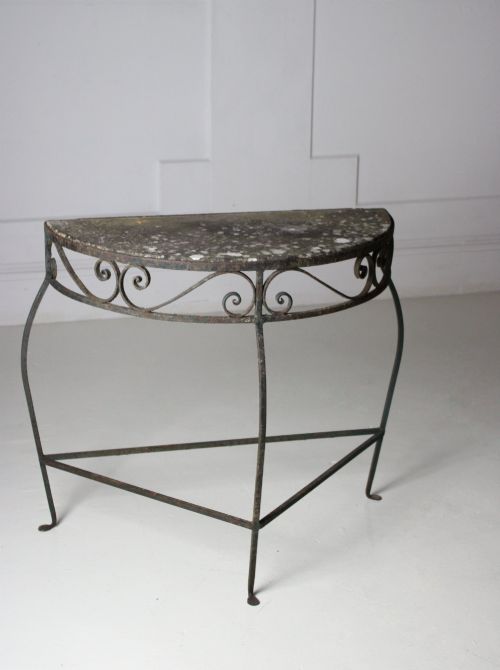
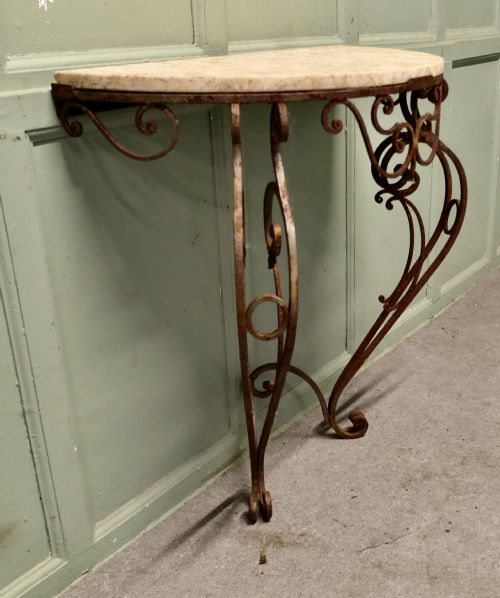
Makers fashioned the structural supports from solid timbers such as mahogany, walnut, and oak, or carved softwood intended for subsequent gilding. Giltwood and gesso surfaces received layers of gold leaf or paint, while heavier bases utilised wrought iron for structural rigidity.
The defining stone slabs comprise heavy marble, breccia, and faux porphyry cut to fit serpentine or rectangular tops. These stone slabs rest directly upon the wooden frames, secured by their own considerable weight or discreet fixings beneath.
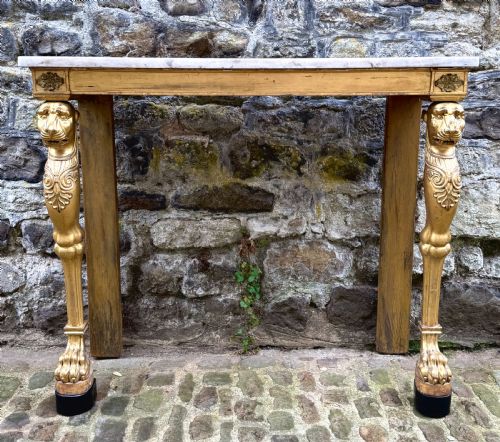
Several monumental consoles feature carved lion's paw supports, standing ready to hold heavy candelabras for centuries.
Execution and Detail
The distinction between ordinary and exceptional wall consoles lies in the depth and crispness of the wood carving. Skilled carvers rendered acanthus leaves, scrollwork, and figurative supports with sharp relief and undercut details, whereas lesser pieces rely on shallow moulding and thick gesso applications.
The selection and finishing of the stone top further separate the tiers of craftsmanship. Finer examples display figured marble types like breccia d'alep, accurately profiled at the edge to match the complex curves of the wooden apron below.
Felix Alfred Ternisien
The Marble Top Wall Consoles Glossary
- Console table
- A bracketed table designed to be fixed against a wall rather than stand independently on four legs. Many historical examples rely on wall attachment for complete stability.
- Giltwood
- Timber coated with fine gold leaf applied over a prepared gesso ground. This finish reflects candle and natural light in period reception rooms.
- Breccia
- A composite marble characterised by angular rock fragments embedded within a contrasting matrix. It appears frequently on grand eighteenth and nineteenth century Italian surfaces.
- Pier glass
- A tall mirror designed to hang in the wall space between two windows, frequently positioned directly above a matching console table.
- Serpentine
- A furniture front or marble edge shaped with a central convex curve flanked by concave sweeps. This flowing outline demands precise joinery and stone-cutting skills.
Marble Top Wall Consoles: Frequently Asked Questions
How do I secure a wall console safely?
These tables are designed to anchor directly into solid masonry or studwork using heavy concealed brackets. Because the stone tops carry substantial weight, the frame must be screwed securely to the wall to prevent tipping.
Professional installation is strongly advised for heavier marble slabs, particularly when dealing with eighteenth-century giltwood frames that lack front legs.
Were these tables designed to stand without wall fixings?
Most historical wall consoles rely on a combination of front legs and wall mounts, though many grand continental examples possess only two front supports and depend entirely on the wall for balance. Checking the rear stretcher reveals whether the piece requires a masonry anchor.
Without proper wall attachment, two-legged consoles will destabilise because the heavy stone surface shifts forward.
Can I use modern cleaning products on the marble?
Harsh modern cleaning agents and acidic solutions will permanently etch and dull historical polished marble surfaces. Warm water applied with a soft cloth suffices for routine maintenance of older stone.
Care must also be taken to protect gilded wooden frames from excess moisture and abrasive cloths during cleaning.