





Music Room Stool
A music room stool is a seat designed for keyboard practice, offering adjustable height or storage for sheet music.
Music Room Stool
A music room stool provides a dedicated seat for pianists and harpists, appearing primarily in Victorian, Edwardian, and Georgian forms on this page. These pieces accommodate keyboard practice and performance with specific mechanical or storage designs.
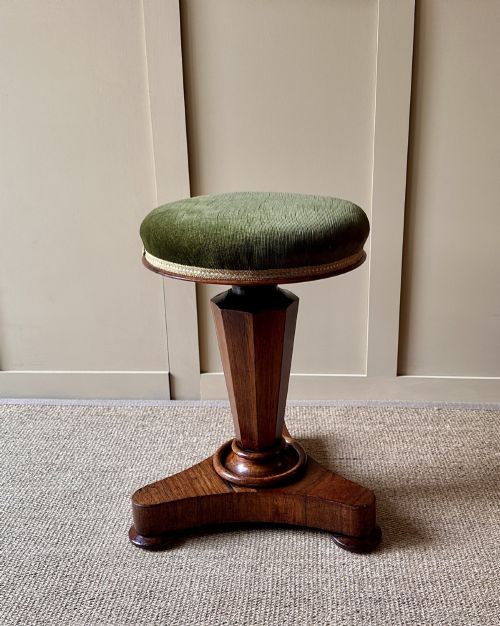
Revolving piano stools dominate the selection, often featuring screw mechanisms to alter the seat height. Other variants include duet sizes, fall front compartments, and lift up upholstered seats for storing scores.
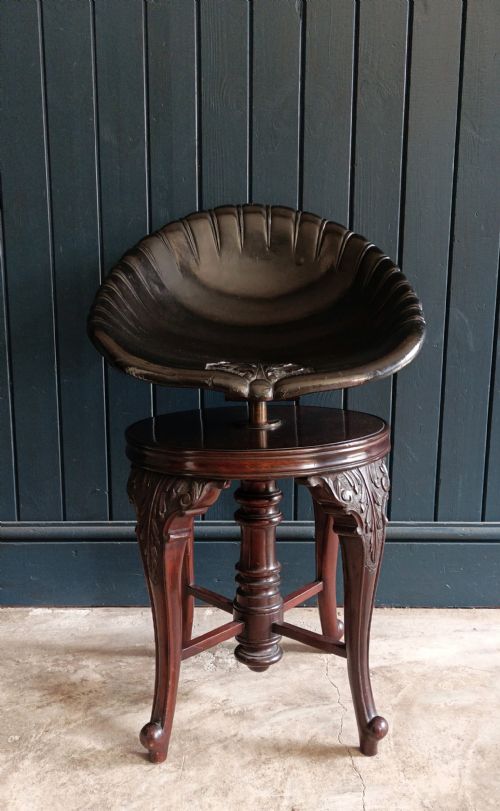
Originating across the nineteenth and early twentieth centuries, these wooden seats combine utility with period craftsmanship. They range from simple mahogany frames to inlaid Edwardian examples and papier mache harpist chairs.
How they were made
Cabinet makers utilised dense hardwoods such as mahogany, rosewood, and walnut for the structural frames and legs. These timbers provide the necessary strength to support daily seating and mechanical turning components.
Upholstery forms a central part of the construction, employing materials like velvet, leather, and various fabrics over padded seats. Brass fittings frequently appear in the internal revolving mechanisms and adjustment screws.
Music Room Stool Retail Price Guide 2026
Typical asking prices for music room stool among the pieces listed under this phrase on Sellingantiques today, from the lower quarter to the upper quarter. They describe what is for sale here now, not the wider market.
Papier mache joins mahogany in supporting harpists, proving that paper pulp can handle a serious musical workout.
What varies in quality
The refinement of the woodwork dictates much of the distinction between pieces, with simple turned legs at one end and intricate Edwardian inlaid decoration at the other. Timber selection also separates standard production from finer rosewood and walnut examples.
Mechanical complexity sets certain pieces apart, particularly the smooth operation of revolving screw mechanisms and patent chair adjustments. The choice of original upholstery materials, such as supple green or tan leather and plush velvet, further defines the grade of the piece.
The Music Room Stool Glossary
- Revolving piano stool
- A seat featuring a central screw mechanism that allows the user to raise or lower the height by spinning the top. This design accommodates players of different statures at the keyboard.
- Duet piano stool
- A wider seating platform built to accommodate two musicians side by side for piano practice. These versions often incorporate larger internal spaces for holding multiple scores.
- Fall front piano stool
- A cabinet style seat where the front panel folds forward rather than lifting from the top. This provides easy access to internal sheet music storage.
- Papier mache
- A composite material formed from paper pulp mixed with adhesive, pressed and dried into rigid forms. It is decorated and utilised for specialist harpist and music seating.
Music Room Stool: Frequently Asked Questions
How do revolving piano stools work?
Revolving piano stools use a central wooden or metal screw thread concealed beneath the seat. Turning the top rotates the screw to raise or lower the sitting height.
This mechanism allowed nineteenth century musicians to adjust their posture easily at the piano.
Where was sheet music stored?
Many period music stools include built in compartments beneath the upholstery. Lift up seats and fall front panels provide hidden space for keeping paper scores tidy.
This kept music close at hand beside the piano or harp without cluttering the room.
How do I date an Edwardian stool?
Edwardian music stools often feature lighter mahogany timbers with decorative wood inlay. Their design reflects the domestic fashions of around nineteen hundred.
Earlier Victorian examples tend towards darker rosewood, walnut, or heavier turned supports.