

Antique Brown Leather Seat
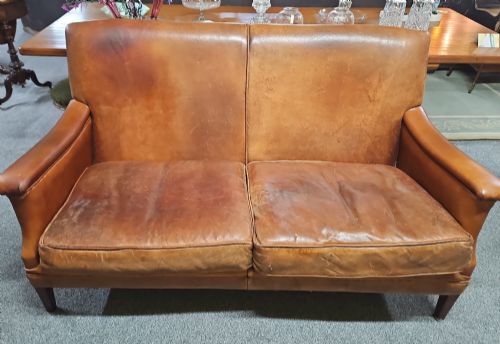
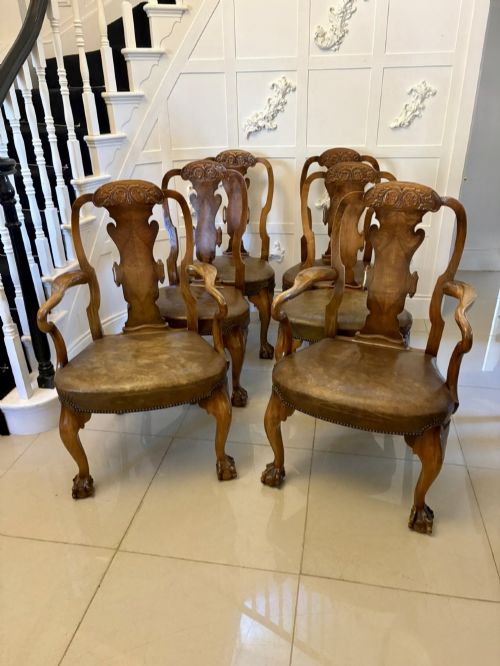
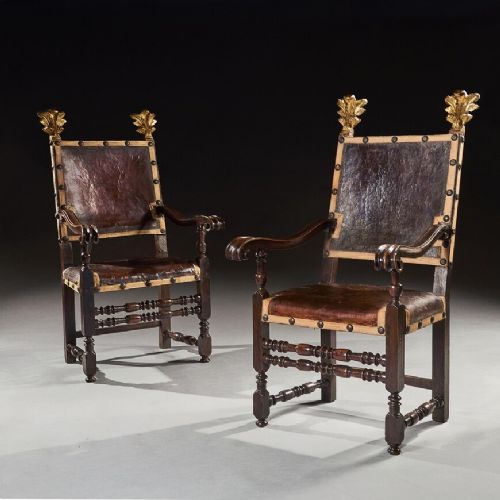
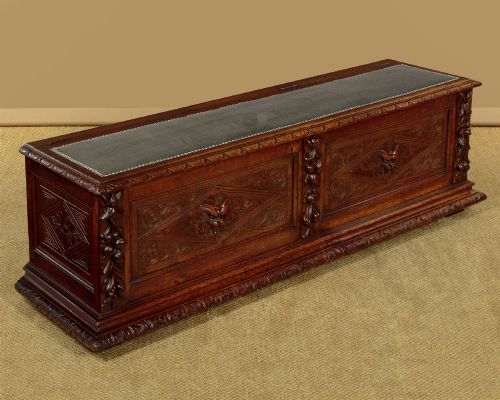
An antique brown leather seat offers rich patination and solid period construction, bringing immediate character and traditional comfort to a room.
Materials and Construction Techniques
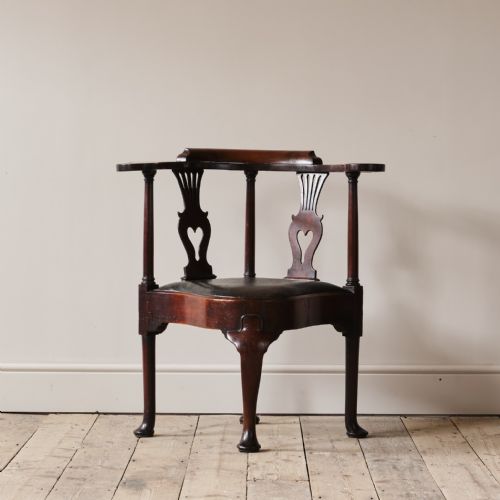
Frames are constructed from dense native hardwoods such as mahogany, oak, walnut, and rosewood, joined with traditional mortise and tenon or dowel techniques for lasting structural integrity. Secondary supports incorporate iron and brass fixings, alongside cane panels in specific lighter chair designs.
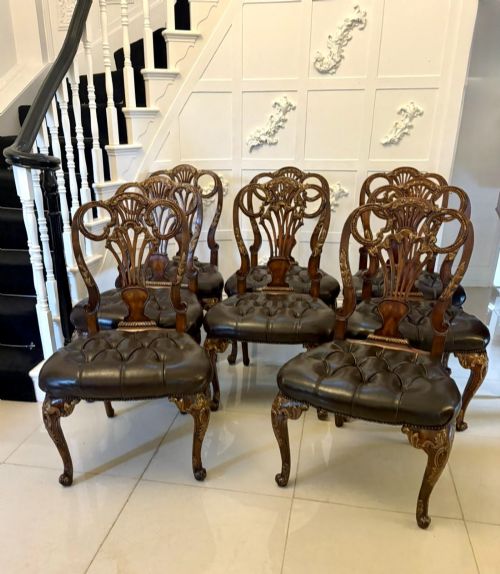
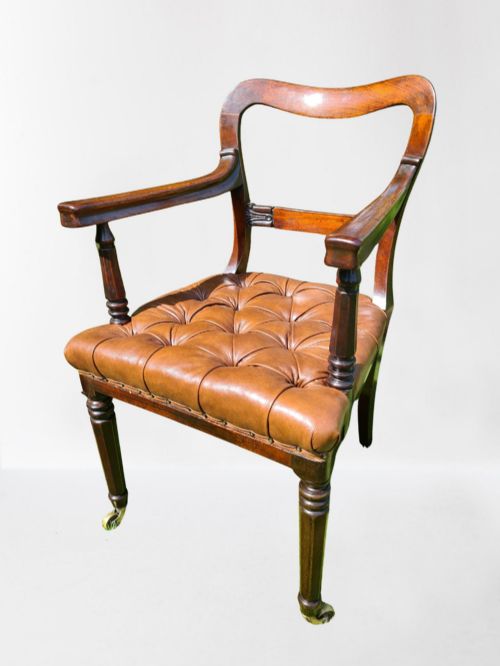
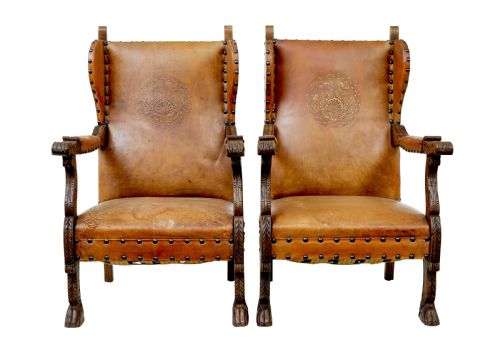
Upholstery relies on full hide leather, frequently hand-dyed or embossed, secured directly to the wooden framework using brass tacking or button-tufting methods. Interior padding employs traditional stuffing materials within heavy webbing to achieve the characteristic firmness and contour of period seating.
Indicators of Quality
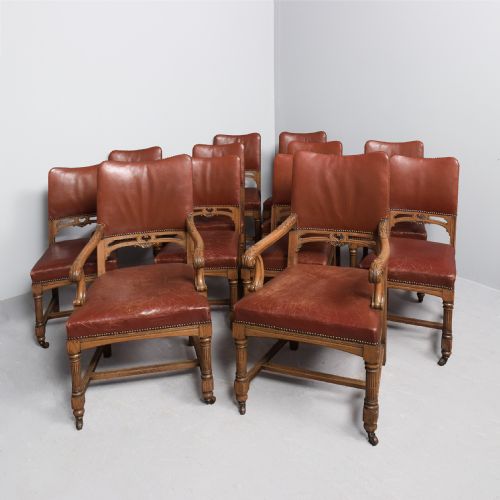
The grade of an antique brown leather seat is determined by the depth of patination on the hide and the integrity of the underlying timber frame. Superior examples display even wear across the leather without modern replacement panels, alongside crisp hand-carved details on the wooden armrests and legs.
Constructional solidity differentiates standard utility pieces from exceptional workshop output, visible in tight joinery and original brass hardware. The harmonious integration of frame style with period-appropriate leather treatment governs the overall distinction of the item.
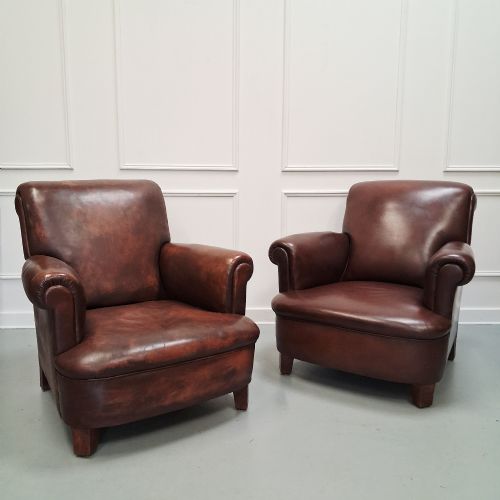
Several armchairs are specifically designated as bothy chairs, suggesting rustic comfort for remote rural retreats.
The Antique Brown Leather Seat Glossary
- Chesterfield
- A deep-buttoned upholstered sofa or armchair characterised by low back and rolled arms of equal height. This form originated in the nineteenth century and typically employs brown full-hide leather.
- Cabriole leg
- A furniture leg that bends outward and then tapers inward, mimicking animal limbs. It is commonly found on walnut and mahogany seating from the eighteenth and nineteenth centuries.
- Bergère
- An enclosed upholstered armchair with wooden framing exposed around the sides and back. These seats often incorporate cane work alongside leather squab cushions.
- Carver chair
- An armchair designed in the style of the matching dining chairs to sit at the head of a table. These pieces frequently feature carved wooden arm supports and upholstered seats.
- Patination
- The natural sheen and surface alteration acquired by wood and leather over decades of use and handling. Collectors value this visual depth as a sign of age and authenticity.
Antique Brown Leather Seat: Frequently Asked Questions
How do I care for antique leather?
Maintain the material by applying traditional leather creams or waxes sparingly to preserve the natural moisture of the hide.
Avoid placing these seats near direct heat sources or strong sunlight, which can dry out the historic leather and cause cracking.
Were these seats used in offices or homes?
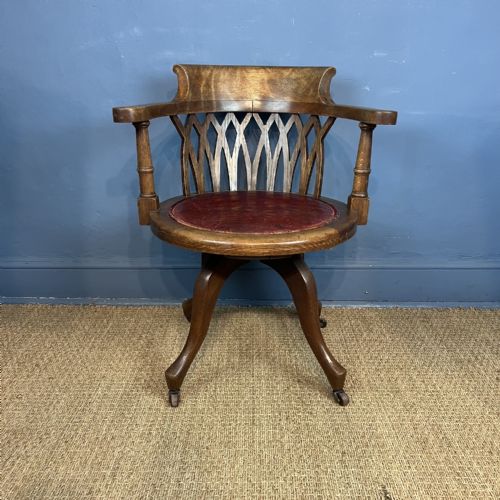
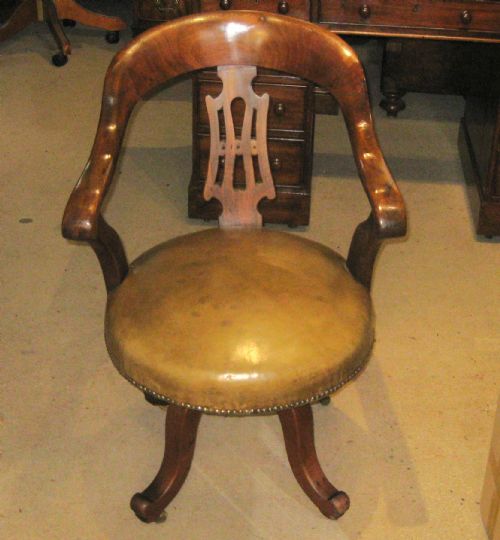
Many forms served utilitarian roles in professional spaces, particularly revolving desk chairs and library armchairs designed for long hours of work.
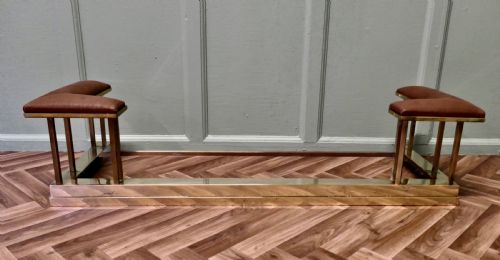
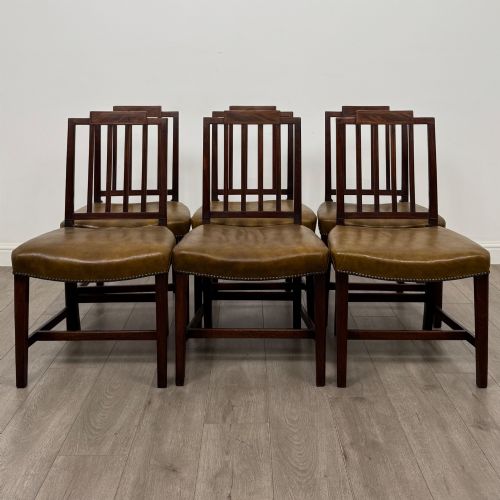
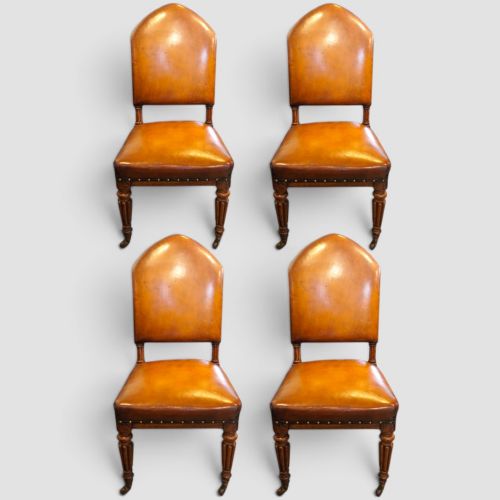
At the same time, dining chairs, club fenders, and chesterfield sofas were intended primarily for domestic reception rooms and studies.
How can I tell a Victorian chair from a Georgian one?
Georgian chairs generally exhibit lighter proportions, restrained carving, and simpler structural lines utilising mahogany or walnut timbers.
Victorian pieces tend to be heavier, sometimes incorporating darker oak, more elaborate ornamentation, or gothic revival motifs.
Are these leather seats entirely original?
Due to centuries of use, many pieces have undergone sympathetic maintenance, including re-webbing or minor frame tightening.
Surviving examples often retain their original hide or period-appropriate replacement leather that matches the intended era.