
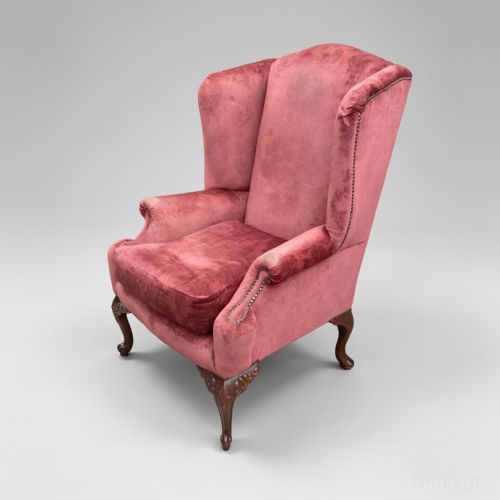


George III Wingback Armchair
A george iii wingback armchair offers deep-seated comfort with draught-defying wings, grounding a room in authentic Georgian proportion and timber character.
George III Wingback Armchair
When you search for a george iii wingback armchair, you are looking at substantial seating designed to keep draughts away from the user by enclosing the head and shoulders in upholstered wings. The versions you are most likely to meet on this page span the Georgian period, the eighteenth century, and later nineteenth or twentieth-century revivals.
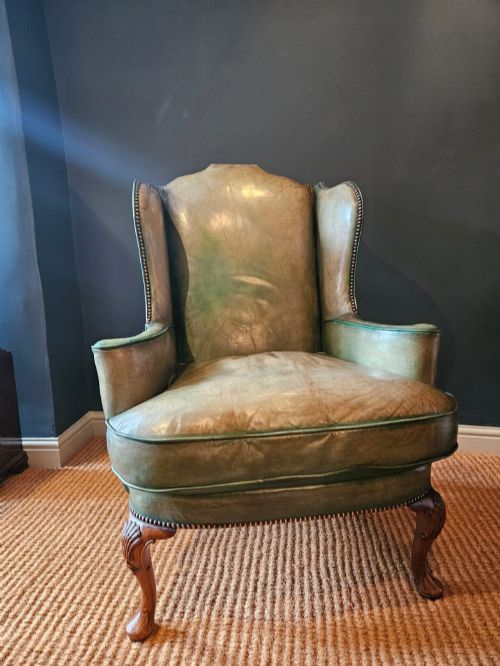
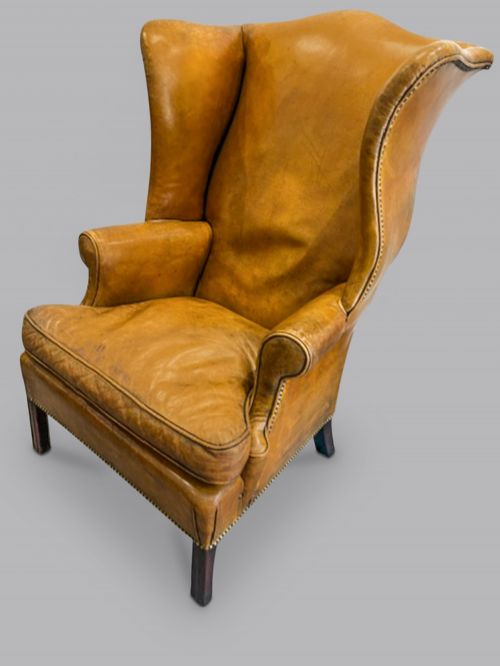
These seating forms appear in various scales, from enormous proportions down to standard library sizes, often framed in mahogany or walnut. Some examples present cabriole legs, while others rely on straightforward mahogany framing or barrel-backed configurations.
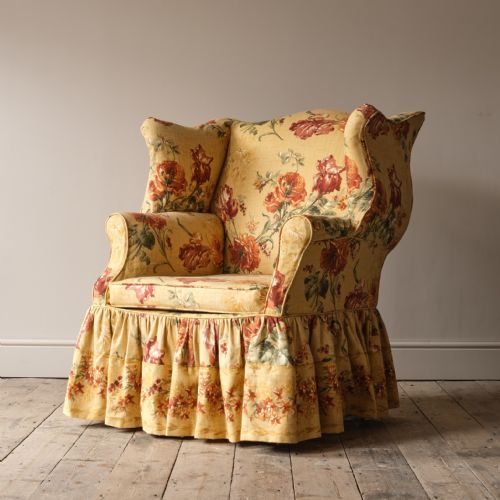
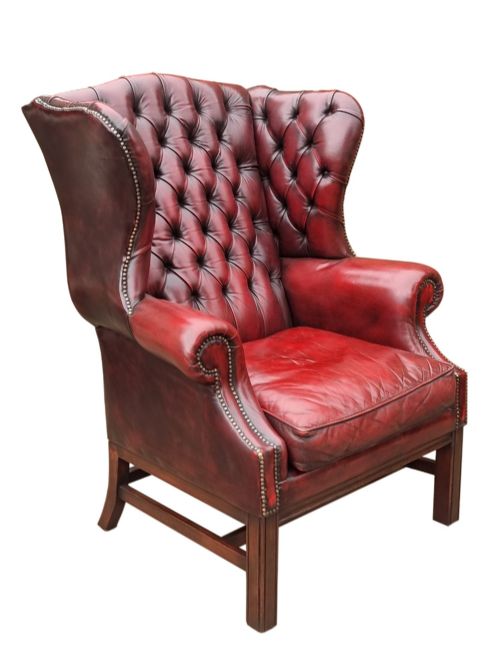
Upholstery choices range from utilitarian leather and heavy cotton chintz to button-backed velvet and red damask. You will encounter genuine eighteenth-century pieces alongside later interpretations built in the George III style.
Materials and construction
Makers built the structural frames of a george iii wingback armchair using timber such as mahogany and walnut, selected for strength and grain. These foundational woods support substantial upholstery layers and provide rigid support for the characteristic enclosed back and sides.
Upholstery materials include leather, cotton chintz, velvet, and damask, secured with brass detailing where appropriate. Timber legs frequently feature shaped cabriole profiles or straight mahogany turnings that anchor the heavy upholstered body above.
The wings were originally engineered to trap heat from the fire and keep your ears warm in draughty stone halls.
Assessing quality in construction and material
Quality separates pieces by the crispness of the timber carving on the legs and the integrity of the underlying frame construction. Walnut and mahogany examples with well-defined cabriole supports sit at the upper end of the scale.
The choice of covering material and the weight of the timber frame dictate the overall substance of the piece. Superior construction shows in the balance between the generous proportions of the wings and the stability of the wooden base.
The George III Wingback Armchair Glossary
- Cabriole leg
- A furniture leg that curves out and then in, resembling the leg of an animal. This form appears frequently on walnut and mahogany seating from the Georgian era.
- Wingback
- An armchair featuring protective side panels attached to the backrest. These extensions were originally designed to shield the occupant from cold draughts.
- Damask
- A reversible figured fabric traditionally woven from silk, wool, or cotton. Examples in the listings utilise this rich textile for formal upholstery.
- Chintz
- A printed and glazed cotton fabric often featuring floral patterns. This lighter material provides a contrasting texture to heavy timber frames.
George III Wingback Armchair: Frequently Asked Questions
What is a george iii wingback armchair?
A george iii wingback armchair is a traditional seat featuring high upholstered sides and a enclosed back designed to block room draughts. These large forms date from the Georgian era or appear in later revival styles.
They combine substantial timber frames in mahogany or walnut with upholstery ranging from leather to damask and velvet.
How do I date a wing armchair?
Dating relies on examining the timber species, leg profiles, and construction methods used in the frame. Walnut points toward earlier periods, while specific mahogany turnings indicate later eighteenth-century work.
Revival pieces from the nineteenth and twentieth centuries often replicate these earlier styles using mixed timber standards.
Where were wing armchairs used?
These armchairs sat near fireplaces and in draughty hallways where the enclosed wings could trap heat around the sitter. Their generous proportions made them ideal for studies and principal living rooms.
They provided comfortable, sheltered seating for reading or resting away from cold room currents.
What materials cover these armchairs?
Original and revival pieces utilise leather, cotton chintz, heavy velvet, and red damask for the primary upholstery. Brass elements sometimes accent the leather edges.
Underneath these coverings, the supportive frames rely on solid mahogany, walnut, and structural timber.