

Georgian Mahogany Wingback Chair
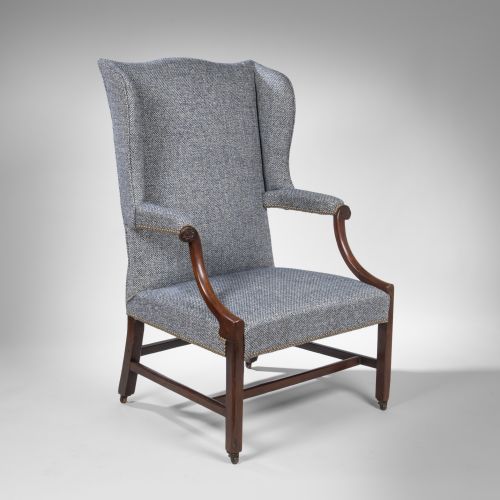
A georgian mahogany wingback chair offers deep-seated comfort and draught-excluding wings, drawing buyers who seek classic fireside seating.
Georgian Mahogany Wingback Chair
When you search for a georgian mahogany wingback chair, you encounter large upholstered armchairs designed to shelter the sitter from draughts by the hearth. The forms span authentic eighteenth-century examples alongside later nineteenth-century revivals and twentieth-century interpretations.
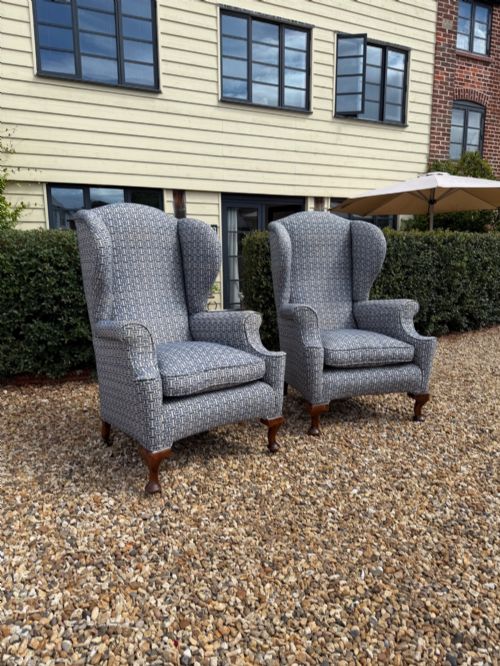
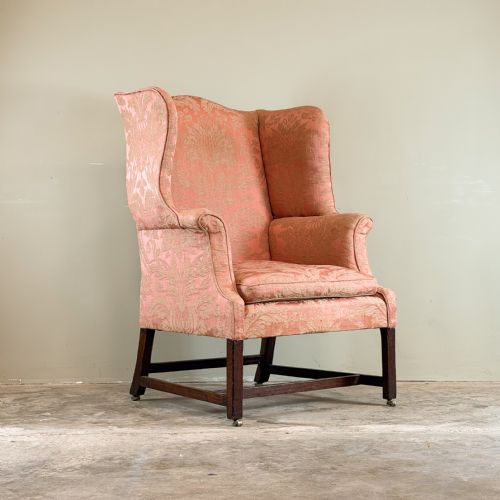
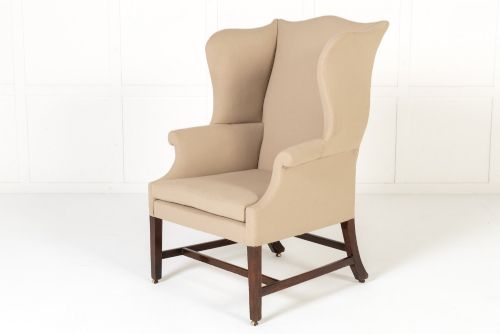
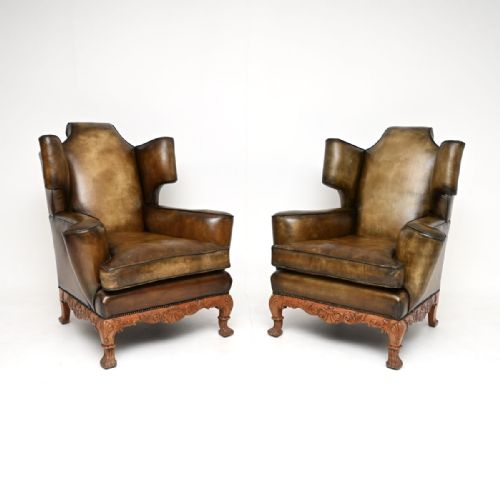
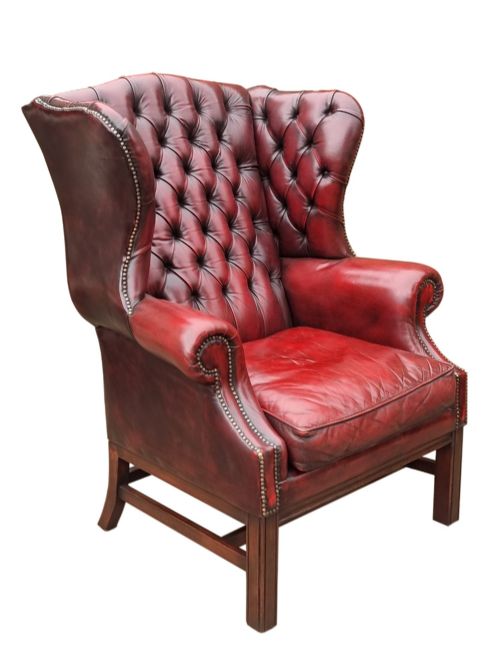
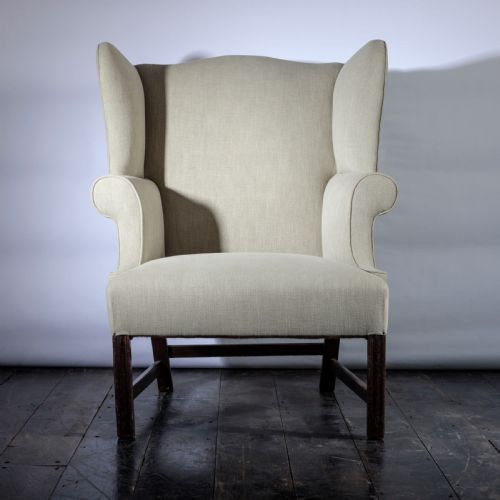
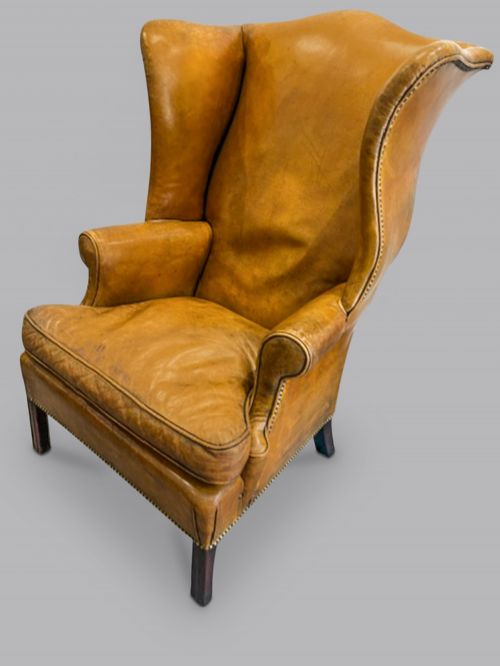
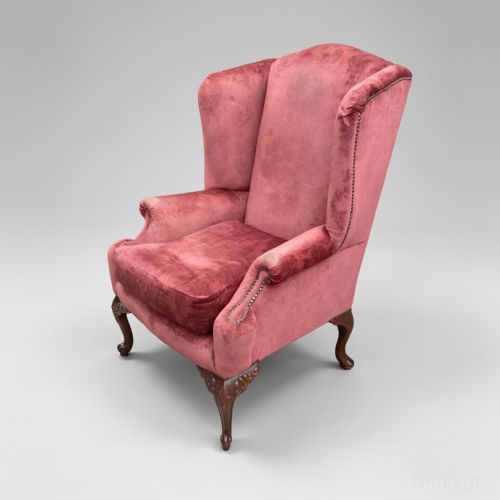
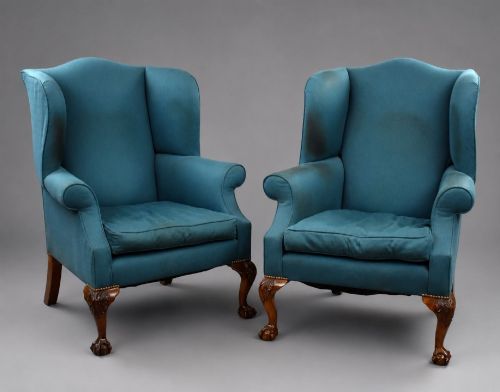
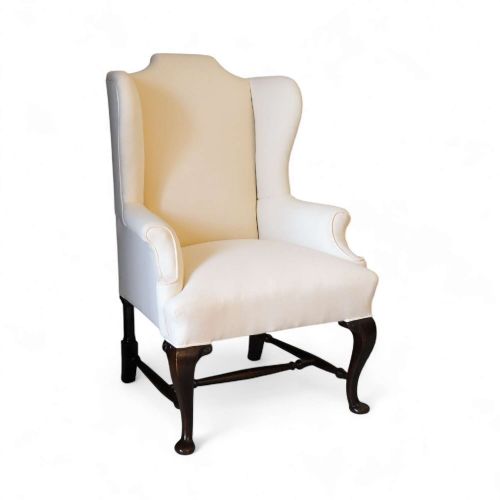
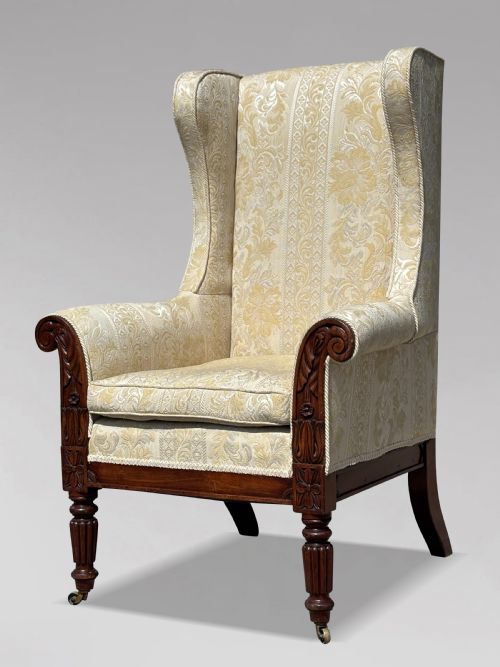
Many listings show classic high backs flanked by prominent vertical wings and supported on wooden legs. You also meet barrel back variants where the arms curve continuously into the backrest, alongside occasional library chairs and larger scale armchairs.
Originating primarily from English workshops, these pieces appear in periods ranging from the Georgian era through the Regency and Victorian epochs, stretching into early twentieth-century revivals. The versions most commonly met combine rich timber frames with varied modern and traditional upholstery.
Construction and materials
Makers constructed the structural frames using solid timber, predominantly mahogany, which provided the necessary strength for the sweeping back and projecting wings. This dense wood allowed craftsmen to carve intricate details onto the legs and stretchers.
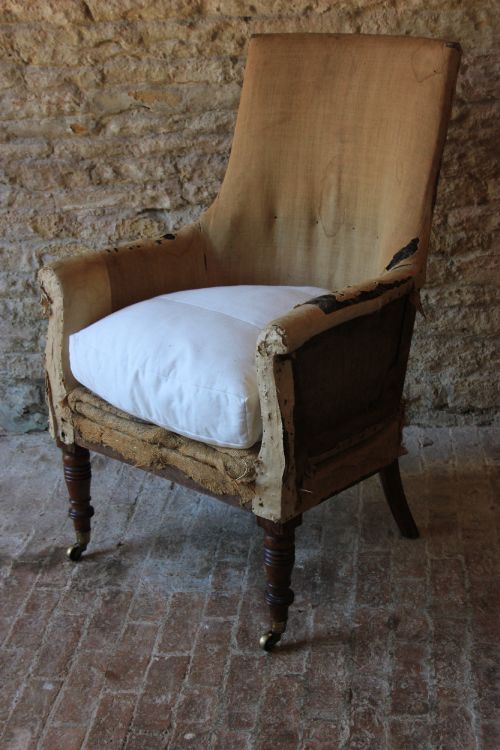
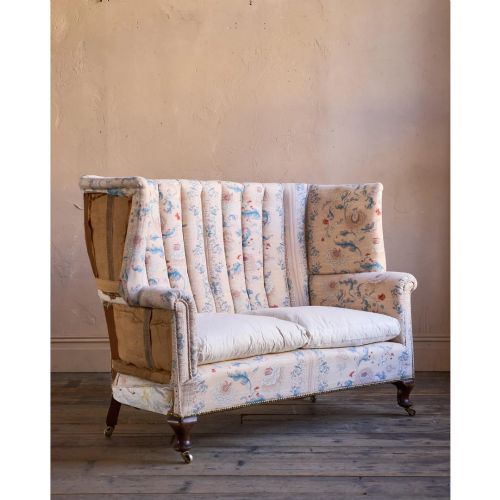
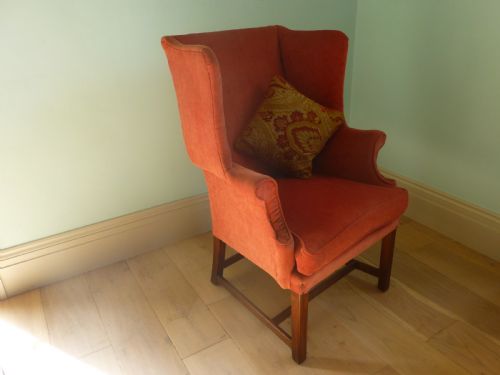
Upholstery formed the core of the seating structure, employing traditional fillings held by hessian and calico foundations before finishing in leather, fabric, velvet, or chenille. Brass elements sometimes appeared as castors on the feet or decorative upholstery tacks along the borders.
Some chairs spent centuries quietly absorbing fireside gossip before arriving here in bright orange chenille.
Assessing quality and proportion
The distinction between tiers rests upon the harmony of proportions, where superior pieces maintain a balanced relationship between the height of the back, the projection of the wings, and the stance of the legs. Finer examples display crisp carving on the mahogany frame rather than flat or hesitant moulding.
Integrity of the timber frame and the depth of the original or traditional stuffing dictate the standing of a piece. Chairs that retain their original structural timber without excessive alteration command greater respect among collectors.
Howard And Sons
The Georgian Mahogany Wingback Chair Glossary
- Wingback
- An armchair featuring side panels attached to the backrest designed to trap heat and block room draughts. This form became popular during the eighteenth century for fireside use.
- Mahogany
- A durable tropical hardwood favoured by cabinet makers for its rich colour and stability. It took a fine polish and resisted warping.
- Calico
- A plain-woven unbleached cotton fabric frequently used as an underlying upholstery stage. It provides a clean base before the application of top covers like leather or velvet.
- Hessian
- A coarse woven fabric made from jute fibres used internally for webbing and stuffing containment. It underpins the traditional upholstery layers.
- Chippendale Style
- A design classification inspired by the eighteenth-century cabinet maker Thomas Chippendale, characterised by carved mahogany frames and classical motifs.
Georgian Mahogany Wingback Chair: Frequently Asked Questions
What is a georgian mahogany wingback chair?
A georgian mahogany wingback chair is an upholstered fireside armchair featuring protective side wings and a sturdy mahogany wooden frame. These seats were originally designed to shield sitters from cold draughts in large rooms.
Today, they serve as prominent statement pieces in traditional and contemporary interiors alike, valued for their generous proportions and classic silhouette.
How do I tell an 18th century chair from a revival piece?
Distinguishing period pieces from later revivals involves examining the construction marks, timber ageing, and hand-cut joinery within the mahogany frame. Eighteenth-century examples often display tool marks and timber patination consistent with age.
Revival pieces from the nineteenth or twentieth centuries typically exhibit machine-sawn components and different structural standardisation, even when styled in the Georgian manner.
What materials are used for upholstery?
Upholstery materials range from hand-dyed leather and rich velvet to patterned fabrics, calico linings, and Hessian internal foundations. Many listings show pieces presented in calico stage, ready for final covering.
Traditional stuffing methods give these chairs their characteristic firmness and supportive shape, utilising materials suited to both historical accuracy and modern comfort.
Where should I place a wingback chair?
These large armchairs find a natural home beside a fireplace, in a study, or as a reading chair in a spacious living room. Their high backs and wings create a private seating enclave.
Because of their substantial scale, they require adequate floor space to let the mahogany legs and silhouette stand out without crowding the room.