


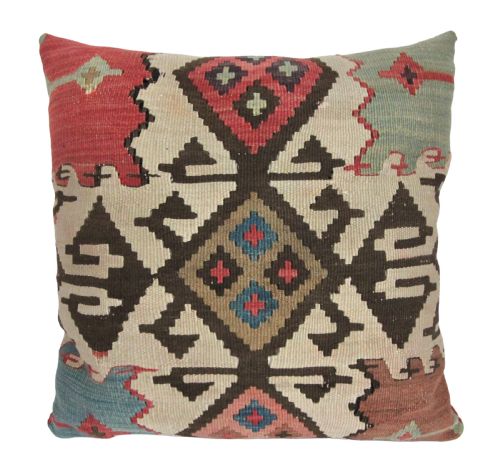


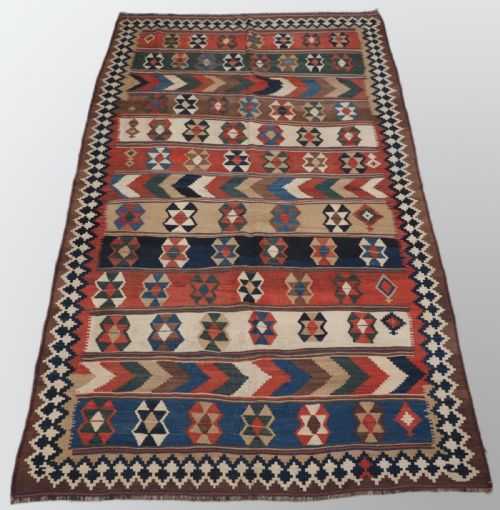

Multicoloured Flatweave Wool Rug
A multicoloured flatweave wool rug brings tribal artistry into the home through geometric patterns and vibrant dyes.
Multicoloured Flatweave Wool Rug
When searching for a multicoloured flatweave wool rug, buyers encounter tribal and nomadic textiles originating from Anatolia, Persia, the Caucasus, Central Asia, and North Africa. These pieces include kilims, runner rugs, prayer rugs, storage bags, and wall hangings produced across the late nineteenth and early twentieth centuries.
The most common formats on this page are flatweave kilims and tribal utility bags woven by nomadic groups such as the Qashqai, Afshar, and Kurdish tribes. These textiles served practical functions within nomadic camps before entering the decorative market as floor coverings and wall hangings.
Materials and construction
These textiles rely on hand-spun wool and cotton, sometimes incorporating organic elements like cowrie shells for decoration. Weavers utilised slit-tapestry techniques to build crisp geometric motifs without pile.
The structure depends on warp and weft interlace, creating a durable cloth that functions equally well as a floor covering or a hanging textile. Regional dyeing traditions provided the rich hues seen across these pieces.
Some tribal bags still retain their original cowrie shells, once sewn on to ward off the evil eye during nomadic travels.
Judging quality in flatweave textiles
Quality rests upon the tightness of the weave and the precision of the geometric design. Tighter tension in the hand-spun wool yields a sturdier textile that retains its structure over decades of use.
Colour palette and dye saturation dictate visual success. Pieces featuring deeply saturated natural dyes and harmonious colour transitions command greater attention than those with flat or muddy tones.
The Multicoloured Flatweave Wool Rug Glossary
- Kilim
- An un-tufted flatweave textile produced by tightly interweaving the warp and weft strands. This technique creates a lightweight fabric with flat surfaces on both sides.
- Mafrash
- A large rectangular storage chest panel or container used by nomadic tribes for bedding and household goods. These are frequently disassembled and sold as flat panels.
- Torba
- A small utility bag or wall pouch used by Central Asian tribes for domestic storage. They often feature intricate tribal symbols and flatweave backs.
- Sofreh
- A flatwoven spread or cloth used during meals or bread-making rituals. They display minimalist or symbolic geometric compositions.
- Warp
- The stationary vertical threads stretched across a loom before weaving begins. The weft threads pass horizontally through these foundational strands.
Multicoloured Flatweave Wool Rug: Frequently Asked Questions
How were these rugs used?
Nomadic groups utilised these flatweaves as floor coverings, animal trappings, storage containers, and dining spreads. Their durable construction suited the mobile lifestyle of tribes across Persia, Anatolia, and Central Asia.
Over time, many utility bags and storage sacks were repurposed into decorative wall hangings and rugs for modern interiors.
How do I clean a flatweave rug?
Gentle surface brushing and careful vacuuming without a rotating brush help maintain wool fibres. Professional textile cleaning is recommended for deeper maintenance.
Avoid excessive moisture and harsh chemical detergents to preserve the natural wool and traditional dyes.
Are these rugs reversible?
Most flatweave kilims are completely reversible because the weaving technique produces identical or closely mirrored patterns on both sides. This dual-surface quality reduces wear over time by allowing owners to rotate the textile.
Storage bags and panels with plain-weave backs generally display finished decoration on the front face only.
How do I identify tribal designs?
Tribal designs rely on geometric symbols, medallions, and banded layouts specific to regional weaving groups such as the Qashqai, Shahsavan, or Afshar. Colour choices and border motifs often reveal the geographic origin of the maker.
Comparing structural details like edge finishes helps differentiate between Anatolian, Caucasian, and Persian nomadic pieces.