






Multicoloured Flatweave Kilim
These multicoloured flatweave kilim pieces bring vibrant tribal geometry and rich textile history straight into your home.
Multicoloured Flatweave Kilim
When you search for multicoloured flatweave kilim, you encounter a diverse array of tribal and nomadic textiles originating from regions across Anatolia, Persia, the Caucasus, and Central Asia. These items span from the mid-nineteenth century through to the early decades of the twentieth century, reflecting varied regional weaving traditions.
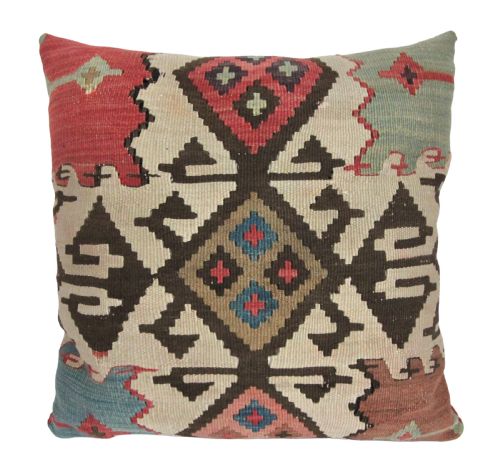
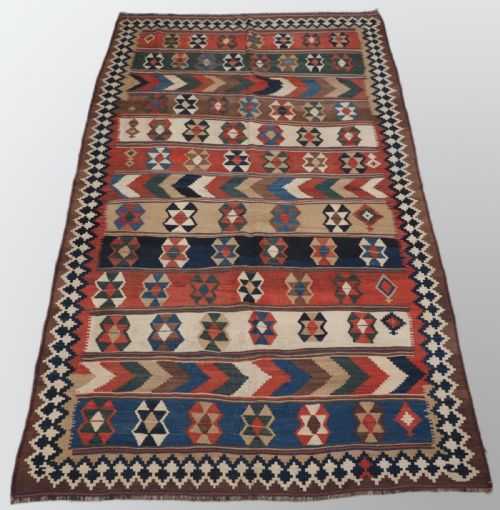
The selection on this page encompasses numerous practical forms beyond standard floor coverings, including larger carpets, prayer kilims, finger kelims, storage bags, and cushions. Each piece showcases the distinctive flat-weave construction typical of tribal textiles produced by groups such as the Qashqai, Shahsavan, Jaf Kurd, Afshar, and Uzbek makers.
Anatolian origins feature prominently among the current listings, alongside Caucasian and Persian pieces that display traditional banded, bold, or complex geometric designs. Whether utilised as a compact cushion or a room-sized rug, these textiles serve as functional works of art shaped by nomadic heritage.
How They Were Made
The textiles listed here rely primarily on wool, cotton, and hand-spun wool, materials chosen by nomadic and tribal weavers for durability and ability to hold dye. Weavers interlocked the warp and weft threads tightly to produce a smooth, pileless surface without knots.
Regional weaving techniques dictate the specific structure of each item, such as pieces woven in two distinct parts and subsequently joined, or specific regional variations like the Afyon finger kelim. The use of hand-spun wool adds subtle texture variations across the surface of the weave.
Some nineteenth-century storage bags still retain their original plain weave backs, offering a quiet, unpatterned contrast to their vibrant geometric fronts.
What Varies in Quality
Quality in these textiles rests upon the precision of the flat-weave structure and the integrity of the materials utilised by the weaver. Tighter, more consistent interlocks between warp and weft threads create a sturdier textile that holds its geometric lines with clarity.
The vibrancy and depth of the palette significantly influence the standing of a piece, with dynamic colour combinations and skilled dye work elevating certain examples. Furthermore, the complexity of the tribal design and the preservation of the original format contribute to the overall character of the item.
Shekarlu Tayefeh·Shahsavan·Jaf Kurd·Afshar Nomads·Karakecili
The Multicoloured Flatweave Kilim Glossary
- Kilim
- A flat-woven carpet or piece of textile produced without a pile by tightly interweaving warp and weft strands. This technique creates a lightweight fabric traditionally utilised for floor coverings, wall hangings, and domestic furnishings.
- Warp
- The stationary vertical threads stretched onto a loom before weaving begins. The horizontal weft threads pass alternately over and under these foundational strands.
- Weft
- The horizontal threads passed through the warp to create the pattern and fabric of the textile. In flatweaves, these coloured threads completely conceal the vertical warp.
- Sofreh
- A type of spread or cloth used traditionally for domestic purposes connected with bread making and dining. These textiles often feature specific tribal motifs and practical formats.
- Mafrash
- A large storage bag or chest panel traditionally used by nomadic groups for transporting bedding and household goods. They typically comprise multiple woven panels assembled to form a rigid container.
Multicoloured Flatweave Kilim: Frequently Asked Questions
How do I clean a kilim rug?
Gentle surface cleaning and regular light vacuuming without a rotating brush help maintain the wool fibres without damaging the flat weave.
Professional textile cleaning is recommended for deeper maintenance to protect the historic dyes and construction.
Where were these flatweaves made?
These textiles originate from various nomadic and tribal regions across Anatolia, Persia, the Caucasus, and Central Asia.
Specific provenances include towns and tribal territories such as Fars Province, Kerman, and Malatya.
Can I use these textiles on the floor?
Many of these items function well as floor coverings, provided you use an appropriate underlay to prevent slipping and reduce friction.
Smaller bags and cushions are better suited for decorative display or gentle domestic use rather than heavy foot traffic.
What is a prayer kilim?
A prayer kilim is a specific textile featuring a niche design that represents the mihrab, traditionally directed toward Mecca during daily prayers.
These pieces often display distinct regional iconography within the border and central field.