
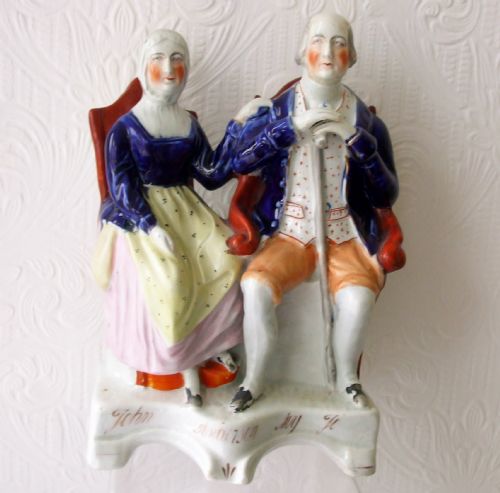
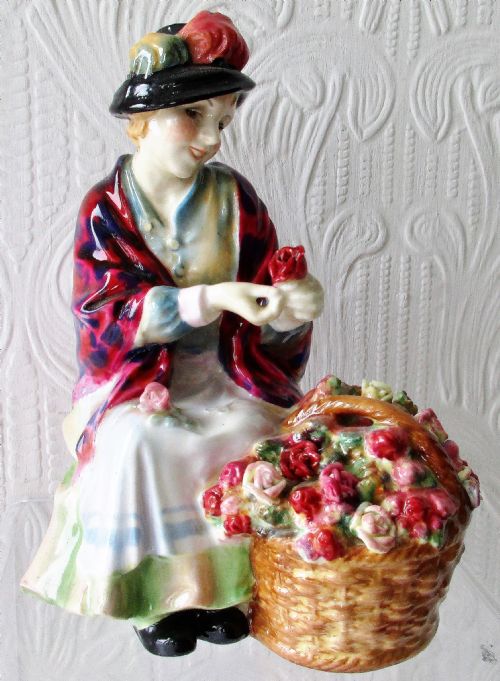
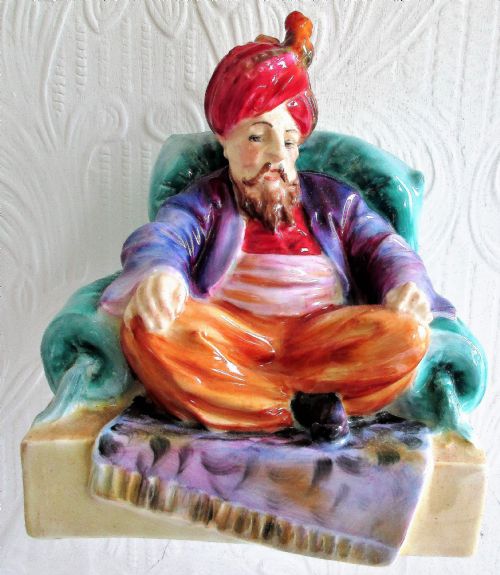
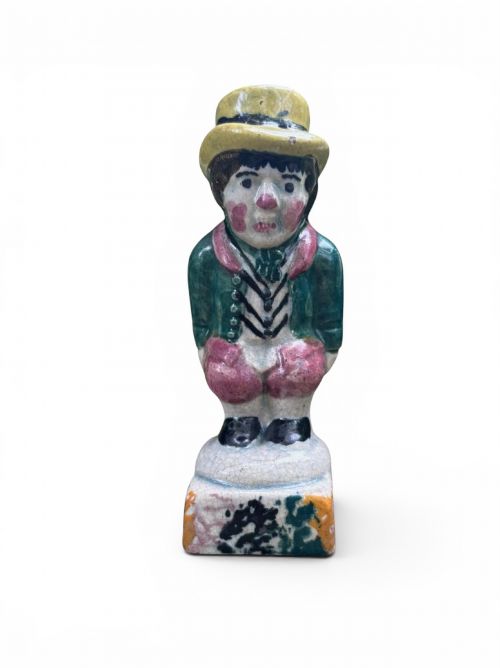


Multicolour Ceramic Figurine
A multicolour ceramic figurine brings character and narrative to a mantelpiece, drawing collectors to these small, hand-painted sculptural works.
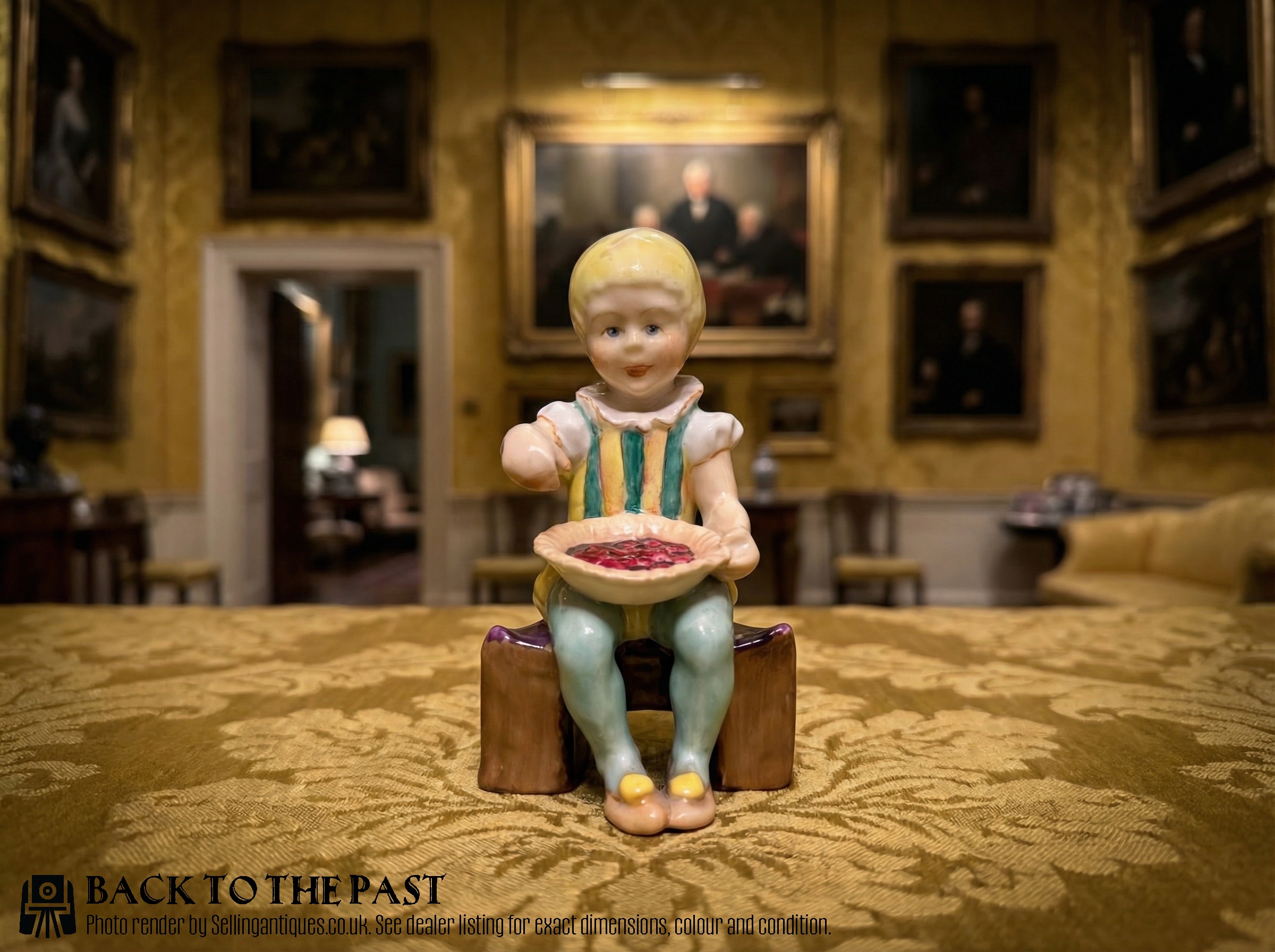
Multicolour Ceramic Figurine
A multicolour ceramic figurine encompasses works shaped from earthenware, pearlware, and porcelain, often taking the form of decorative figures, watch holders, and pepper pots. These pieces span periods from the Georgian era through the Victorian period and into the mid-twentieth century.
The versions most frequently met on this page include Staffordshire pottery portrait figures and English porcelain characters, alongside Chinese Export and Japanese examples. They range from literary and theatrical subjects to traditional folk representations.
Makers represented in these listings include Royal Doulton, Samson of Paris, Derby, Minton, and Royal Worcester, showing the broad geographic spread of nineteenth and twentieth-century ceramic workshops.
Materials and production methods
Potters shaped these figures using clay bodies such as earthenware, pearlware, and fine porcelain, sometimes applying lead glaze or enamel to seal the surface. Gold leaf highlights appear on select nineteenth-century pieces to accent details.
Decoration relies on hand-applied pigments beneath or over the glaze, with workshops employing distinct colour palettes unique to their period and region, from Staffordshire folk art tones to the vibrant enamels of Chinese Famille Rose.
Multicolour Ceramic Figurine Retail Price Guide 2026
Typical asking prices for multicolour ceramic figurine among the pieces listed under this phrase on Sellingantiques today, from the lower quarter to the upper quarter. They describe what is for sale here now, not the wider market.
The listings on this page span from eighteenth-century Georgian pieces to mid-twentieth-century designs, utilising earthenware, pearlware, and porcelain.
Factors of quality and execution
Design complexity also sets pieces apart, as sculptural groups with multiple figures, intricate bases, or functional elements like watch holders and candlesticks demand greater skill from the modeller than simple single forms.
Royal Doulton·Samson of Paris·Derby Porcelain·Minton·Royal Worcester·Satsuma
The Multicolour Ceramic Figurine Glossary
- Pearlware
- A refined earthenware developed in the late eighteenth century, featuring a thin glaze with a slight bluish tinge that pooled in crevices. It served as a popular base for painted figures before pure white bodies became standard.
- Staffordshire pottery
- Earthenware figures and groups produced by numerous potteries in the English Midlands, typically modelled with flat backs and vibrant underglaze colours. They were created for domestic mantelpiece display.
- Famille Rose
- A palette of opaque enamel colours dominated by pink, introduced in Chinese export porcelain during the eighteenth century. The style influenced European workshops attempting to replicate Oriental ceramic decoration.
- Lead glaze
- A glossy coating containing lead oxide applied to earthenware to waterproof the porous clay body and intensify painted colours. It produces a warm, reflective surface characteristic of earlier ceramic wares.
- Enamel
- Vitreous coloured glass fused to the surface of fired porcelain or earthenware at a lower temperature. It allows for a rich spectrum of decorative hues on finished figures.
Multicolour Ceramic Figurine: Frequently Asked Questions
What are Staffordshire figures?
Staffordshire figures are earthenware ceramic sculptures produced in the English Midlands during the nineteenth century for middle-class home display. They typically depict literary characters, historical events, sailors, and animals.
Most are moulded with flat backs because they stood on mantelpieces against a wall. Their decoration relies on hand-painted glazes in bright, simple colours.
How do I date a porcelain figurine?
Dating relies on maker marks, paste composition, and the painting style characteristic of a particular manufacturing period. Nineteenth-century pieces often bear impressed numbers or painted factory ciphers.
Stylistic cues such as costume details and the brilliance of the enamel palette also indicate the era of production. Comparing the base and glaze texture to known dated examples helps confirm the period.
Were these figures meant for display?
Yes, almost all of these ceramic works served as decorative ornaments for domestic interiors, particularly on mantelpieces, side tables, and cabinets. Some examples, however, incorporated practical functions.
Pieces like watch holders and figural candlesticks combined sculptural display with everyday utility. Others, such as pepper pots, doubled as table wares.
What is the difference between porcelain and earthenware figures?
Porcelain is a vitreous, translucent ceramic fired at high temperatures using kaolin and petuntse, resulting in a white, fine-grained body. Earthenware is opaque, more porous, and fired at lower temperatures.
Earthenware figures like pearlware Staffordshire pieces have a heavier feel and often feature a tinted glaze, while porcelain allows for sharper detail and a smoother, glassier finish.