

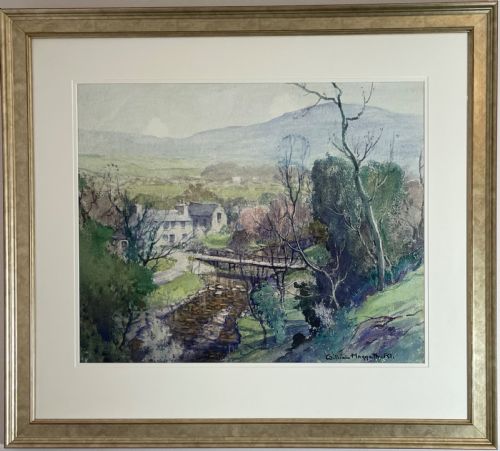


Mountain Landscape Watercolour Art
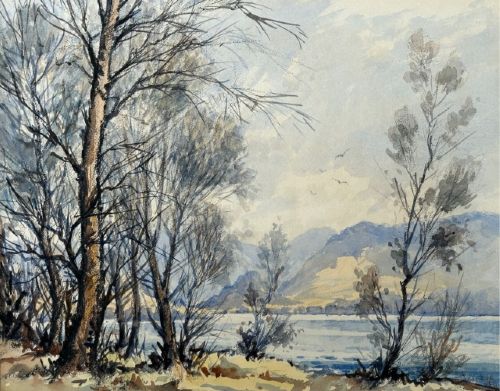
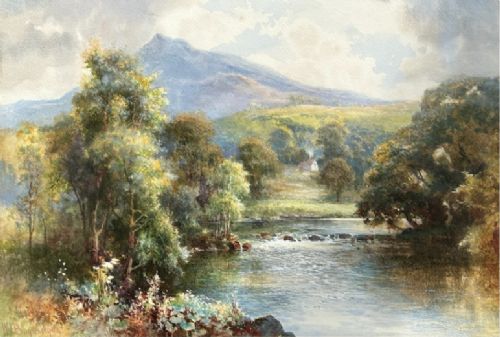
Mountain landscape watercolour art brings distant peaks and remote valleys onto paper through washes of pigment and water.
Mountain Landscape Watercolour Art
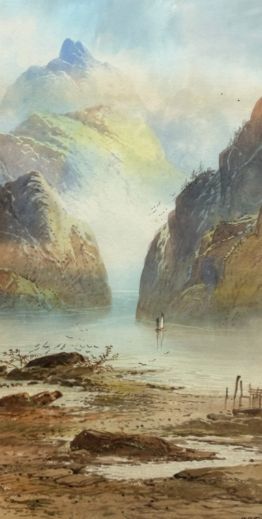
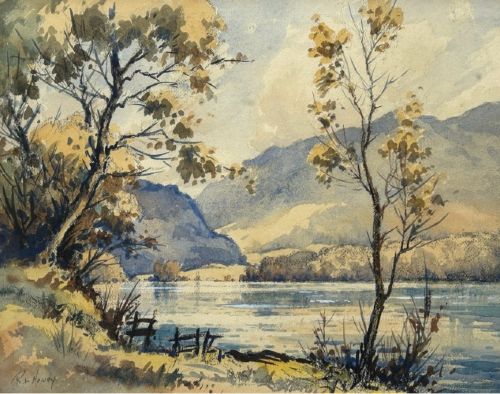
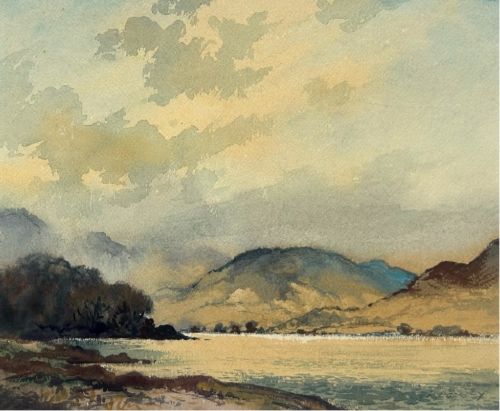
Mountain landscape watercolour art captures topography, rural views, and upland scenes executed on paper from the Georgian period through the mid-20th century. Buyers seek these original paintings to bring historic topography and topographical observation into domestic spaces.
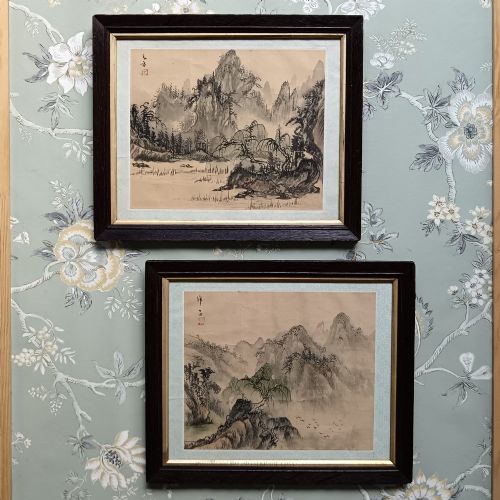
The selections available range from 19th-century British and Welsh valley scenes to mid-century Cumbrian views, Swiss Alpine passes, and traditional Chinese silk paintings. Works span the Victorian and Edwardian eras alongside mid-century British school impressions and continental views.
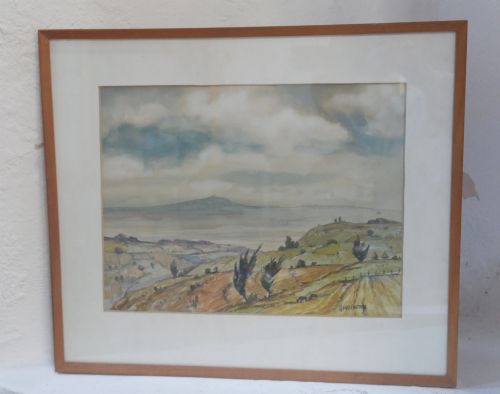
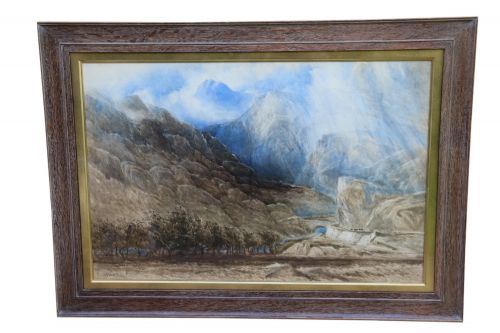
Most examples appear framed and glazed in period wood or gilt mouldings, preserving delicate pigments from atmospheric damage. Smaller sketches sit alongside expansive framed watercolours and gouache compositions.
Materials and execution
Artists applied watercolour pigment and occasional gouache directly onto absorbent paper or silk supports. Washes varied from translucent layers capturing mountain mists to dense opaque applications defining rocky crags and buildings.
Many works incorporate ink linework or sepia tones beneath or alongside the pigment to establish preliminary contours. Finished paintings found protection behind glass within wooden and gilt frames.
Listings feature watercolours on paper and silk, spanning the Georgian, Victorian, Edwardian, and mid-century periods.
Evaluating quality
Quality rests upon the artist's handling of light, atmospheric depth, and topographical accuracy within the wash. Superior examples manage tonal transitions across rugged terrain without muddying the underlying paper.
The preservation of the original paper support and the vibrancy of the pigment distinguish finer sheets. Intact period framing and clear artist signatures further elevate individual works.
William Henry Earp·Robert Leslie Howey·William Joseph Boyes·Henry Martin Pope·William Hoggatt·Edward Horace Thompson·YA MING·Stanley Orchart·Thomas Lound·James H Hulse·Hirst Walker RBA·AJ Thornton·Noel Harry Leaver·Cornelius Pearson·Samuel Towers·Milton Drinkwater·J.D. Walker·Willie Stephenson·Orlando Greenwood
The Mountain Landscape Watercolour Art Glossary
- Gouache
- An opaque water-based paint that includes white pigment, creating heavier, solid passages of colour compared to transparent watercolour washes.
- Shan Shui
- Traditional Chinese landscape painting style depicting scenery such as mountains and rivers using brush and ink on silk or paper.
- Glazed
- Fitted with a protective glass pane over the face of the painting to shield the delicate paper and pigments.
- Sepia
- A brownish pigment derived from the ink sac of the cuttlefish, frequently used for monochrome landscape sketches.
- Gilt wood
- Wood framing finished with a thin layer of gold leaf or metallic gilt paint, common in 19th-century presentations.
Mountain Landscape Watercolour Art: Frequently Asked Questions
How should I hang watercolour art?
Hang watercolours away from direct sunlight to prevent the fugitive pigments from fading over time.
Ensure the room maintains stable humidity levels to protect the historic paper and wooden frames.
Are these paintings original?
The selections consist of hand-painted original works rather than modern mass reproductions.
Many retain artist signatures, studio stamps, or period inscriptions detailing the specific geographic location depicted.
What periods do these watercolours cover?
The works span from the Georgian era through the Victorian and Edwardian periods into the mid-20th century.
Mid-century British and continental views sit alongside 19th-century topographical studies.
Why are they framed under glass?
Glass protects delicate paper supports and water-soluble pigments from dust, moisture, and physical contact.
Historic watercolours rely entirely on this physical barrier for long-term preservation.