



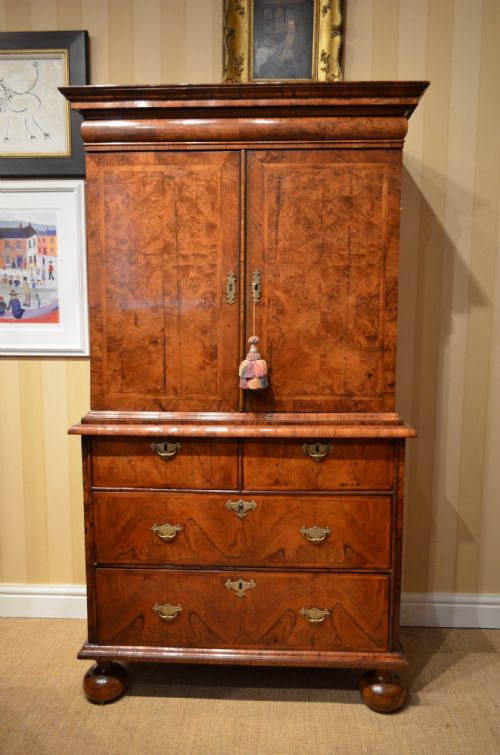
Moulded Walnut Drawer Chest
A moulded walnut drawer chest brings deep timber grain and quiet structure into a room, offering both generous storage and rich tactile warmth.
Moulded Walnut Drawer Chest
A moulded walnut drawer chest brings together the rich, dark tones of walnut timber and structured, architectural drawer fronts. These pieces serve as practical storage items while offering a commanding presence through their substantial timber construction.
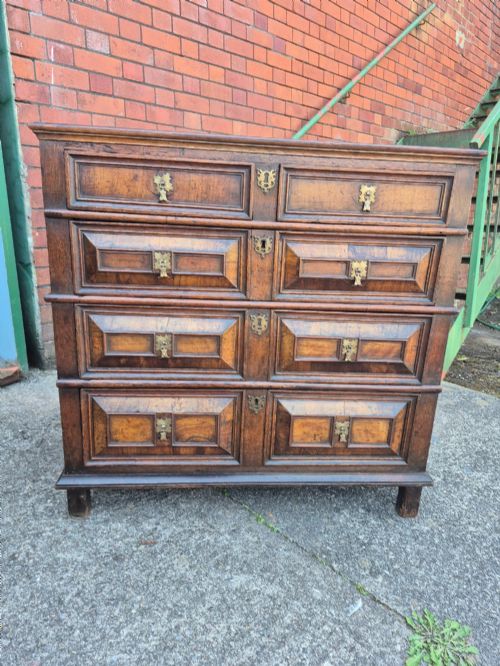
The versions most commonly met on this page span the seventeenth century up to the late nineteenth century. You will find seventeenth-century examples featuring geometric mouldings alongside later Victorian and mid-eighteenth-century commodes topped with grey marble.
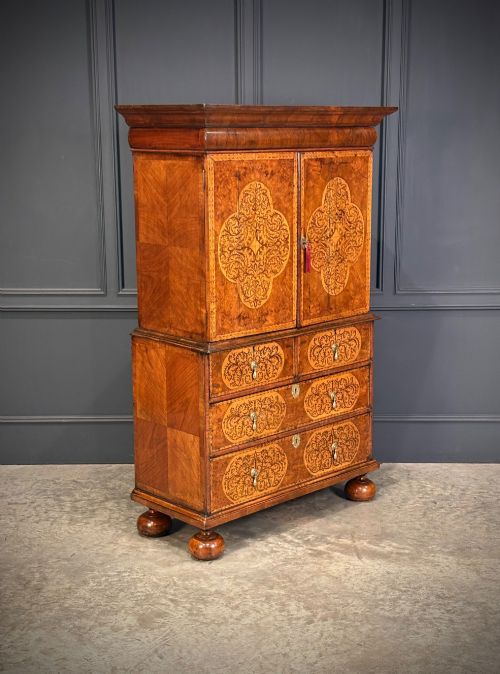
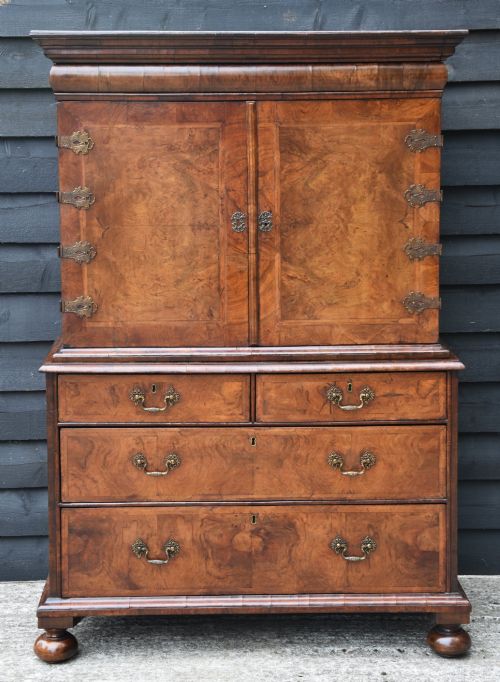
Forms range from standard chests of drawers to two-part chests, cabinets on chests, and specialised collectors cabinets. Origins stretch across English, French, and Italian workshops, reflecting diverse regional tastes in timber work and moulding profiles.
How they were made
Makers utilised walnut as the primary timber, often combining it with oak carcases, fruitwood inlay, and satin birch details. Metal and brass hardware such as drop handles and escutcheons completed the construction of the drawers and doors.
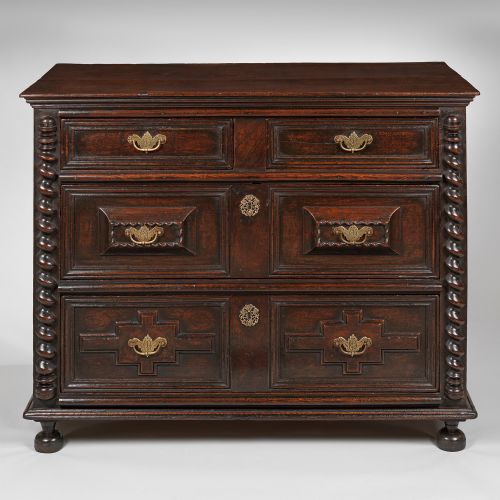
The key technique defining these items is the application of raised mouldings to the drawer fronts, creating geometric patterns or framed panels. Cabinet makers also employed fruitwood inlay and two-part carcass construction to build robust furniture designed to endure.
Moulded Walnut Drawer Chest Retail Price Guide 2026
Typical asking prices for moulded walnut drawer chest among the pieces listed under this phrase on Sellingantiques today, from the lower quarter to the upper quarter. They describe what is for sale here now, not the wider market.
Collectors occasionally discover hidden compartments tucked behind geometric walnut mouldings.
What varies in quality
Quality rests in the depth and selection of the walnut veneer or solid timber, along with the crispness of the geometric or block mouldings. Superior examples display harmonious grain patterns across the drawer fronts and careful integration of secondary woods like oak and fruitwood.
The sophistication of the construction distinguishes the pieces, from simple joined drawer banks to complex cabinets on stands and commodes fitted with grey marble tops. Finer items exhibit precise joinery in their two-part frames and well-executed fruitwood inlay.
The Moulded Walnut Drawer Chest Glossary
- Commode
- A low chest of drawers or cabinet, frequently associated with French or Italian design and often finished with a marble top.
- Geometric chest
- A piece featuring raised mouldings arranged in intricate rectangular or octagonal patterns across the drawer fronts.
- Cabinet on chest
- A tall storage form comprising an upper cabinet section resting upon a lower chest or supporting stand.
- Fruitwood inlay
- The decorative insertion of lighter fruitwood pieces into contrasting walnut surfaces to create linear or pictorial designs.
- Two-part chest
- A modular furniture form built in upper and lower sections to ease transport and placement within a building.
Moulded Walnut Drawer Chest: Frequently Asked Questions
How do I date a walnut chest?
Dating relies on observing the construction methods, handle hardware, and the specific style of the mouldings on the drawer fronts. Pieces range from seventeenth-century geometric designs to nineteenth-century commodes.
Changes in secondary woods like oak or fruitwood, alongside the presence of marble tops or satin birch accents, help narrow down the period of manufacture.
Where were these chests used?
These chests served primarily in bedrooms, grand parlours, and hallways for storing garments, linens, and valuables. Collectors cabinets were specifically built to house small precious items or specimens.
Their robust timber construction and generous drawer space made them central pieces of domestic furniture across English, French, and Italian interiors.
How do I care for walnut timber?
Walnut benefits from stable room temperatures away from direct sunlight and severe humidity changes, which can affect the timber and veneer. Regular gentle dusting preserves the natural finish of the wood.
Avoid using harsh chemical polishes that might degrade the historic surface or react adversely with the fruitwood inlay and brass hardware.
What is a cabinet on chest?
A cabinet on chest is a tall, two-part storage furniture form where an enclosed upper cabinet sits securely on top of a lower chest base. This format provided specialised storage for documents, textiles, or collections.
They often feature elaborate walnut grain and distinct architectural mouldings that divide the upper and lower sections.
Are marble tops original?
Marble tops frequently appear on French and Italian commodes dating from the eighteenth and nineteenth centuries. The grey marble slab provided a durable, decorative surface for the top of the low chest.
Evaluating the fit of the stone and its relationship to the walnut frame helps determine its period context.