



Moulded Glass Urn
These moulded glass urn and vase forms bring distinct Art Deco lines and tactile relief surfaces into any room.
Moulded Glass Urn
A moulded glass urn or vase represents the height of early twentieth century decorative design, typically taking the form of robust glass vessels produced in the Art Deco style. When people search for a moulded glass urn, they seek these substantial decorative objects that serve as striking centrepieces in domestic spaces.
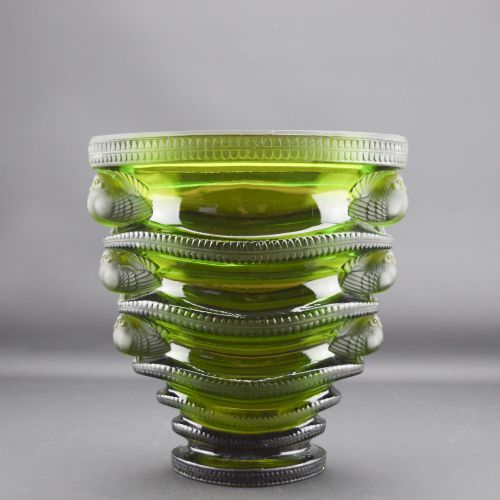
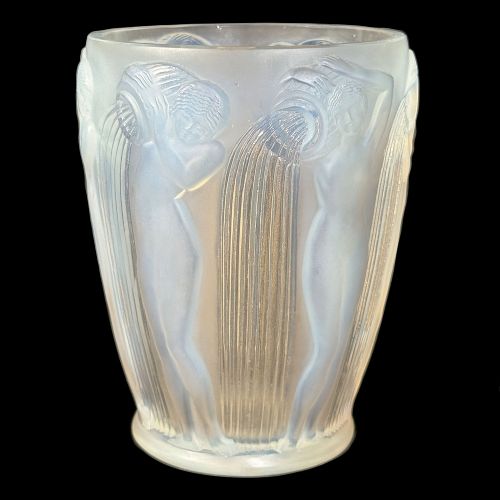
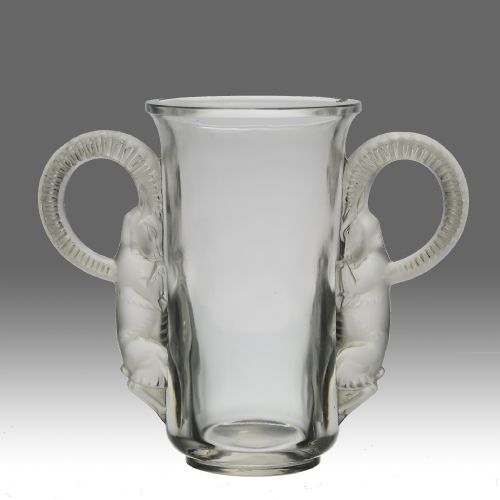
The examples gathered here date from the 1920 and 1930 periods, showcasing specific named models such as the Saint-Marc, Danaides, Beliers, Thibet, Renoncules, Acacia, Graines, Gui, Ferrières, Lauriers, Myrrhis, and St Francois. Most of these creations originate from the renowned designer René Lalique.
Buyers will encounter these pieces primarily as vases designed with sculptural motifs, functioning both as vessels and as standalone works of decorative art. The forms rely on heavy glass construction shaped through industrial moulding techniques of the era.
How they were made
Makers utilised press-moulded and pressed glass techniques to achieve deep relief decoration across the body of each vessel. Molten material was forced into metal moulds to capture intricate sculptural details like foliage, figures, and animal motifs.
The finished items appeared in various material treatments including frosted glass, clear glass, opalescent glass, and stained glass. Surface patination and colour manipulation during the cooling process created the characteristic milky or glowing optical effects seen on the opalescent and green pieces.
Listings show items exclusively from the 1920 and 1930 periods, spanning frosted, opalescent, clear, and stained glass materials.
What varies in quality
Quality differences lie in the crispness of the moulded relief and the depth of the opalescence within the glass body. Superior examples display sharp definition in the sculptural details and a rich interplay of light through the frosted or coloured material.
The artistic execution of the design, whether depicting water carriers, rams, or botanical subjects, dictates the distinction between standard production items and masterworks. The handling of the surface finish and the purity of the glass substance further define the standing of each piece.
Rene Lalique·René Lalique
The Moulded Glass Urn Glossary
- Art Deco
- A design style popular in the 1920 and 1930 periods characterised by stylised motifs, geometric symmetry, and streamlined forms. It influenced architecture, jewellery, and decorative glassware.
- Opalescent glass
- A type of glass that exhibits a milky, bluish, or amber glow when lit from certain angles. This optical effect is achieved through the chemical composition of the batch during manufacturing.
- Press-moulded glass
- A manufacturing method where molten glass is pressed into a metal mould by a plunger to form the vessel and impart surface decoration simultaneously. This technique allowed for the production of heavy, decorative items.
- Frosted glass
- Glass treated to achieve a textured, non-transparent surface finish through acid etching or sandblasting. It diffuses light gently across sculptural reliefs.
Moulded Glass Urn: Frequently Asked Questions
What is a moulded glass urn?
A moulded glass urn is a heavy decorative vessel shaped in a metal mould during the early twentieth century.
These objects often feature prominent Art Deco designs and sculptural motifs rendered in frosted, clear, or opalescent glass.
How do you date these glass pieces?
Dating relies on the production methods, stylistic markers of the Art Deco movement, and records associated with the makers.
Items seen here typically belong to the 1920 and 1930 periods, reflecting the technological capabilities of those decades.
Where were these glass items made?
These decorative vessels originate from European workshops and factories operating during the interwar years.
Master designers of the era oversaw the production of these pressed and moulded glass forms.
How should you display moulded glass?
Display these pieces in locations with adequate lighting to highlight the opalescent qualities and frosted surface reliefs.
Placing them on stable surfaces away from heavy traffic ensures the heavy glass vessels remain secure.