
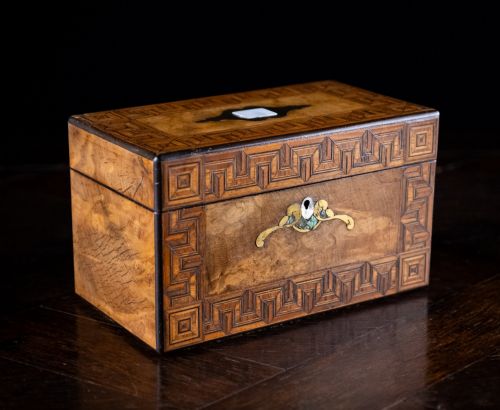
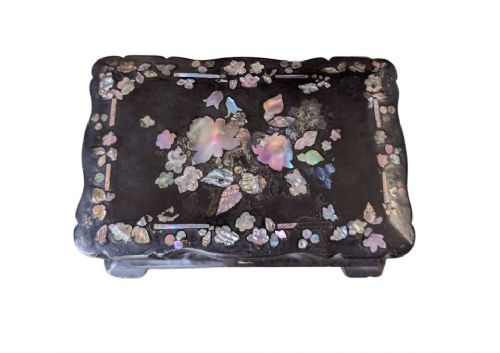
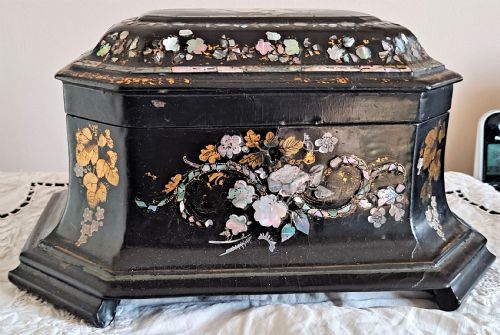


Mother of Pearl Tea Chest
These mother of pearl tea chest examples combine lustrous marine shell with rich hardwoods and papier-mâché, offering collectors tactile desktop storage.
Mother of Pearl Tea Chest
When you search for a mother of pearl tea chest, you encounter lidded receptacles designed to store dried leaves securely in domestic parlours. These items emerge from nineteenth century workshops, encompassing both Regency and Victorian aesthetic movements.
Buyers most frequently meet nineteenth century papier-mâché vessels alongside solid rosewood and walnut boxes embellished with brass and gold leaf detailing. Several pieces incorporate specialised compartments for leaf storage alongside stations for stationery.
How they were made
Artisans constructed the rigid carcasses of these containers from dense timbers such as rosewood, walnut, and coromandel, often applying parquetry patterns. Alternatively, workers utilised papier-mâché to mould smooth, dark surfaces suited to high-contrast shell decoration.
Craftsmen inlaid thin marine shell into prepared recesses within the wood or lacquer, securing the material before adding engraved lines. Many examples integrate cast brass feet, escutcheons, and hinges alongside delicate gold leaf ornamentation.
What varies in quality
The refinement of the shell inlay dictates the visual impact of each piece, distinguishing simple geometric dots from intricate bird and foliate designs. Finely engraved details across the iridescent surfaces demonstrate superior handwork by skilled nineteenth century artisans.
The choice of primary cabinet timber influences overall distinction, with richly grained coromandel and figured rosewood standing above standard woods. Structural integrity, preserved lacquer finishes, and matching interior components further separate exceptional examples from standard boxes.
The Mother of Pearl Tea Chest Glossary
- Mother-of-pearl
- An iridescent inner layer of shells produced by molluses, utilised for decorative inlay on nineteenth century boxes.
- Papier-mâché
- A composite material made from paper pulp or reinforced sheets mixed with binding adhesive, moulded and finished with dark lacquer.
- Sarcophagus
- A monumental container shape featuring a domed or sloping lid reminiscent of stone coffins, popular during the Regency period.
- Coromandel
- A heavy, dense tropical timber featuring dark brown graining with contrasting yellowish streaks, favoured for luxury boxes.
- Parquetry
- A geometric mosaic of wood strips fitted together to create patterned decorative surfaces across a cabinet exterior.
Mother of Pearl Tea Chest: Frequently Asked Questions
How do I date a tea chest?
Dating relies on identifying stylistic markers from periods such as the Regency, William IV, and Victorian eras. Sarcophagus silhouettes and specific wood choices like coromandel typically point toward earlier nineteenth century production.
Later Victorian pieces frequently employ moulded papier-mâché combined with iridescent shell inlay and gold leaf decoration.
How do I care for my box?
Keep wooden and papier-mâché surfaces away from direct sunlight and excessive humidity to prevent warping or lacquer cracking. Dust gently with a dry, soft cloth without applying modern chemical polishes or abrasive cleaners.
Protect the delicate shell inlay by maintaining stable indoor temperatures throughout the year.
How were these boxes used?
Households stored expensive tea leaves under lock and key within partitioned interior wells to manage domestic provisions. Servants or hosts transferred measured amounts into teapots during formal gatherings.
Over time, many of these vessels transitioned into general keepsake boxes for letters, jewellery, and stationery.