


Inlaid Mother of Pearl Caddy
An inlaid mother of pearl caddy brings tactile warmth and reflective shell ornament to a room.
Inlaid Mother of Pearl Caddy
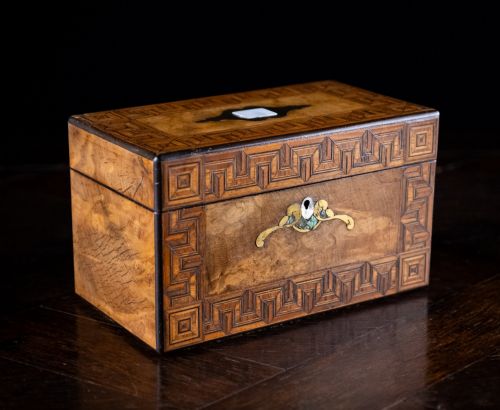
An inlaid mother of pearl caddy is a lidded container designed for storing loose tea leaves, constructed in wood or papier-mâché and finished with shimmering shell details. These pieces span the Georgian, Regency, William IV, and Victorian periods, reflecting shifting tastes in domestic containment and display.
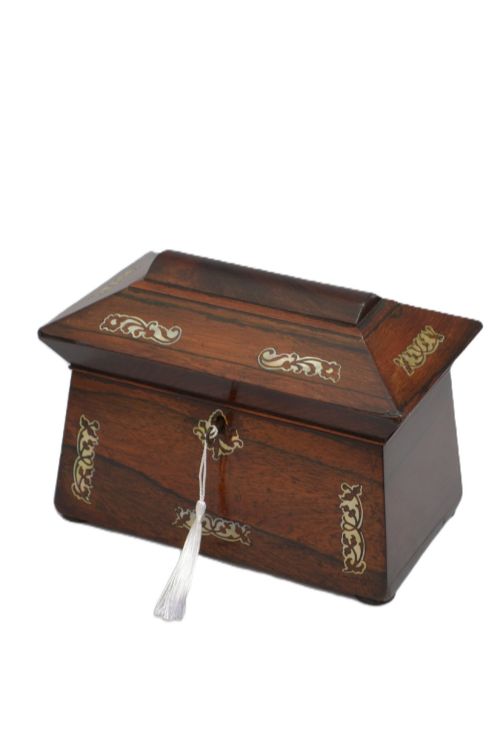
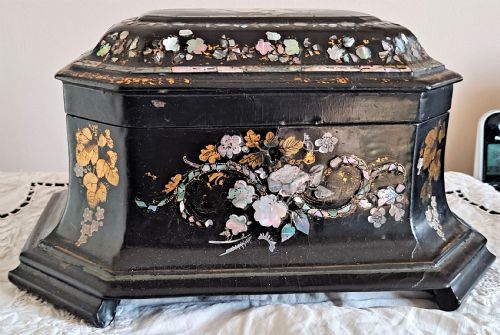
The version most commonly met on this page is the Rosewood tea caddy, frequently accompanied by Victorian papier-mâché examples and occasional table cabinets or sewing boxes. Makers utilised dense tropical timbers like rosewood and walnut, alongside japanned papier-mâché, to create durable and decorative receptacles.
Beyond the standard tea caddy form, related boxes emerge in formats such as jewellery boxes, correspondence cases, and keepsake boxes. Each object retains the characteristic lustre of shell inlay, set against dark wood grounds or polished black lacquer.
How they were made
Artisans built the carcases of these caddies from hardwoods such as rosewood, walnut, and coromandel, often shaping them into sarcophagus or casket silhouettes. Surfaces were carefully planed and polished to display rich natural grain patterns before any decorative elements were applied.
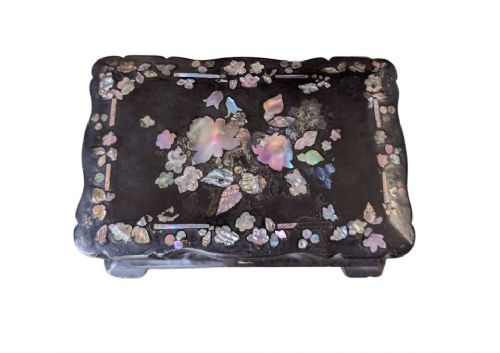
Mother-of-pearl shell was cut into thin, geometric or foliate plaques, then embedded into prepared recesses in the wood or papier-mâché ground. Engraving was frequently added to the shell surface to define the details of birds, flowers, and geometric borders.
Secondary materials like brass stringing, gold leaf, and tortoiseshell were incorporated alongside the pearl to enrich the overall composition. Lacquer was built up in multiple layers on papier-mâché pieces, providing a smooth, durable base for the pearl inlay.
Tea was so costly that Georgian householders kept their caddies locked, trusting only the lady of the house with the tiny brass key.
What varies in quality
The calibre of an inlaid mother of pearl caddy depends heavily on the precision of the inlay work and the figuration of the underlying timber. Finely cut shell pieces that sit flush with the surrounding wood indicate superior workshop practice compared to hastily set elements.
Surface depth and the complexity of the decorative scheme separate standard items from exceptional ones. Pieces featuring finely engraved mother-of-pearl birds, brass stringing, or combination materials like tortoiseshell demonstrate higher ambition in design and execution.
Jennens and Bettridge
The Inlaid Mother of Pearl Caddy Glossary
- Papier-mâché
- A composite material made from paper pulp or layers of paper bound with glue, pressed into moulds and baked. It provides a smooth, stable dark ground for mother-of-pearl inlay.
- Sarcophagus
- A box shape featuring sloping sides and a domed lid, resembling an ancient stone coffin. This form is common among Regency and Victorian tea caddies.
- Parquetry
- A geometric mosaic of wood pieces used for decorative veneer on furniture and boxes. It often frames the mother-of-pearl panels on walnut surfaces.
- Macassar ebony
- A heavily figured exotic hardwood with dark brown and warm golden stripes. It serves as a dense, contrasting background for pearl ornament.
- Thuya wood
- A fragrant burl timber prized for its swirling grain patterns and warm reddish-brown colour. It appears on decorative collectors boxes from the nineteenth century.
Inlaid Mother of Pearl Caddy: Frequently Asked Questions
What is an inlaid mother of pearl caddy?
An inlaid mother of pearl caddy is a decorative storage box made during the Georgian and Victorian eras, primarily designed to keep precious tea leaves dry and secure under lock and key.
These pieces combine dense hardwoods or papier-mâché with iridescent shell fragments, turning a utilitarian kitchen container into a refined tabletop object.
How were tea caddies used originally?
Tea was an expensive commodity in the nineteenth century, so leaves were kept locked inside these specialised boxes to prevent theft by household staff. The interior typically featured lidded compartments to separate different varieties of black and green tea.
Servants brought the caddy to the drawing room where the mistress of the house measured out the leaves for brewing.
How do I date a mother of pearl box?
Dating relies on observing the box shape, timber choice, and inlay style alongside structural markers. Regency examples often feature sarcophagus forms in rosewood, while mid-Victorian pieces frequently utilise papier-mâché or burr walnut.
Hardware such as escutcheons and interior fittings also offer clues to the exact period of manufacture.
How do I care for antique wood and shell?
Keep these boxes away from direct sunlight and sudden temperature shifts to prevent the wood from warping and the pearl inlay from loosening. A light dusting with a dry, soft cloth is generally sufficient for maintenance.
Avoid using modern liquid polishes or moisture, which can damage the delicate lacquer, brass stringing, and historical wood finishes.