


English Papier Mache Box
An English papier mache box brings together durable layered paper pulp and fine Victorian hand-painted artistry to hold your small treasures.
English Papier Mache Box
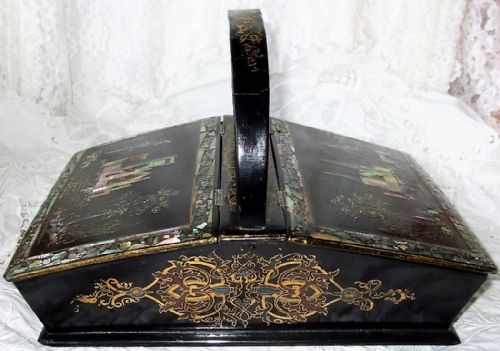
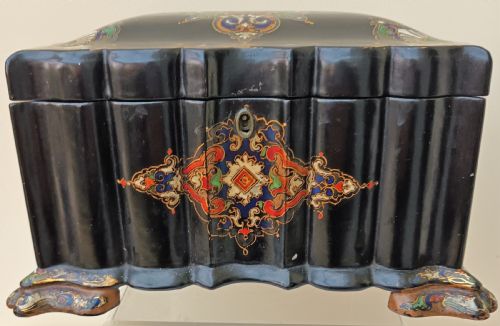
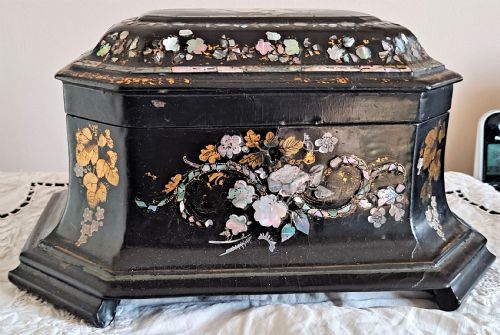
When you search for an english papier mache box, you encounter nineteenth-century items created for specific domestic tasks. The selections on this page concentrate on tea caddies, needlework caskets, jewellery boxes, and games boxes from the Victorian period.
Tea caddies and writing boxes dominate the surviving examples, alongside table cabinets and scent bottle boxes. These objects served utilitarian roles in nineteenth-century drawing rooms while displaying decorative finishes.
The forms span small glove boxes and card boxes to grand table cabinets and lap desks. Each piece reflects the nineteenth-century domestic interior through distinct functional compartments.
Materials and construction
These items rely on papier-mache as a primary body, formed from layered paper pulp treated to create a rigid structure. Artisans reinforced this base before applying layers of dark lacquer to achieve a smooth, resilient surface.
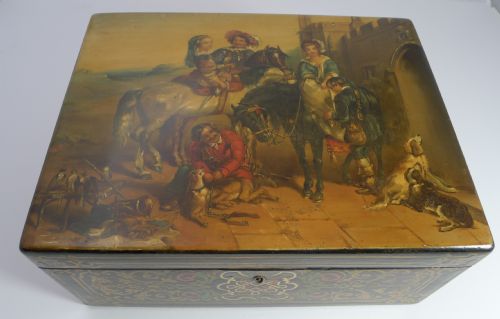
Decoration often incorporates mother-of-pearl inlay, gold leaf, and brass fittings alongside detailed hand-painting. Gilt accents and painted scenes of animals, such as dogs, complete the exterior finish.
Victorian artisans frequently chose dogs as subjects for hand-painted box lids, bringing loyal hounds to guard your stationery.
Assessing quality and finish
Quality rests upon the precision of the papier-mache body and the integrity of the lacquered surface. Superior examples maintain intact hand-painted details and secure mother-of-pearl inlay without significant lifting or loss.
Internal fittings distinguish standard containers from superior cabinets and writing boxes. Retained original interiors, complete with compartments and glass or gilt elements, elevate the standing of the piece.
Jennens & Bettridge
The English Papier Mache Box Glossary
- Papier-mache
- A composite material made from paper pulp or layers of paper mixed with glue and resin, pressed into moulds and baked until rigid. It provides a lightweight yet durable base for decorative boxes.
- Mother-of-pearl
- The iridescent inner layer of certain mollusc shells, sliced into thin sheets and inlaid into lacquer surfaces. It catches the light to form geometric patterns or floral motifs.
- Tea caddy
- A small container designed to store dry tea leaves securely, often featuring internal lidded canisters. In nineteenth-century households, these sat prominently in the parlour.
- Lap desk
- A portable writing surface equipped with sloping panels, inkwells, and storage compartments for stationery. These boxes allowed letter writing away from a permanent bureau.
English Papier Mache Box: Frequently Asked Questions
What were these boxes used for?
These boxes served specific household functions in the nineteenth century, holding loose tea leaves, sewing needles, playing cards, and personal correspondence.
Larger versions functioned as portable writing desks or desktop cabinets for stationery and inkwells, keeping valuable items organised in the Victorian drawing room.
How do I care for papier mache?
Keep these items away from direct sunlight and damp environments to protect the lacquer finish and prevent the papier-mache base from warping.
Dust gently with a dry, soft cloth and avoid chemical polishes that can damage the delicate hand-painted surfaces and gold leaf.
Are the interiors usually original?
Many boxes retain their fitted compartments, velvet linings, and small glass or ceramic components from the nineteenth century.
Some examples have experienced restoration to their paper linings or wooden internal frames over generations of use.
How can I tell the period?
Victorian pieces often display characteristic lacquer techniques, mother-of-pearl inlay styles, and hand-painted motifs typical of the mid-to-late nineteenth century.
Examining the hinges, locks, and internal construction methods helps confirm the manufacturing era.