


Mother of Pearl Sewing Box
A mother of pearl sewing box brings lustrous nacre surfaces and fitted interiors to a dressing table or desk.
Mother of Pearl Sewing Box
A mother of pearl sewing box is a decorative casket designed to hold needlework tools, threads, and small accessories. These pieces typically date from the 19th Century, spanning the Regency and Victorian periods.
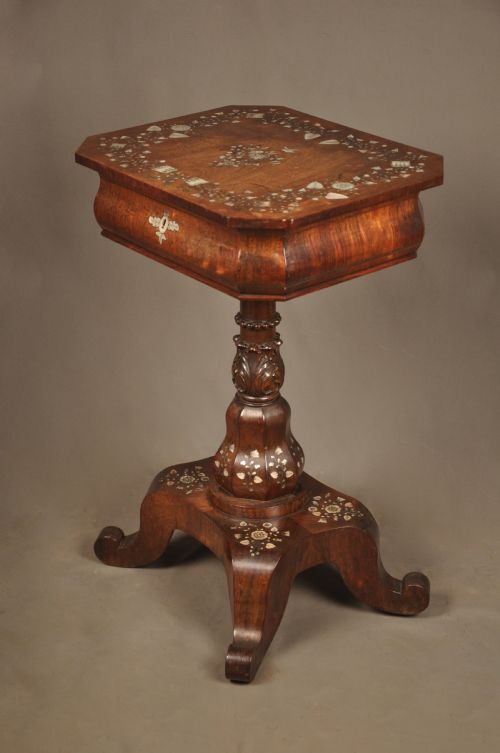
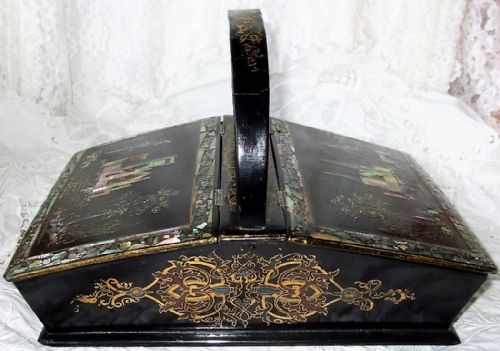
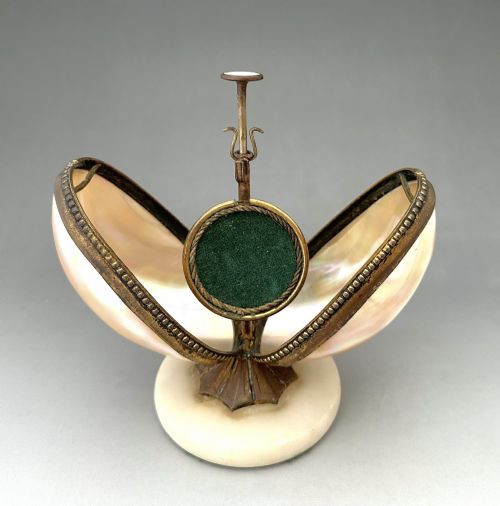
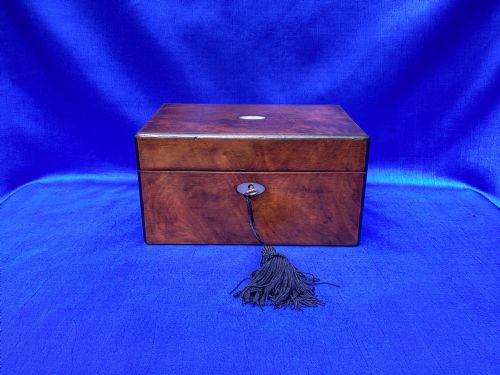
The most common version met on this page is a wooden box carcass - frequently rosewood or coromandel-wood - inlaid with geometric or floral panels of mother-of-pearl. Alternative forms include papier-mâché needlework caskets and delicate shell-shaped etuis.
Inside these boxes, collectors find fitted compartments lined with silk or velvet, often retaining original gold-tooled accessories such as needles, scissors, and thread winders.
How They Were Made
Craftsmen shaped thin plates of iridescent nacre into precise geometric tessellations, floral motifs, or escutcheons, pressing them flush into prepared recesses within the timber. Rosewood, coromandel-wood, walnut, and papier-mâché provided the dark contrasting backgrounds that made the pearl gleam.
Fine wire inlay of brass or silver frequently accompanied the pearl plaques, outlining lids and key escutcheons with delicate metallic lines. Interiors required meticulous woodworking to build removable trays, lidded compartments, and velvet-lined ledges tailored to tiny tools.
Several boxes double as musical caskets, playing tunes while you mend.
What Varies in Quality
The distinction between ordinary and exceptional examples rests on the density and precision of the shell inlay. Top-tier pieces feature completely panelled exteriors or intricate figurative engraving across the nacre, combined with exotic secondary woods like coromandel rather than standard mahogany.
Interior completeness dictates value just as strongly as exterior decoration. Boxes retaining their original matching gold-fitted tools, silk linings, and working locks demonstrate higher original expense and superior survival.
Edwards
The Mother of Pearl Sewing Box Glossary
- Mother-of-Pearl
- An iridescent inner layer of mollusc shell used for decorative inlay. It reflects shifting tones of silver, pink, and green under changing light.
- Coromandel-wood
- A dense, heavily figured tropical timber with dark brown and black striations. It appears on high-end 19th-century luxury boxes.
- Etui
- A small ornamental case designed to hold needles, tweezers, or cosmetic implements. These portable containers often used carved shell panels.
- Papier-mâché
- A composite material made from paper pulp mixed with glue and resin, pressed into moulds and lacquered. Caskets made this way provided a smooth dark surface for mother-of-pearl plaques.
- Sarcophagus
- A box shape featuring a domed or sloping lid resting on a rectangular base, popular for Victorian rosewood workboxes.
Mother of Pearl Sewing Box: Frequently Asked Questions
What fits inside a sewing box?
These boxes contain removable wooden trays divided into small compartments for bobbins, thimbles, and pins. Deeper lower sections store folded textiles and larger patterns.
Many retain dedicated velvet slots specifically sized for bone or steel tools.
How do I date a sewing box?
Dating relies on timber choice, box silhouette, and secondary decorative details like brass stringing. Regency and early 19th-century examples often favour sarcophagus rosewood shapes, while later Victorian pieces utilise flat-lidded coromandel or papier-mâché.
Interior silk linings and paper labels can also narrow down the manufacturing decade.
Are the tools usually original?
Some boxes preserve their matching gold-fitted needle cases, bodkins, and scissors, while others accumulated replacement implements over time. Complete original tool sets are less common than empty or mixed fitted interiors.
Checking for custom-moulded velvet recesses helps determine if the current tools match the original layout.
Where should I place it?
A sewing box suits a dressing table, side table, or open shelf where its reflective nacre lid catches the light. Because mother-of-pearl and antique woods are sensitive to humidity and strong direct sun, stable indoor spots away from radiators work best.
Keeping the exterior dusted with a soft dry cloth preserves the polished finish.