


Mother of Pearl Inlay Desk
A mother of pearl inlay desk brings luminous iridescence to a study through intricate shell work set into rich woods.
Mother of Pearl Inlay Desk
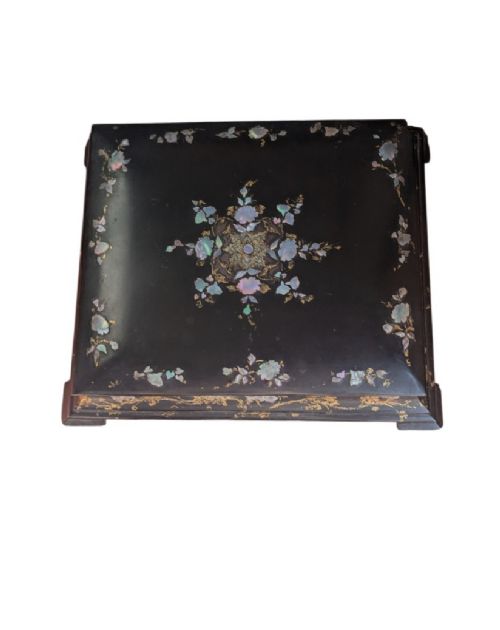
A mother of pearl inlay desk encompasses portable writing slopes, lap desks, writing boxes, and larger writing tables made across the nineteenth century. These objects served the Victorian correspondence desk and portable writing needs of travellers.
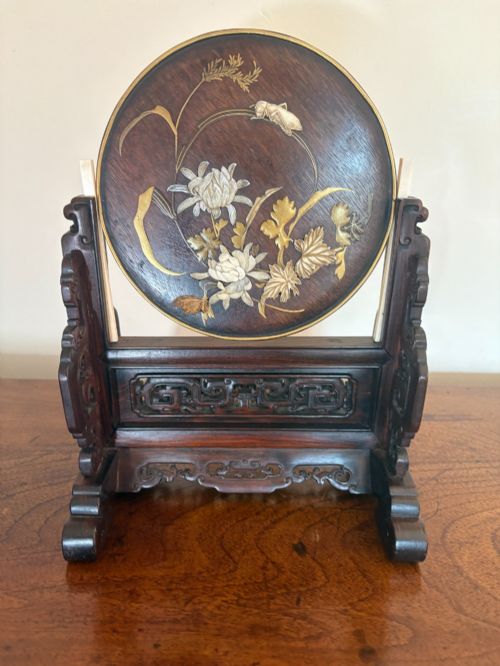
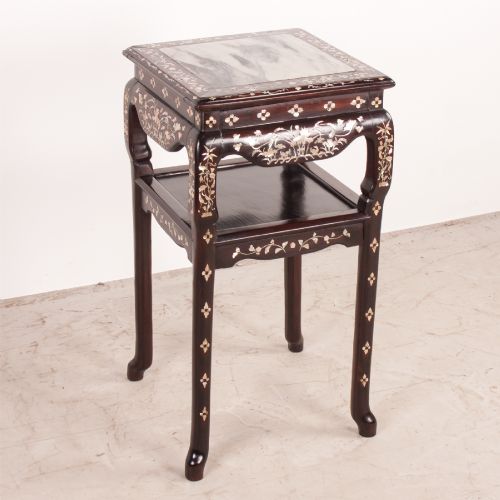
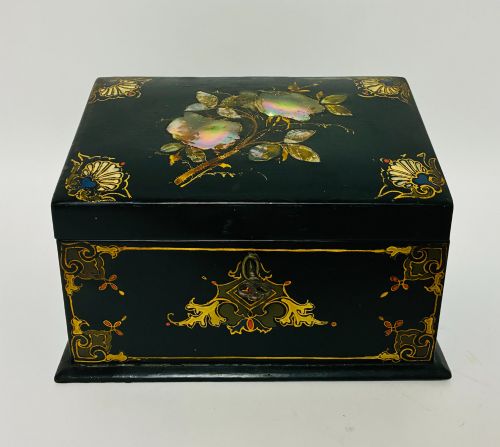
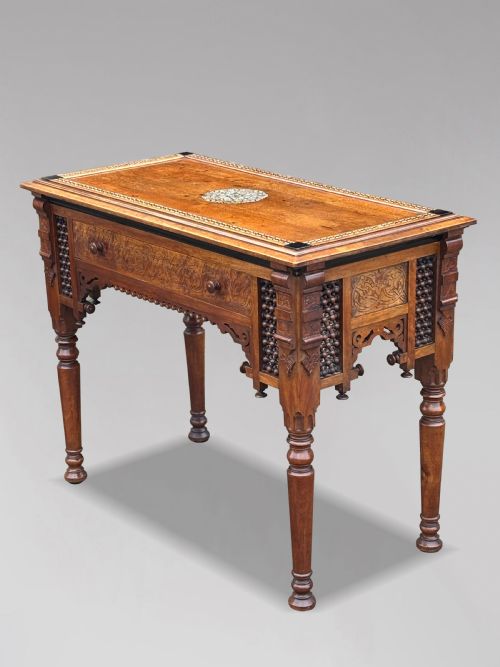
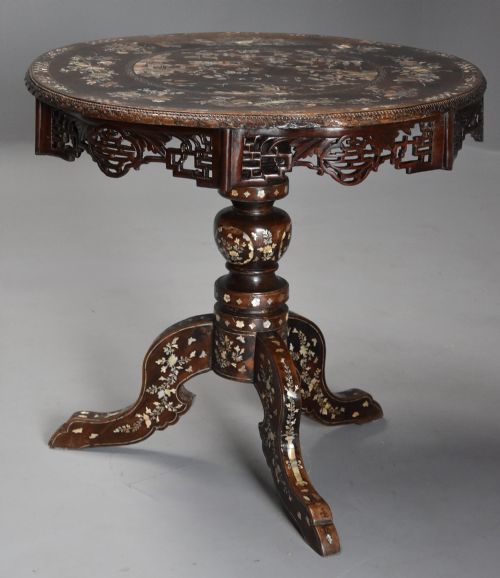
The pieces appearing most often combine rosewood or coromandel wood bodies with iridescent shell sections. Alongside desks, related forms include occasional tables, centre tables, stationery boxes, and table screens.
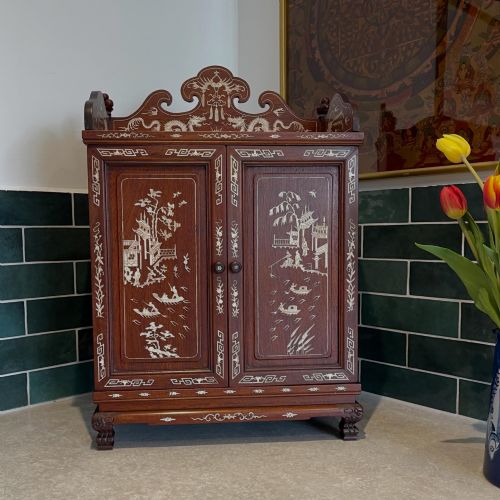
Origins stretch from English workshops to French, Chinese, Japanese, Syrian, and Vietnamese makers, reflecting global nineteenth century trade and aesthetic exchanges. Pieces range from compact table accessories to substantial pedestal desks.
How they were made
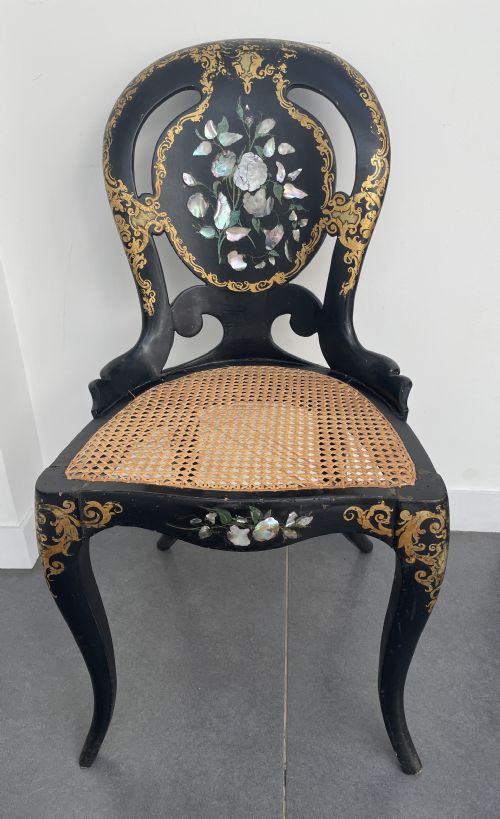
Craftsmen cut thin plates of mother of pearl, abalone, and brass, fitting them meticulously into hand-carved recesses within dense timbers like rosewood, coromandel, and hardwood. Papier-mâché and lacquer provide alternate grounds for iridescent shell placement.
Fitted interiors incorporate glass inkwells, velvet or leather writing surfaces, and secret drawers concealed within the wooden framework. Metal hinges, locks, and silver accents complete the construction of these portable and static writing pieces.
Listings feature Victorian and 19th century pieces built from rosewood, coromandel, and mother of pearl.
What varies in quality
The precision of the inlay work marks the difference between standard production and exceptional craftsmanship, visible in how tightly the shell pieces meet the surrounding wood grain. Complex floral, geometric, or pictorial compositions demand greater skill than simple borders.
Choice of timber dictates overall character, with figured coromandel and rich rosewood foundations holding higher status than simpler hardwoods or painted papier-mâché. Complete internal fittings such as matching glass inkwells and intact velvet slopes distinguish well-preserved examples.
George Austin Dublin·Lund of London·Viardot
The Mother of Pearl Inlay Desk Glossary
- Mother of pearl
- The iridescent internal layer of mollusc shells, utilised for decorative inlay. It reflects shifting tones of pink, green, and silver under changing light.
- Writing slope
- A portable box with a slanted lid that opens to reveal a leather or velvet writing surface and compartments for stationery. These pieces allowed correspondence while travelling.
- Coromandel wood
- A dense, heavily figured timber from Asia featuring dark brown grain with contrasting light streaks. It served as a premium foundation for nineteenth century boxes and desks.
- Shibayama
- A Japanese decorative technique incorporating inlaid shell, ivory, and coral to form detailed pictorial scenes. It appears on screens and decorative panels.
- Papier-mâché
- A composite material made from paper pulp or layers of paper bound with glue, pressed, and lacquered. It provided a smooth dark surface for mother of pearl decoration.
Mother of Pearl Inlay Desk: Frequently Asked Questions
How do I use a writing slope today?
A writing slope functions as a portable desk or a decorative box for storing letters, stationery, and small keepsakes. The slanted lid offers a firm surface for handwritten notes when opened.
Many examples include internal compartments and inkwells that organise modern desk accessories. Placed on a table or shelf, the inlaid exterior acts as a focal point in a room.
How are Victorian and Regency pieces told apart?
Regency pieces typically date from the early nineteenth century, exhibiting restrained neoclassical lines and precise brass or shell stringing. Rosewood forms dominate this earlier period.
Victorian pieces often display denser, more exuberant mother of pearl floral clusters and varied forms such as papier-mâché boxes and Davenport desks. Elaborate scrollwork and mixed materials characterise this later phase.
What woods were used for these desks?
Makers relied on dense, dark timbers that contrasted sharply with the pale iridescence of the shell inlay. Rosewood and coromandel appear frequently across English and French pieces.
Alternative materials include exotic Asian hardwoods, walnut, and japanned papier-mâché. Each timber ground influences the overall tone of the inlaid decoration.
Where were these inlaid pieces made?
Production spanned British workshops in London and Dublin, alongside continental centres in France. Asian export items came from Chinese and Japanese artisan workshops.
Middle Eastern and Vietnamese pieces also contributed distinct geometric and floral inlay traditions. This global exchange created diverse regional interpretations of the form.