
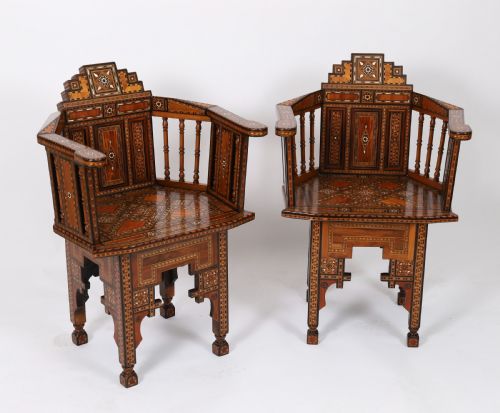


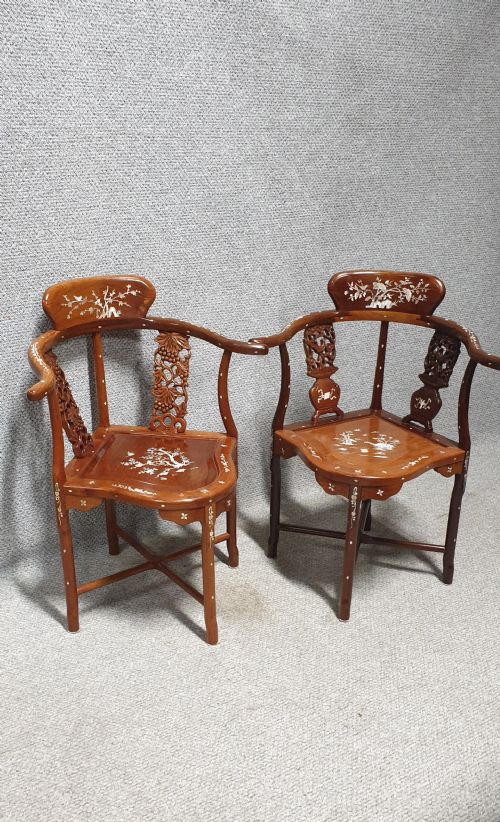
Mother of Pearl Inlay Chairs
Mother of pearl inlay chairs bring intricate Levantine craftsmanship and shimmering nacre details into a room, offering striking focal points for a traditional or eclectic interior.
Mother of Pearl Inlay Chairs
When you search for mother of pearl inlay chairs, you encounter a distinct gathering of seating spanning the nineteenth and early twentieth centuries. These pieces cross various cultural traditions, from Syrian and Levantine workshops to Victorian parlours and Chinese export studios.
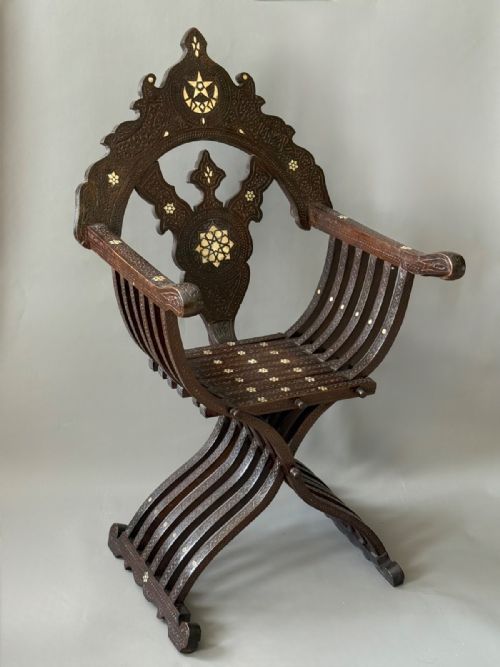
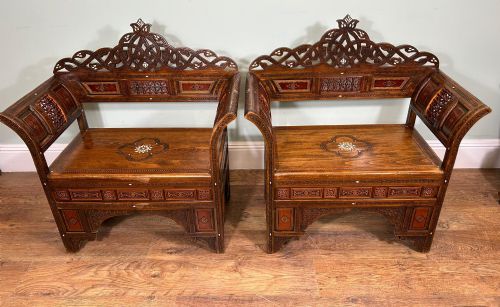
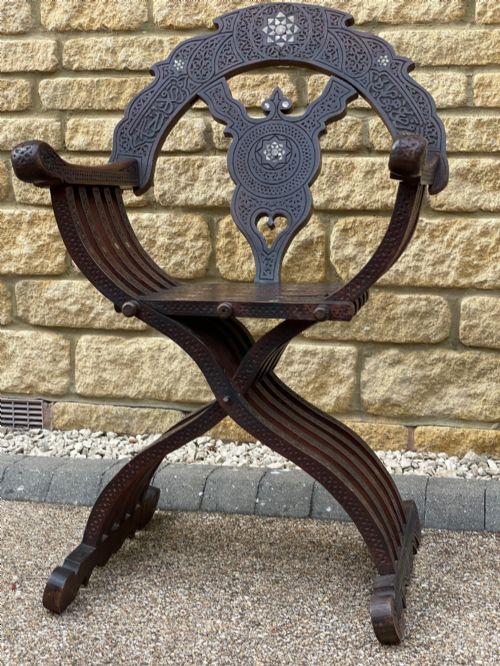
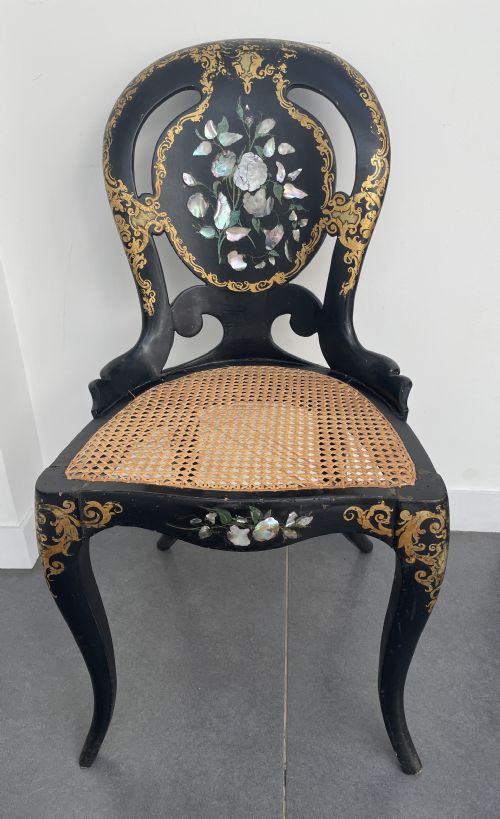
The most common examples on this page are Syrian and Moorish armchairs, side chairs, and corner chairs featuring dense geometric patterns. You also find Victorian papier-mâché bedroom chairs and occasional seating, reflecting a global Victorian fascination with exotic styles.
Forms range widely from standard side and accent chairs to folding X-frame chairs, low seats, and full seating suites. Each regional style brings a specific structural silhouette, whether it is the curved Savonarola form or the rigid geometry of Mashrabiya panels.
How they were made
The makers of these chairs relied on dense woods such as walnut, fruitwood, hardwood, and mahogany as the primary structural vehicle. Artisans also utilised papier-mâché for specific Victorian forms, building a sturdy yet lightweight core for intricate lacquer work.
Decoration hinges on meticulous inlay work, pressing small, shimmering pieces of mother-of-pearl, nacre-shell, and bone into carved recesses within the wood. In Levantine and Syrian pieces, this technique often combines with parquetry to form elaborate geometric mosaics across every visible surface.
Some nineteenth-century makers packed their folding X-frame chairs with so much shimmering shell that the timber practically vanished beneath the mosaic.
What varies in quality
The standard of a mother of pearl inlay chair rests upon the density and precision of the mosaic work. Superior examples display tightly fitted nacre fragments with minimal filler, whereas lesser items show wider gaps and simpler, stamped patterns.
Carving depth and wood selection further divide the range, as deeply hand-carved hardwood frames hold their structural integrity and decorative sharpness far better than hastily assembled alternatives. The condition of the delicate shell work and the stability of the underlying joints dictate the overall tier of the piece.
Liberty and Co·Jennens and Bettridge
The Mother of Pearl Inlay Chairs Glossary
- Nacre
- The iridescent internal layer of mollusc shells used to create mother of pearl inlay. This material catches the light and forms the shimmering geometric patterns characteristic of these chairs.
- Mashrabiya
- A traditional projecting window enclosed by carved wood latticework. In chair design, these intricate pierced panels are often incorporated into backs and corners.
- Parquetry
- A geometric mosaic of wood pieces used for decorative effect on furniture surfaces. It frequently frames the mother of pearl sections on Levantine armchairs.
- Savonarola chair
- An X-frame folding chair constructed from multiple curved wooden slats. This Renaissance-revival form was widely adopted by Middle Eastern and Moorish workshops.
- Papier-mâché
- A composite material made from paper pulp reinforced with glue and resin. Victorian makers moulded this substance into bedroom chairs before applying dark lacquer and shell inlay.
Mother of Pearl Inlay Chairs: Frequently Asked Questions
Where were mother of pearl inlay chairs made?
These chairs originate from diverse regions, including workshops in Syria, the Levant, and China, alongside Victorian British factories. Each region applied distinct decorative vocabularies to local timber frames.
Levantine and Syrian pieces showcase dense geometric mosaics, while Victorian iterations often utilise papier-mâché or incorporate Moorish revival motifs into standard parlour forms.
Are these chairs comfortable for daily use?
Most antique mother of pearl inlay chairs function best as accent pieces, occasional chairs, or visual focal points in a room rather than primary lounging seats. Their rigid wooden structures and upright backs reflect nineteenth-century standards of posture.
Low chairs and upholstered armchair suites offer a slightly more relaxed sit, but the delicate nature of the shell inlay warrants gentle daily handling.
How do I date a Moorish inlaid chair?
Dating relies on examining the timber species, the style of the joinery, and the complexity of the bone and nacre mosaic. Pieces from the late nineteenth century frequently display sophisticated Moorish revival or Syrian export designs.
Comparing the construction methods to dated examples from the Victorian era and early twentieth century helps narrow down the decade of manufacture.