




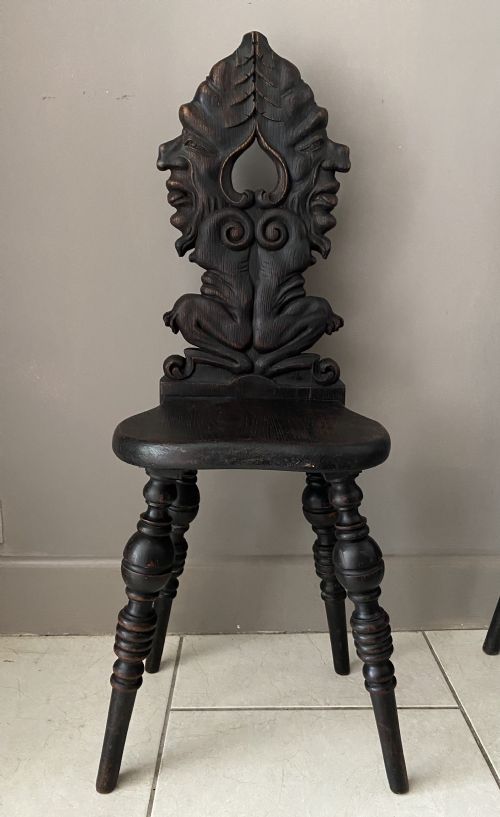


Victorian Decorative Accent Chairs
Victorian decorative accent chairs offer sculptural timber frames and rich upholstery that instantly ground a period interior with distinct character.
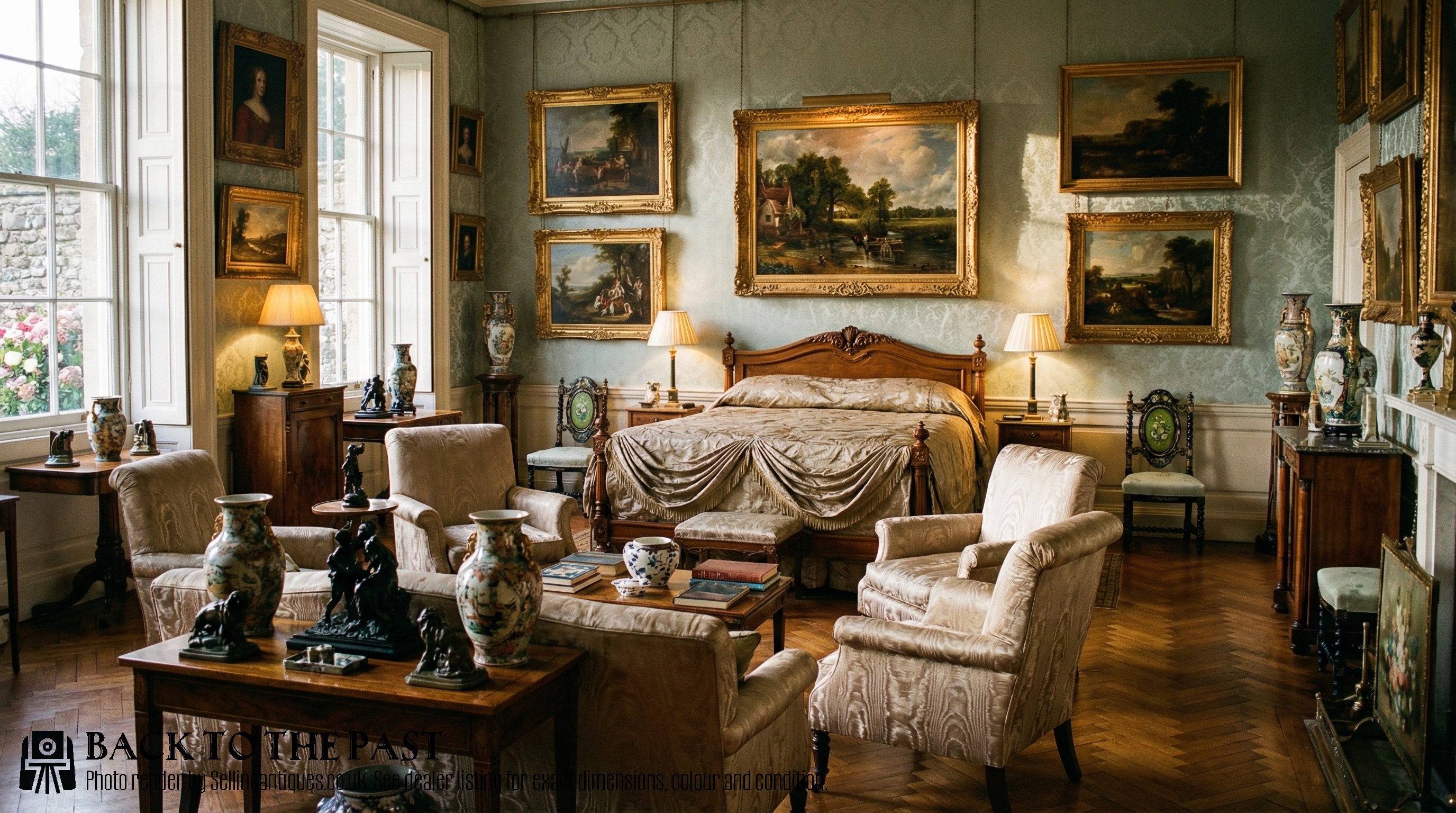
Victorian Decorative Accent Chairs
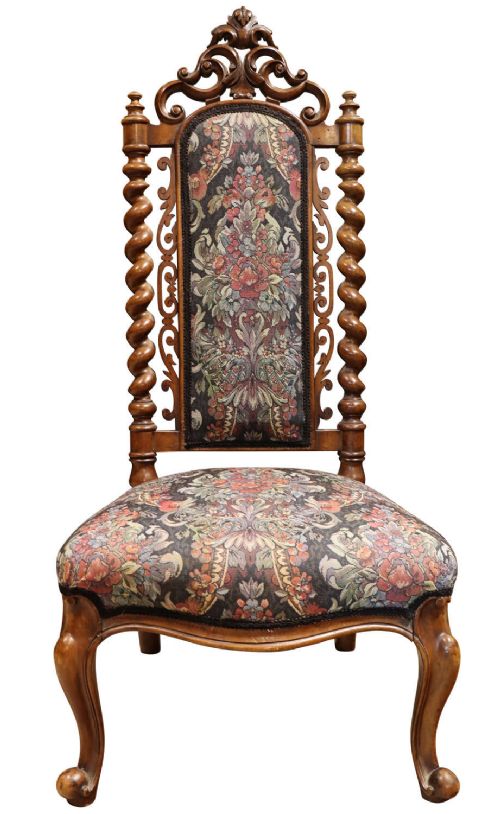
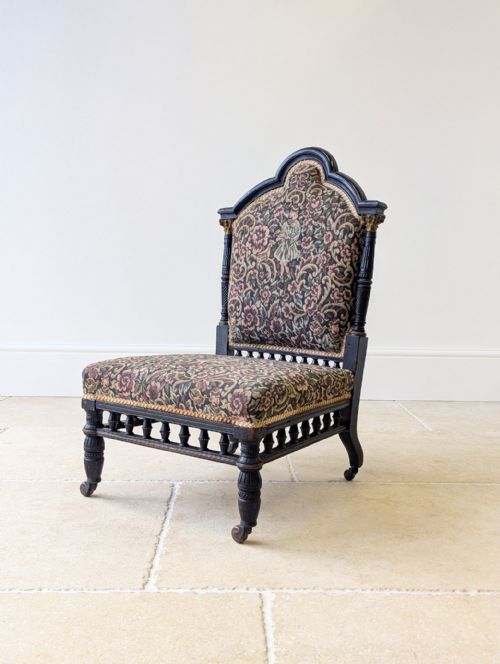
Victorian decorative accent chairs encompass a variety of seating forms designed primarily for visual impact and refined parlour use rather than long hours of repose. The selection spans distinct styles including Aesthetic Movement ebonised frames, Gothic Revival Glastonbury seating, and intricate papier-mâché bedroom chairs.
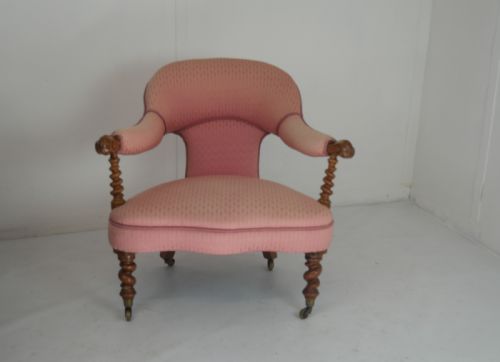
Buyers encounter numerous forms on this page, ranging from low salon chairs and carved walnut side chairs to Mendlesham regional chairs and spindle-backed spinning chairs. Most examples date from the nineteenth century, utilising walnut, oak, mahogany, and rosewood alongside specialised textile or hand-painted embellishments.
Materials and construction
Timbers such as walnut, oak, mahogany, and rosewood form the structural backbone of these pieces, often shaped through intensive carving, ebonising, or intricate turning. Cabinetmakers utilised papier-mâché as a smooth base for lacquer and hand-painted decoration, creating lightweight yet resilient frames for bedroom and salon settings.
Upholstery relies on traditional textile applications, tapestry work, and cane seating integrated directly into the wooden framework. Brass hardware and inlaid details frequently punctuate the design, securing structural joints while adding a subtle metallic contrast to the dark timber surfaces.
The inventory records regional forms like Mendlesham chairs alongside urban salon seating, low bedroom chairs, and carved hall gargoyle designs.
Judging quality
The distinction between ordinary and exceptional pieces rests upon the crispness of the hand-carving and the integrity of the timber framing. Depth of detail in the woodwork, such as figurative gargoyle carvings or precise floral motifs, marks the distinction in craftsmanship.
Originality of surface finish and the preservation of period upholstery or hand-painted lacquer elevate the standing of a piece. Subtle joinery execution and the harmonious proportion of turned elements demonstrate the skill applied during manufacture.
Jennens and Bettridge
The Victorian Decorative Accent Chairs Glossary
- Aesthetic Movement
- A late nineteenth-century design style focusing on art for art's sake, often featuring ebonised wood and minimalist lines. This aesthetic rejected heavy Victorian ornamentation in favour of cleaner, Japanese-inspired compositions.
- Papier-mâché
- A durable composite material made from paper pulp mixed with binders, pressed and baked to form rigid shapes. It served as a smooth canvas for black lacquer and mother-of-pearl inlay.
- Glastonbury chair
- A distinctive medieval revival armchair design with an X-framed base and sloping arms. It gained popularity during the Gothic Revival period for ecclesiastical and domestic interiors.
- Bobbin chair
- A seating form characterised by turned wooden components resembling spools or bobbins threaded together. This technique created a rhythmic, tactile surface texture across the frame.
Victorian Decorative Accent Chairs: Frequently Asked Questions
How do I identify an Aesthetic Movement chair?
Aesthetic Movement chairs typically feature ebonised wood surfaces that mimic Japanese lacquer work, often accented with gilt highlights or subtle incised decoration. Their silhouettes lean towards clean, geometric lines rather than bulbous Victorian curves.
You will frequently find them serving as low salon chairs designed for informal seating and artistic interior schemes.
Were papier-mâché chairs durable?
Papier-mâché furniture is surprisingly strong because the material was constructed from multiple layers of paper pressed, dried, and treated with heavy coats of varnish and lacquer. This created a rigid composite capable of supporting everyday use in domestic settings.
However, they were generally intended for light duties in bedrooms or drawing rooms rather than heavy service in dining spaces.
What is a Mendlesham chair?
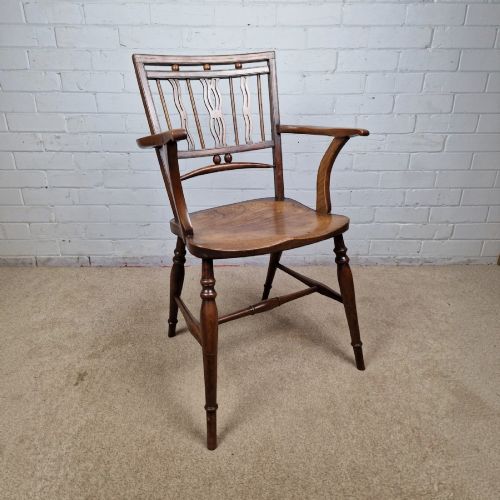
A Mendlesham chair is a distinctive regional Windsor-style armchair originating from Suffolk, traditionally constructed with a solid elm seat and a yew wood bow. They are recognised by their pierced splats and sturdy country craftsmanship.
These pieces represent the robust vernacular traditions running parallel to high-style urban Victorian furniture.
Where should I place an antique side chair?
Antique side chairs work well in hallways, bedrooms, or as occasional seating in a living room where their decorative frames can be appreciated without blocking traffic flow. Because many have low seats or delicate structures, they function best in low-traffic areas.
Pairing a walnut or rosewood side chair with a simple reading corner highlights its carved details and period upholstery.