
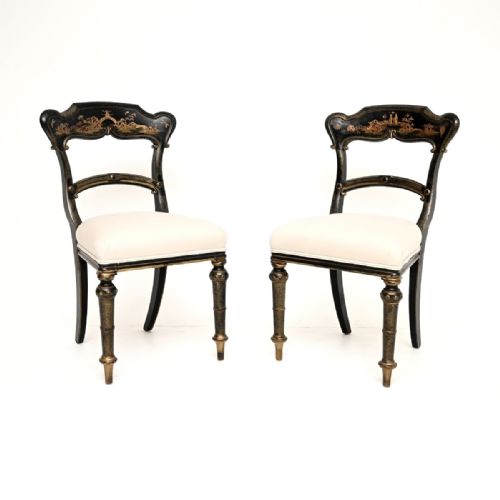


Gilded Black Chairs
These gilded black chairs combine dark timber or lacquer with bright metallic leaf, bringing striking contrast and period character to any interior.
Gilded Black Chairs
When you search for gilded black chairs, you encounter seating finished in dark surfaces such as ebonised wood, black lacquer, or japanning, heightened with gilt decoration or gold leaf. The examples listed on this page span several centuries, reaching from eighteenth-century Dutch items through Regency and Victorian periods up to early twentieth-century interpretations.
You will find various forms among these listings, including side chairs, armchairs, hall chairs, bedroom chairs, boudoir chairs, and nursing chairs. The styles range across Victorian Chinoiserie, Aesthetic Movement, Italian Rococo Revival, French Chateau, and Regency, showing how diverse dark and gilded seating can be.
The version you are most likely to meet on this page is a Victorian or nineteenth-century piece utilising ebonised wood or lacquered wood with gilt highlights. Many items appear as pairs, which suits buyers looking to place matching seating in a reception room or bedroom.
How they were made
Makers achieved the dark body of these seats through ebonising timber, applying black lacquer, or employing japanned finishes. Some specific items utilise papier-mâché for bedroom and boudoir chairs, demonstrating alternative base materials within the selection.
Decoration relied upon the application of gilt, gold leaf, and brass fittings to contrast against the dark background. Certain pieces incorporate fabric upholstery or cane work for the seats, combining rigid frames with softer textures.
Victorian papier-mâché chairs prove that mashed-up paper, when pressed firmly and gilded properly, can outlast most owners.
What varies in quality
The distinction between tiers often lies in the execution of the surface finish and the preservation of the original decoration. Pieces retaining good original gilt decoration and refined lacquer work stand apart from those with later repainting.
Craftsmanship in the underlying frame construction, whether carved timber or moulded papier-mâché, dictates the structural integrity of each chair. The finesse of the Chinoiserie motifs or Rococo carving also separates standard production from finer examples.
Bruce J. Talbert·Jennens and Bettridge
The Gilded Black Chairs Glossary
- Ebonised wood
- Timber treated with stain or paint to imitate ebony. This dark finish provides the primary contrasting base for gilt highlights.
- Japanning
- European imitation of East Asian lacquer work. It involves layering dark finishes and varnishes, often seen on Chinoiserie furniture.
- Gilt
- A thin layer of gold or gold-like material applied to surfaces. It catches the light against dark ebonised frames.
- Papier-mâché
- A composite material made of paper pulp and binder used for lightweight chair frames. It permitted moulded shapes in Victorian bedroom seating.
- Aesthetic Movement
- A late nineteenth-century design style emphasising visual qualities over narrative content. Chairs from this movement often featured ebonised surfaces and incised gilt detailing.
- Chinoiserie
- European artistic style reflecting Chinese motifs. This aesthetic appears frequently on lacquered and japanned seating.
Gilded Black Chairs: Frequently Asked Questions
What periods do these chairs come from?
The selection covers several distinct eras, starting from eighteenth-century Dutch pieces and moving through the Regency period.
You will also find nineteenth-century Victorian items, Aesthetic Movement examples, and pieces dating into the early twentieth century.
Are these chairs sold as pairs?
Many of the listings on this page consist of matched pairs rather than single items. This includes side chairs, armchairs, and boudoir seating.
Single chairs do appear occasionally, particularly among nursing chairs and specific armchairs from the Victorian era.
What materials are used for the frames?
The frames rely predominantly on timber treated with ebonisation, black lacquer, or japanning to create a dark surface. Some lighter bedroom chairs utilise papier-mâché.
Decoration is added through gold leaf, gilt, and occasionally brass accents, while seats may incorporate fabric or cane.
How do I identify Chinoiserie styles?
Chinoiserie pieces feature lacquer work inspired by traditional East Asian design motifs. They often display painted or gilded scenes on black backgrounds.
These characteristics appear on eighteenth-century Dutch items and Victorian lacquer pieces alike.
Where were these chairs placed originally?
Different chair types served specific rooms in historic homes, such as hall chairs for entryways and side chairs for reception rooms. Boudoir and bedroom chairs were intended for private retiring spaces.
Nursing chairs featured lower seats designed for comfort during domestic tasks.