

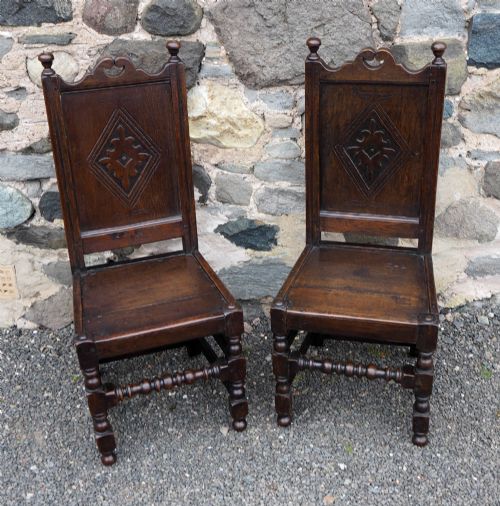


Carved Panel Side Chairs
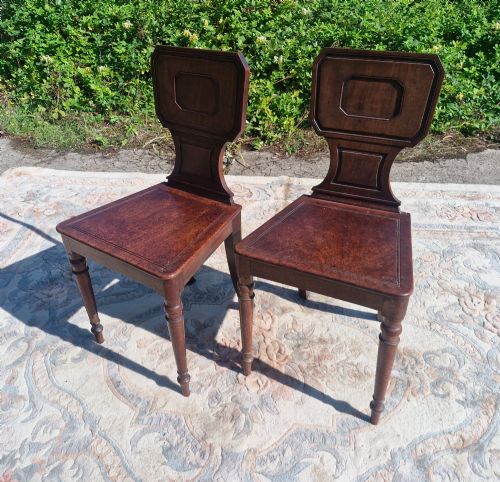
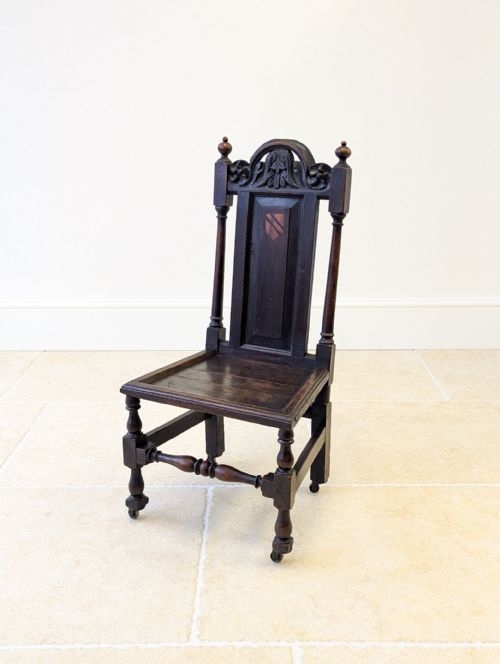
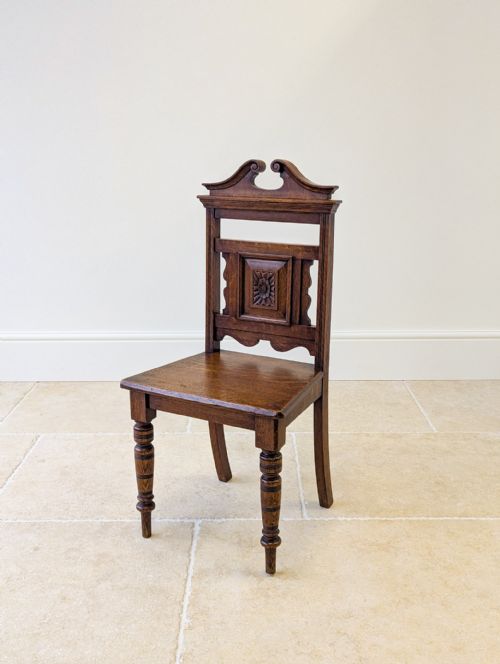
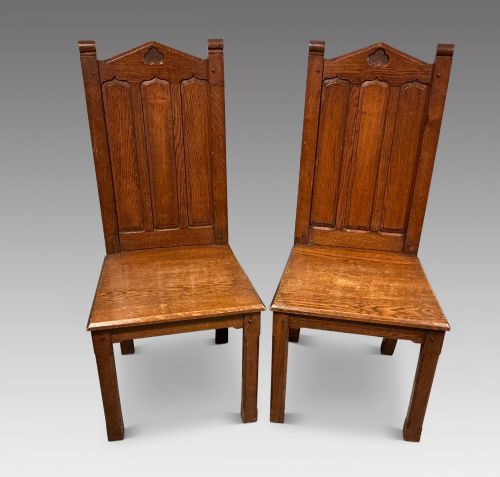
These carved panel side chairs bring solid oak, mahogany and ebonised timber into everyday use, offering sturdy seating with centuries of history.
Carved Panel Side Chairs
When you search for carved panel side chairs, you encounter sturdy timber seating designed for halls and dining rooms, spanning from the seventeenth century through to Victorian revivals. These pieces rely on solid construction, often taking the form of high-backed side chairs, hall chairs and country dining seats.
The most common examples on this page are seventeenth century oak pieces and later Victorian reinterpretations like the Jacobean Revival and Gothic styles. Regional variations, such as Lancashire chairs and South Yorkshire backstools, appear alongside Regency mahogany designs and early eighteenth century examples.
How they were made
Makers built these chairs primarily using English oak and mahogany, shaping the timber with hand tools to form rigid frames and solid seats. Joinery relied on mortise and tenon joints secured by wooden pegs, creating durable structures designed to withstand heavy daily use.
Decoration involved chiselling panels and backs with geometric motifs, foliage and strapwork. Some pieces incorporated ebonised wood or japanning, while others featured turned legs and brass fittings.
Listings feature oak, mahogany and ebonised wood spanning from the seventeenth century to the nineteen-thirties.
What varies in quality
The distinction between standard examples and superior pieces rests on the depth and crispness of the timber carving. Sharp, well-defined panel work and balanced proportions indicate skilled hand craftsmanship rather than hurried production.
Originality of the wood and the integrity of the frame construction define the overall standard. Chairs retaining their early timber surfaces and solid joints command greater appreciation than heavily restored or altered examples.
Bruce J. Talbert
The Carved Panel Side Chairs Glossary
- Joint stool
- A piece of domestic furniture constructed using mortise and tenon joints rather than turned legs secured by glue. These formed the structural basis for early chairs and seating.
- Jacobean revival
- A nineteenth century architectural and furniture style imitating the heavy, carved oak designs of the early seventeenth century. This movement produced many of the dark wood hall chairs seen today.
- Japanned
- A European imitation of East Asian lacquerwork applied to wooden furniture surfaces. This finish involved coating timber with dark varnishes and hardening them through heat.
- Hall chair
- A rigid wooden seat placed in the entrance hall of a grand house, often featuring a carved family crest or decorative panel. These chairs prioritized striking upright design over deep physical comfort.
Carved Panel Side Chairs: Frequently Asked Questions
Where were carved panel side chairs used?
These chairs originally stood in the halls, parlours and dining rooms of large houses and country residences. They served as formal seating for guests or as functional furniture in entranceways.
Over time, many migrated into domestic dining spaces or studies, where their upright wooden seats provided sturdy support.
How do I spot a seventeenth century chair?
Seventeenth century chairs generally feature heavy English oak construction with pegged mortise and tenon joints. The timber often displays a dark, patinated surface developed through centuries of handling.
Decoration on these early pieces typically includes hand-chiselled geometric panels, strapwork and sturdy turned supports without modern metal fixings.
Are these chairs comfortable for daily sitting?
Most carved panel side chairs feature solid wood seats and rigid, upright backs designed for posture rather than lounging. They work best as occasional seating or dining chairs.
Adding a removable squab cushion can soften the wooden seat for longer meals while keeping the historic frame visible.
What is a Lancashire chair?
A Lancashire chair is a regional seventeenth century seating form characterised by sturdy oak frames and distinctive panelled backs. These pieces often incorporate rush or wooden seats.
They reflect local cabinet-making traditions from the north of England, prioritising robust construction and practical utility.