



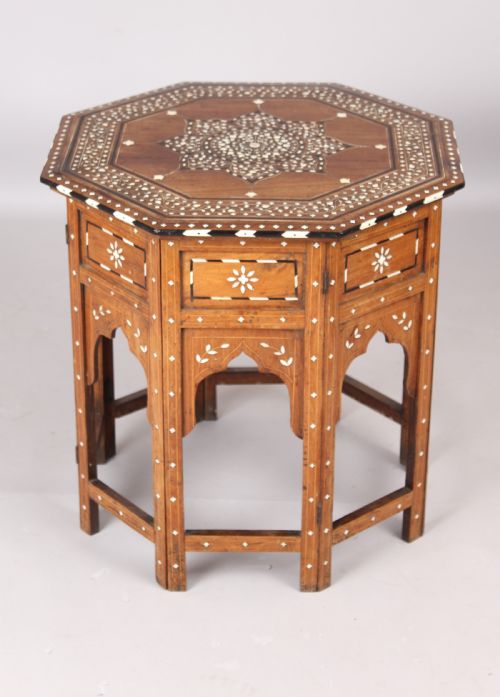

Moorish Bone Inlaid Table
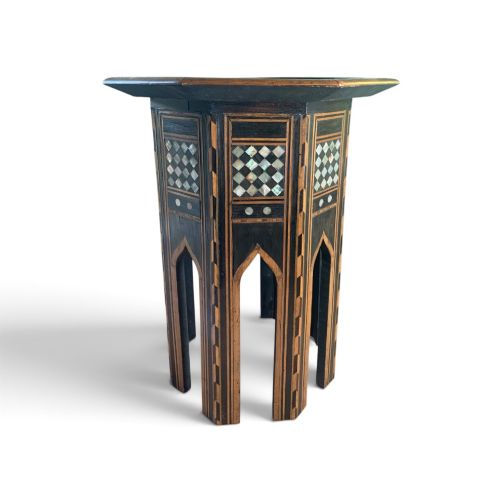
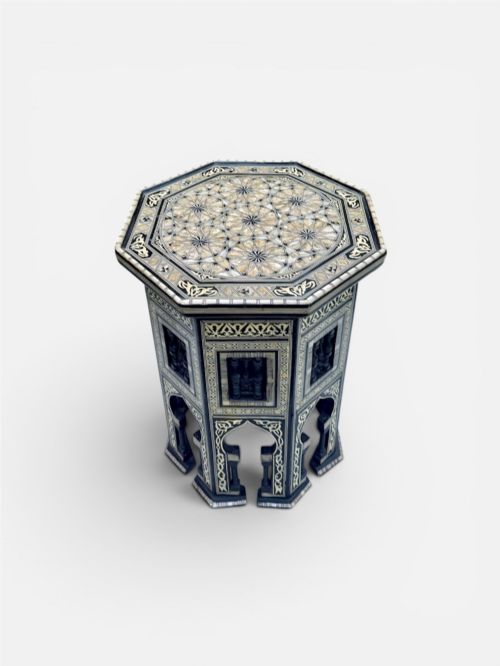
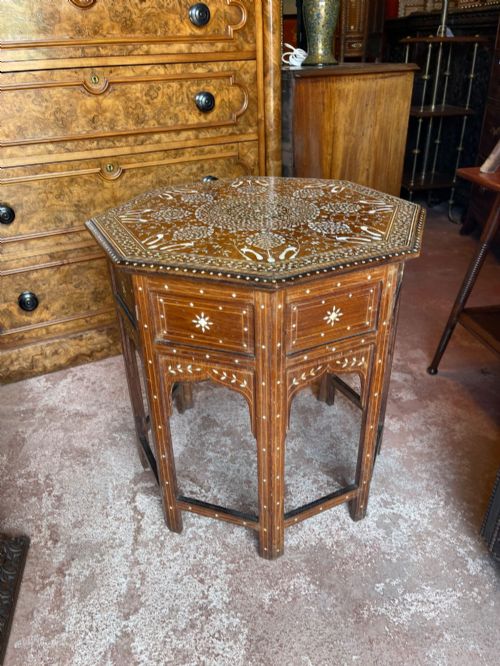
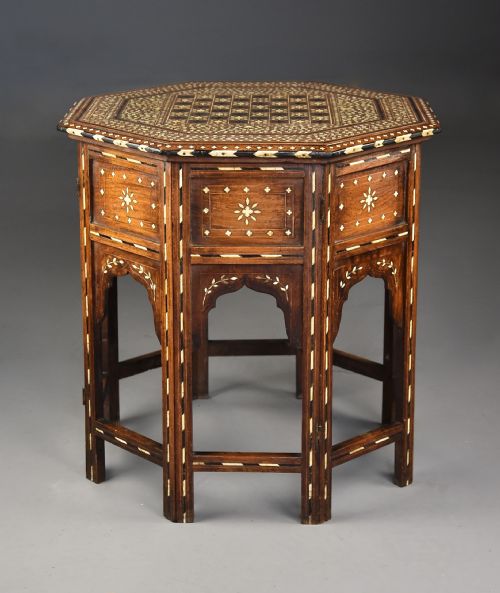
These moorish bone inlaid table pieces combine intricate geometric bone work with rich hardwoods, bringing a distinct exotic presence to any room.
Moorish Bone Inlaid Table
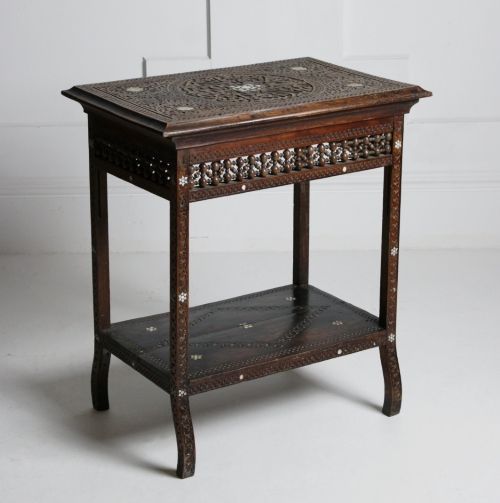
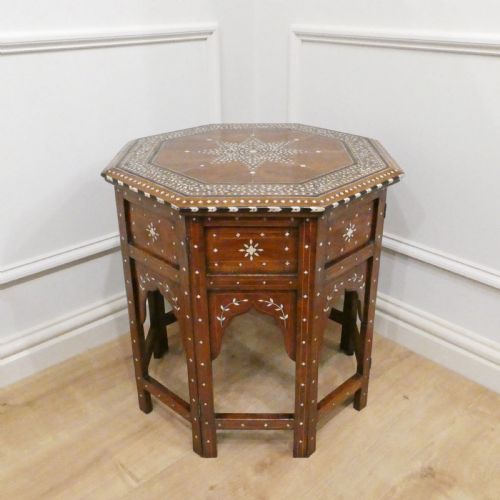
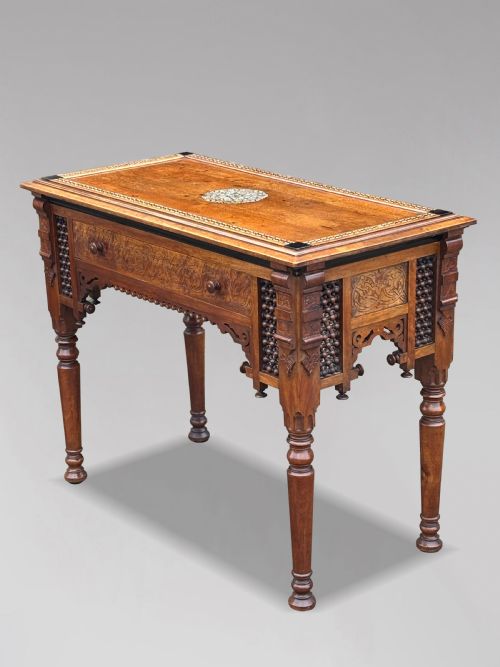
When you search for a moorish bone inlaid table, you encounter intricate occasional and side tables originating from the nineteenth and early twentieth centuries. These pieces reflect diverse regional traditions, including Anglo-Indian Hoshiarpur work, Syrian craftsmanship, and Ottoman or Moorish revival designs.
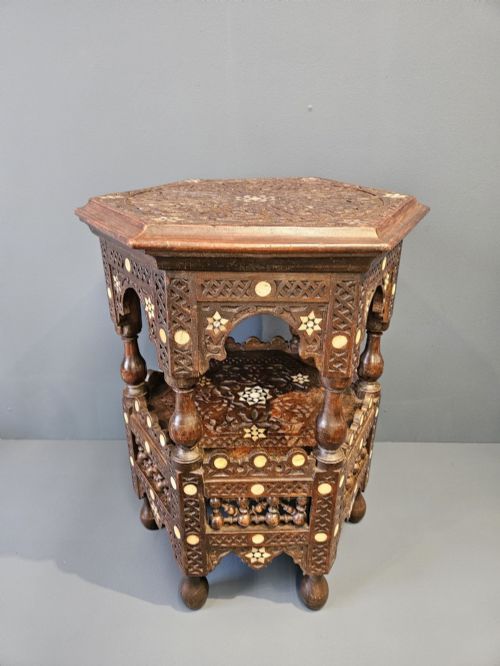
Octagonal and hexagonal forms dominate the selection, alongside folding chess tables and occasional stands. The surfaces typically feature dense geometric patterns created through the meticulous arrangement of small bone and mother-of-pearl segments set into dark timber frames.
Examples range from compact lamp tables to larger two-tier structures and console pieces. Many connect to stylistic movements of the period, such as Liberty style and the Aesthetic Movement, bridging British retail tastes with Eastern craftsmanship.
How they were made
Artisans constructed these tables using dense hardwoods such as walnut, rosewood, sandalwood, and ebonised timber as a foundation. They carved the structural elements deeply before preparing precise recesses to receive the ornamental surface decoration.
Workers shaped thousands of tiny pieces of bone and mother-of-pearl by hand, fitting them tightly together into complex geometric mosaics. These individual fragments were secured into the wooden matrix using natural adhesives, then smoothed flush across the entire plane.
Listings feature pieces incorporating bone, mother-of-pearl, walnut, rosewood, and sandalwood across the nineteenth and early twentieth centuries.
What varies in quality
The precision of the geometric mosaic work determines the standing of a piece, with finer examples displaying microscopic gaps between individual bone tesserae and the surrounding wood. Artisans who maintained strict symmetry and crisp alignment across complex multi-sided surfaces achieved superior results.
The choice and depth of timber carving also separate standard production from exceptional craftsmanship. Tables featuring deeply carved undercut foliage alongside immaculate bone and mother-of-pearl inlays represent the most accomplished work of the period.
Liberty and Co
The Moorish Bone Inlaid Table Glossary
- Hoshiarpur
- A region in Punjab, India, renowned for producing highly detailed inlaid wooden tables and furniture using shisham wood, sandalwood, and bone. Pieces from this tradition often feature dense star patterns and intricate foliate carving.
- Tessera
- An individual small block of bone or mother-of-pearl used to build up geometric mosaic patterns on the surface of the table. Thousands of these tiny components are fitted together to create the overarching design.
- Octagonal
- Having eight sides, a common geometry for the tops and bases of these occasional tables. This shape allows for symmetrical star motifs and facilitates folding mechanisms in many Anglo-Indian examples.
- Ebonised
- Wood treated with a chemical stain or finish to imitate the appearance of ebony. This dark ground provides high contrast against the bright white bone and iridescent mother-of-pearl inlays.
Moorish Bone Inlaid Table: Frequently Asked Questions
Where were these tables originally made?
Production centres spanned across the Indian subcontinent, particularly in Hoshiarpur, as well as workshops in Damascus and Cairo. European retailers like Liberty and Co imported these goods to satisfy Victorian and Edwardian taste for exotic furnishings.
Craftsmen in these diverse regions utilised local timbers and traditional geometric motifs, adapting them for Western domestic interiors.
How do I care for the bone inlay?
Bone and mother-of-pearl react to significant shifts in humidity, so stable indoor conditions help prevent movement in the wood base. Gentle dusting with a dry cloth is sufficient for routine maintenance.
Avoid applying liquid polishes or moisture directly onto the inlaid surface, as dampness can weaken the historical adhesives holding the small tesserae in place.
Are these tables sturdy enough for daily use?
Many examples function well as lamp tables or occasional surfaces for holding light objects. Folding versions and rigid octagonal tables were designed for practical domestic service during the nineteenth century.
Weight distribution matters due to the delicate nature of the multi-piece tops, meaning heavy loads or extreme pressures should be avoided.
How do I distinguish regional styles?
Anglo-Indian pieces frequently employ sandalwood or shisham with dense all-over floral carving and star geometries. Syrian and Ottoman examples often incorporate greater quantities of mother-of-pearl alongside intricate banding and hexagonal footprints.
Examining the underlying timber and the specific geometry of the bone work helps clarify the geographic origin of an individual table.