





Folding Bone Inlaid Table
These folding bone inlaid table pieces bring intricate geometric artistry and rich woods into a room with remarkable versatility.
Folding Bone Inlaid Table
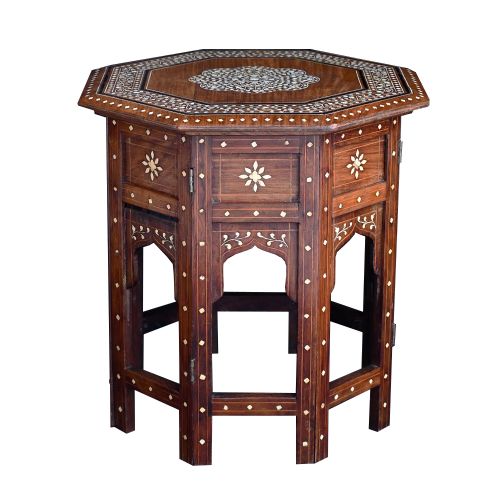
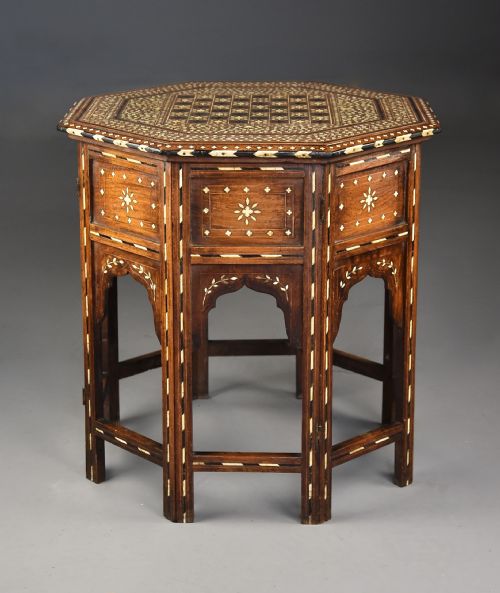
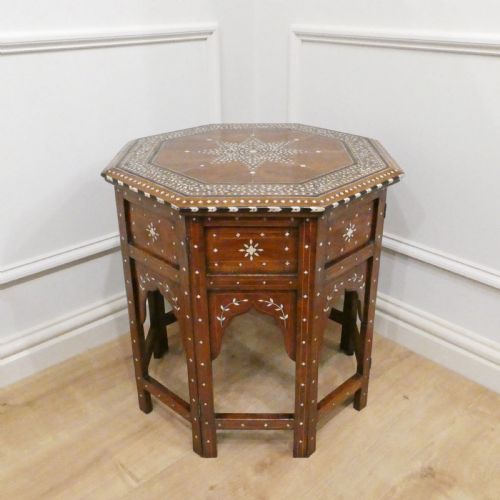
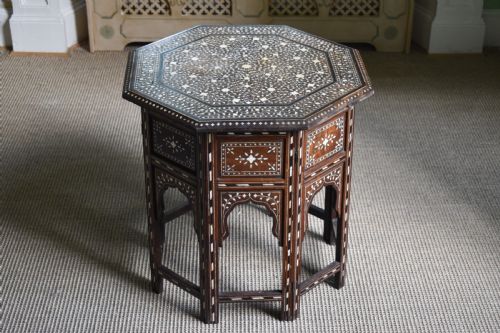
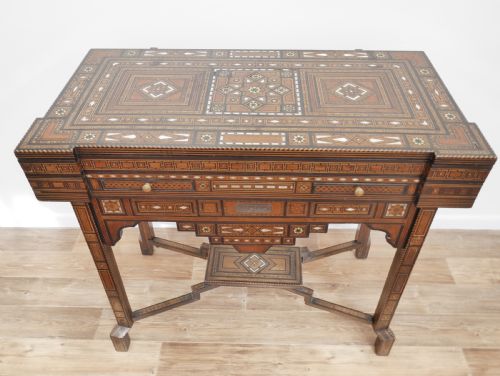
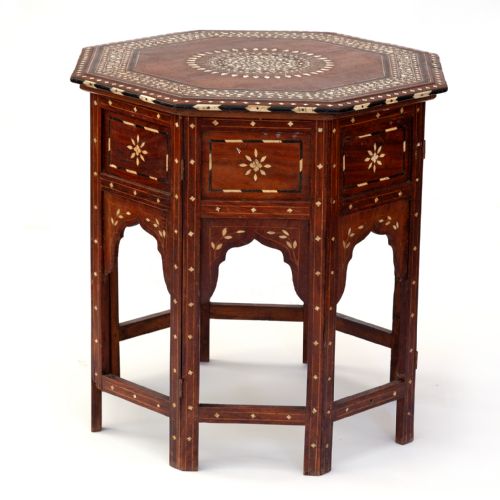
A folding bone inlaid table brings together intricate craftsmanship and practical design, originating primarily from traditions such as Anglo-Indian Hoshiarpur work, Syrian artistry, and Moorish revival styles. When searching for a folding bone inlaid table, buyers frequently encounter octagonal occasional tables, chess or games tables, and collapsible side pieces designed to be easily stored when not in use. These items showcase elaborate geometric patterns that reflect distinct regional aesthetics from the nineteenth and early twentieth centuries.
The pieces appearing on this page span several decades, reaching from the late nineteenth century into the early twentieth century. Octagonal formats and star designs dominate the selection, often featuring collapsible folding bases that support detailed inlaid tops. Alongside standard side and occasional pieces, collectors also find specialised forms like metamorphic writing tables and games surfaces.
Origins range across distinct geographical workshops, with Hoshiarpur in India and Damascus in Syria representing the primary centres of production. Makers in these regions utilised local timbers and specific carving techniques to produce work tailored for both local use and export markets. This background ensures that each example carries historical character rooted in traditional woodcarving and inlay practices.
Materials and construction methods
Craftsmen built these tables using dense timbers such as teak, rosewood, sandalwood, padauk, sheesham wood, walnut, fruitwood, and general hardwood. These dark or richly grained woods provided a stable foundation that contrasted sharply with the pale, luminous quality of the decorative elements.
Makers cut animal bone into tiny geometric tiles and delicate floral motifs, often pairing them with mother of pearl to create intricate surface patterns. They recessed these pieces precisely into the wooden substrate, securing them within hand-carved channels to form complex interlocking designs across the top and sides.
The folding mechanisms rely on ingenious interlocking wooden frames that collapse flat without modern metal hinges. Artisans carved the support structures from the same timber as the top, ensuring structural integrity while maintaining the ability to fold smoothly.
Some folding tables double as chess boards, proving that nineteenth-century travellers still needed a quick match on the road.
Assessing quality and execution
The density and intricacy of the bone inlay reveal the skill of the original workshop. Finer pieces feature tight, precise geometric tessellation with minimal filler, whereas simpler examples display more spaced-out motifs and larger expanses of plain wood.
The choice of primary wood significantly influences the character of an item. Dense exotic timbers like sandalwood, rosewood, and padauk provide a finer finish and richer aroma than standard hardwoods or fruitwoods.
The complexity of the folding base and the depth of the surrounding carved relief work separate standard production from exceptional examples. Deeper, crisper carving on the frame indicates superior hand execution by skilled artisans.
Hoshiarpur workshop tradition·Damascus workshop tradition
The Folding Bone Inlaid Table Glossary
- Hoshiarpur
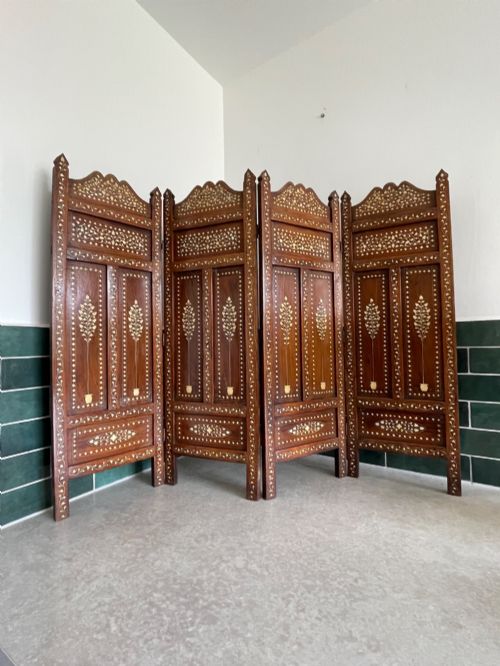
- A city in Punjab, India, renowned for its distinctive wood carving and intricate bone and brass inlay work on tables and screens. Pieces from this region often feature dense floral and geometric patterns.
- Octagonal
- Having eight sides. This shape is characteristic of many traditional occasional tables designed with folding bases.
- Inlay
- A decorative technique where small pieces of bone or mother of pearl are set flush into the surface of a wooden object. This method creates contrasting patterns and textures.
- Metamorphic
- Describing furniture designed to transform or serve multiple functions, such as a table that converts into a writing desk. These pieces demonstrate clever mechanical ingenuity from the period.
- Padauk
- A heavy, durable tropical hardwood with a reddish hue used in the construction of certain Anglo-Indian occasional tables. It provides a robust and stable foundation for detailed carving.
Folding Bone Inlaid Table: Frequently Asked Questions
How do I fold these tables?
The folding mechanism relies on interlocking wooden sections that slot together without hinges. Lift the top slightly and gently release the cross-braced base to fold the structure flat.
Take care to support both sides evenly when collapsing the frame to avoid straining the carved wooden joints.
Were these tables made for export?
Many examples from Hoshiarpur and Syria were produced specifically for the British colonial market and international exhibitions during the nineteenth century. Artisans combined traditional local motifs with forms suited to Western drawing rooms.
This blend of styles created portable, decorative items that proved immensely popular among Victorian and Edwardian collectors.
How should I clean the bone inlay?
Dust the surface regularly with a soft, dry brush to prevent dirt from settling into the carved recesses. Avoid using wet cloths, harsh detergents, or modern furniture polishes on bone and untreated wood.
Applying a minimal amount of appropriate natural wax can help protect the timber without harming the delicate inlay work.